Gorilla Trekking
Gorilla Trekking
For many travellers, this is the reason they came to Africa. Fewer than 1,100 mountain gorillas remain on earth, living only in the forests of Uganda, Rwanda and the Democratic Republic of Congo, and standing among them is an experience that consistently ranks as one of the most profound in all of wildlife travel.
The day begins early with a briefing at the park headquarters, where visitors are divided into small groups of eight and assigned a gorilla family. Trackers set out at dawn to locate the group, radioing their position back to the guides. From there, you follow them into the forest, climbing through dense undergrowth, steep slopes, and thick mud on a hike that can last anywhere from one to six hours depending on where the gorillas have moved.
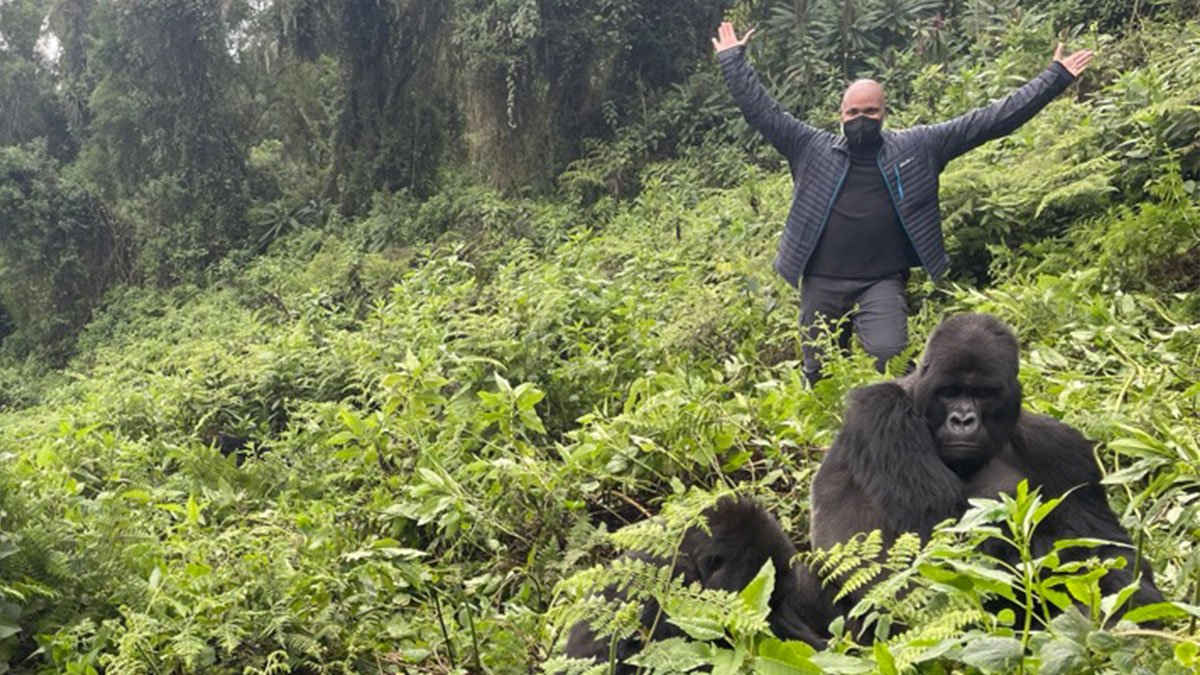
Then, suddenly, they are there. A silverback resting against a trunk, mothers with infants clinging to their chests, juveniles tumbling through the vegetation. You are permitted one hour in their presence, kept at a respectful distance, and it passes in what feels like minutes. Most people describe it as unexpectedly emotional rather than simply exciting.
Uganda's Bwindi Impenetrable Forest shelters almost half the world's population, with permits at $800, while Mgahinga offers a quieter alternative. Rwanda's Volcanoes National Park is more accessible and more polished, with permits at $1,500. Success rates in both exceed 95 percent.
Trekking is possible year-round, though the drier months of June to September and December to February offer firmer trails. Reasonable fitness is required, but porters are available at every trailhead, and hiring one both eases the climb and supports the local community.