Wildlife Watching
About This Experience
Africa is known for wildlife animals and few destinations are ranked as the best places for overland road trips with interest to see the wildlife that include the big five and small wild animals that are endangered within the world.
Never miss seeing the wildlife animals in Zambia, Kenya, Botswana, Tanzania, Namibia, and Uganda while on a self-drive holiday in Africa. Easy-to-spot wildlife is in no small part responsible for the appeal of Namibia, Botswana, Kenya, and Tanzania as self-drive safari destinations. Large conservation areas and a low population density have allowed many animals to survive and thrive in Africa. Topping the list of 26 parks and reserves, Etosha National Park is a haven for endangered species, offering visitors the opportunity to witness rare animals in their natural habitat. Similarly, the lush Caprivi Strip with its perennial rivers in the northeast of the country provides visitors with a glimpse into an entirely different ecosystem. But in Namibia, wildlife is not restricted to conservation areas, as animals can sometimes be spotted just along the side of the road.
African Wild Dogs
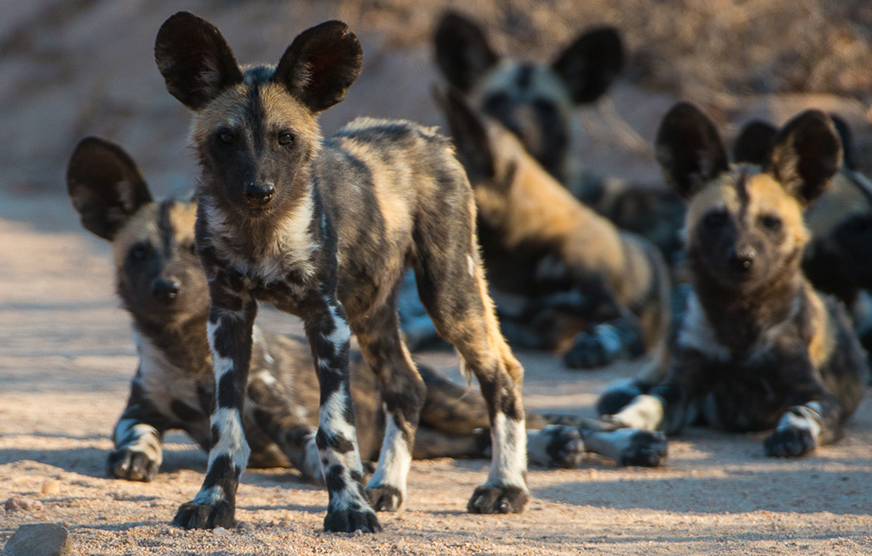
A very distant relative of the domestic dog, African wild dogs are ferocious hunters with an exclusively carnivorous diet. They live and hunt in packs numbering 5 to 15 animals. African wild dogs have a strict social hierarchy with a female leading the pack. Instead of using stealth, they hunt as a pack, relying on their
good eyesight and elaborate communication, achieving a higher success rate than lions or leopards. Hunting during the day, they can be seen patrolling the landscape, scanning the savanna for small- to medium-sized ungulates.
Once fixated on a victim, they chase their prey to exhaustion before tearing it to pieces, often while it is still alive. Despite them being fearsome predators, African wild dogs are often killed by lions. Their fur is spotted, with each individual having a distinct pattern of golden, white, brown, and black spots.
Where to see them
African wild dogs are rare in Tanzania’s Mkomazi National Park, Namibia, Botswana.
Lions
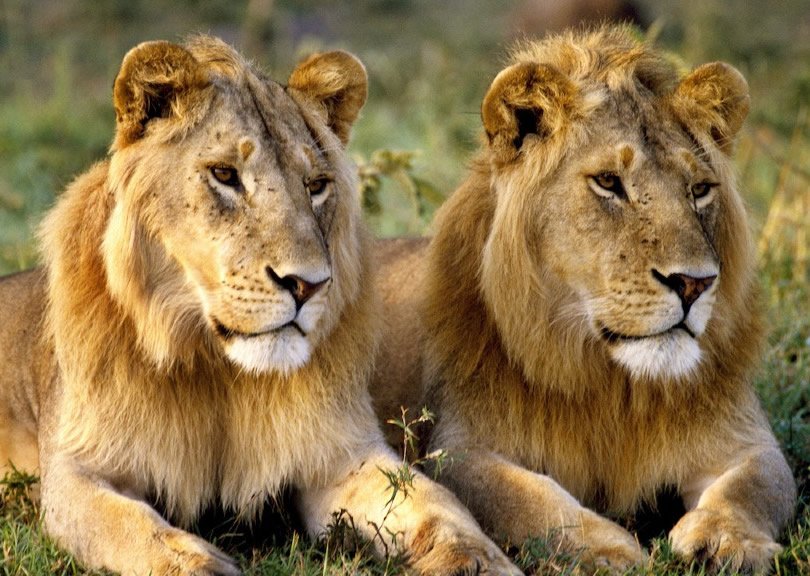
Fearsome predators and Africa’s largest cats, lions live predominantly in open grasslands and savannas, forming prides of 3 to 12 animals led by a dominant male. Juvenile males regularly form bachelor groups. Male and female lions
can be distinguished by the male’s formidable mane that ranges from blonde to black in color. Lions hunt collaboratively, with the females doing the majority of the work. Preying mostly on ungulates, they are capable of taking down zebras, wildebeest, African buffalo, and even giraffes. When hunting, they stalk their prey against the wind until they pounce on it. Most of their hunts happen at night, while they mainly sleep in the shadows during the day
Where to see them
Lions are regularly spotted in Kenya, Tanzania, Namibia, Zambia, Uganda, Botswana, and Rwanda. If you're on an overland plan to spend more time on the game viewing adventure during the day and night, where it's allowed, so that you can enjoy the Lion Watching experiences with 4wd Africa on an African Road trip.
Leopards
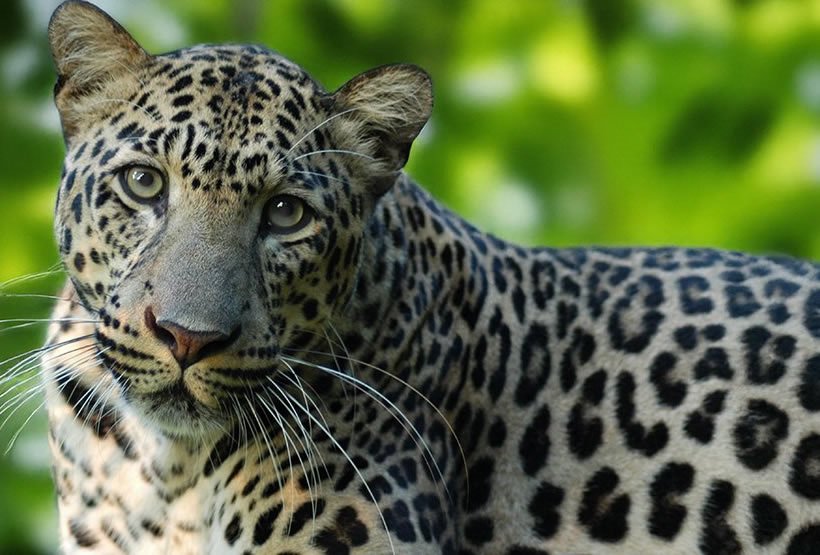
Leopards are powerful stealth predators, relying on their camouflage to get close to prey before ambushing it. They mostly focus on small- to medium-sized ungulates such as impalas and springboks, but also take down large birds. As leopards are formidable climbers, they are well-known to stash their kills on trees to protect them from hyenas or lions. The large cat’s golden-brown fur is spotted with black spots forming rosettes, unlike the cheetah’s, which does not have rosettes. Each leopard’s pattern is distinct, which helps to identify individuals. Leopards are solitary animals and most active at night. Albeit a rare occurrence, leopards are known to stalk and pounce on humans if the circumstances allow.
Where to see them
In theory, many African Countries have them, but sighting them is by chance in these National Parks. Many African National Parks have these leopards, and you can plan an overland road trip to Tanzania, Serengeti, Ngorongoro Crater, Masai Mara, Kidepo Valley National Park, and many more
Cheetahs
The fastest animal on earth, cheetahs are long-legged, slender cat relying on speed to take down their prey. Reaching top speeds of 112 km/h, cheetahs mostly hunt small- to medium-sized antelopes, warthogs, guinea fowl, and small mammals. They usually hunt alone, but sometimes groups of young males take down larger prey such as ostriches. They prefer open woodlands and savannas where they can unleash their power. The cheetah’s fur is brownish-beige with dark spots. They are slimmer and stand taller than a leopard.
Additionally, they have characteristic tear marks on their faces. Despite their speed, they are very vulnerable to lion and hyena attacks, especially after they make a kill. Cheetahs are most active at dawn and dusk and usually rest during the day.
Where to see them
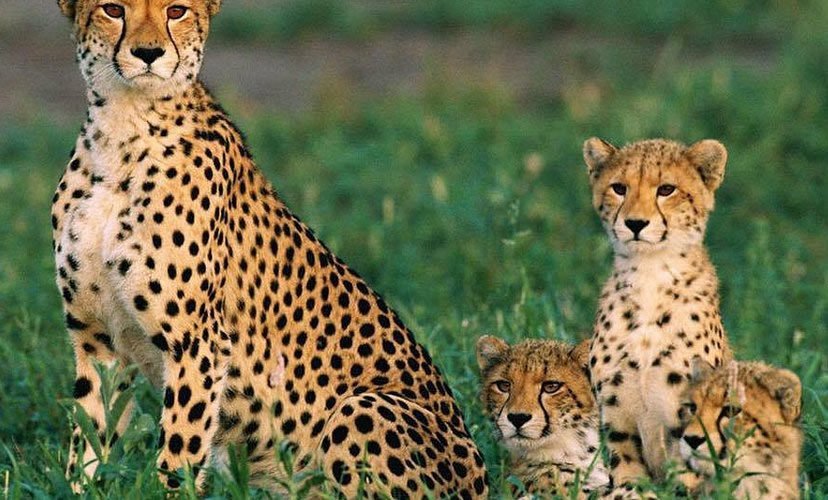
In theory, many African Countries have them, but sighting them is by chance in these National Parks. Many African National Parks have these leopards, and you can plan an overland road trip to Amboseli, Samburu Game Reserve, Serengeti , Ngorongoro Crater, Masai Mara, Kidepo Valley National Park, and many more
Wildebeest Migration
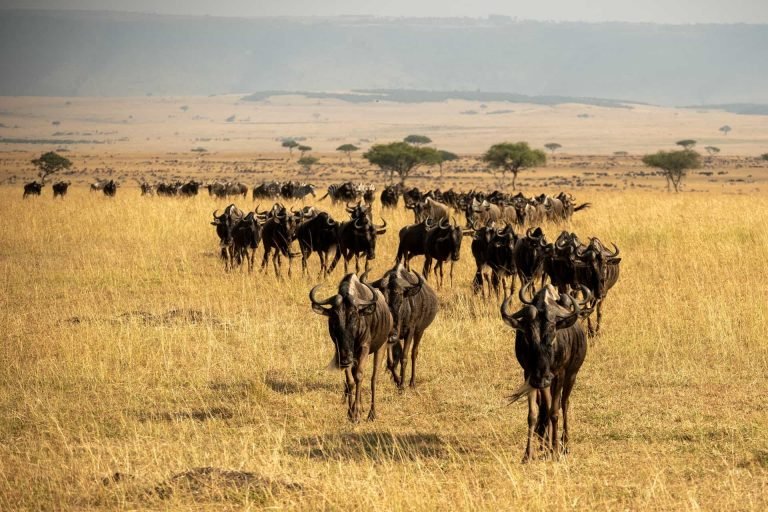
A well-known animal of the African savanna, the wildebeest is a cattle-like antelope. Very muscular in appearance, blue wildebeest are known as fast runners, reaching top speeds of 80 km/h. Wildebeest are gregarious, forming loose herds of 20 to 30 animals. They regularly mix with plains zebras. Only active during the day, blue wildebeest feed in the early morning and late afternoon. They primarily feed on short grass and are dependent on water, which is why they prefer well-watered areas. Although called blue wildebeest, their color is rather brown for males and beige-brown for females. Both males and females have horns. Wildebeest, and especially their calves, are frequently preyed on by predators. Wildebeests always move with the Zebras as they help one another to spot the enemy in time.
Where to see them
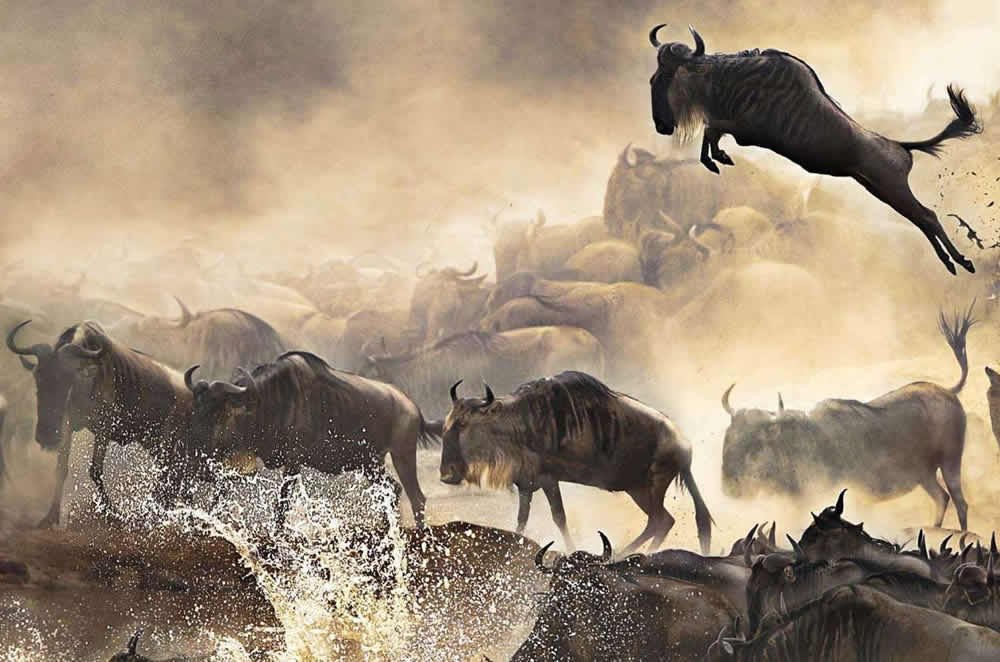
Plan the best Wildebeest migration and watching experiences in Serengeti Tanzania and Masai Mara Kenya on an overland adventure to east Africa.
African buffalo.
Congregating in large herds, African buffalo are dark-colored, cattle-like animals with imposing horns. The male’s curved horns often grow together at the base in what is called a boss. Buffalo are grazers feeding mostly on grass during the day. They need to drink each day and never stray far from water. African buffalo are the most dangerous animals in Namibia, as their behavior cannot be predicted, even by experienced safari guides. They are known to sometimes attack without provocation. Buffalo are also known to cooperate when attacked by lions, sometimes killing the predators. They are fond of wallowing in mud and often use the services of ox-peckers, which remove ticks from their fur
Where to see them
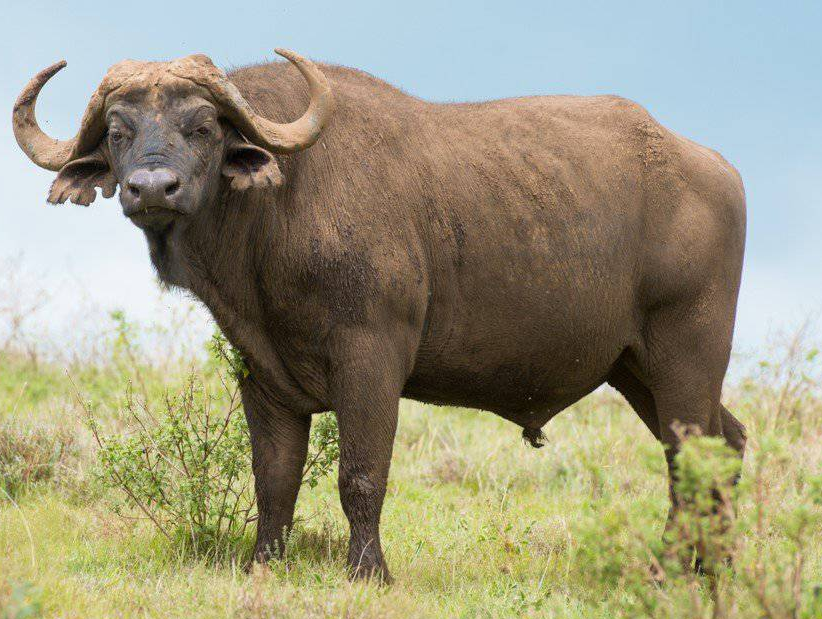
In theory, many African Countries have them, but sighting them is by chance in these National Parks. Many African National Parks have these leopards, and you can plan an overland road trip to Amboseli, Samburu Game Reserve, Serengeti , Ngorongoro Crater, Masai Mara, Kidepo Valley National Park, and many more
Black Rhinoceroses
Smaller and more lightweight than the white rhino, the black rhino is still a huge animal with a barrel-shaped body and two horns. When walking, it usually holds its head up higher than the white rhino. Other ways to differentiate them are by the black rhino’s pointed upper lip and the missing hump on its shoulder. Their
colors, however, are pretty similar, as the black rhino is equally gray. These animals are usually solitary, aside from calves that stay with their mothers. However, black rhinos can be seen congregating around waterholes to socialize. Males can sometimes be moody, charging
blindly to assert their dominance.
Where to see them
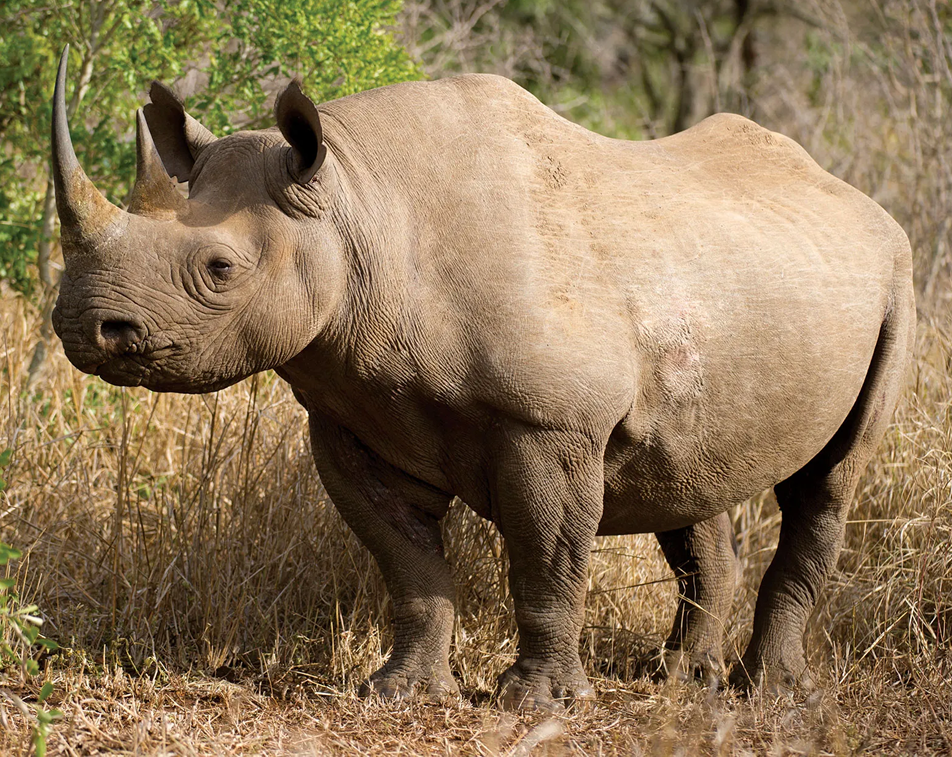
Black rhinos can mostly be found in Etosha National Park, Serengeti National Park, Masai Mara National Park, Samburu National Park, Ngorongoro Crater, Ruaha & Nyerere National Park.
White Rhinoceroses
The white rhinoceros is the largest of its kind and the second-largest land animal after the elephant. It is usually double the weight of a black rhino. The white rhino is tank-shaped, sporting a massive body, a huge head, a humped shoulder, and two horns, one longer than the other. Its modern English name is a misnomer, as the animal is not white, but gray. The name is most likely derived from the Dutch word wijd, meaning wide, a testament to its broad mouth, which is perfectly adapted for grazing. Other than the lonesome black rhino, white rhinos form small groups of females and young. Adult bulls usually mark their territories with large manure heaps
Where to see them
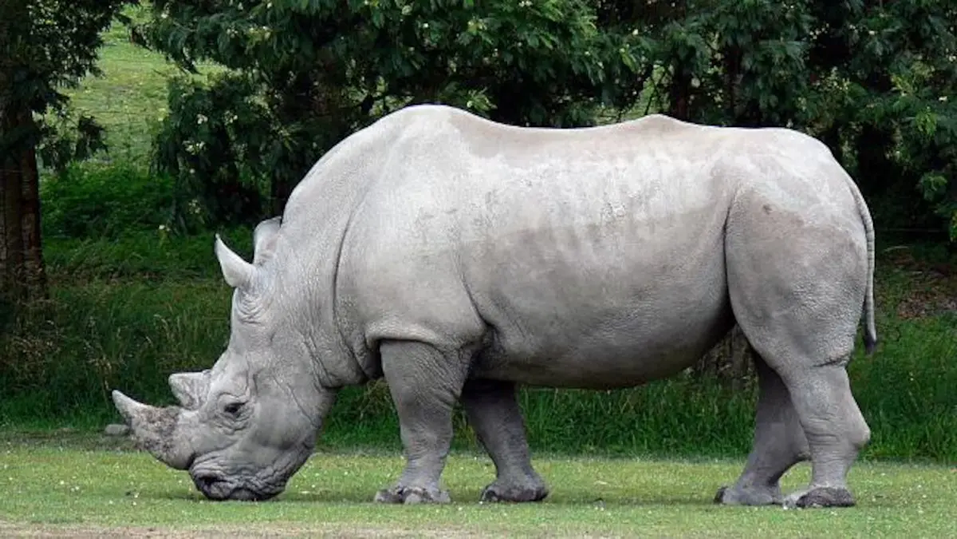
White rhinos can be seen during the road trip to Africa in any of these countries: Botswana, Kenya, Namibia, Rwanda, Uganda, South Africa, Zambia, Zimbabwe.