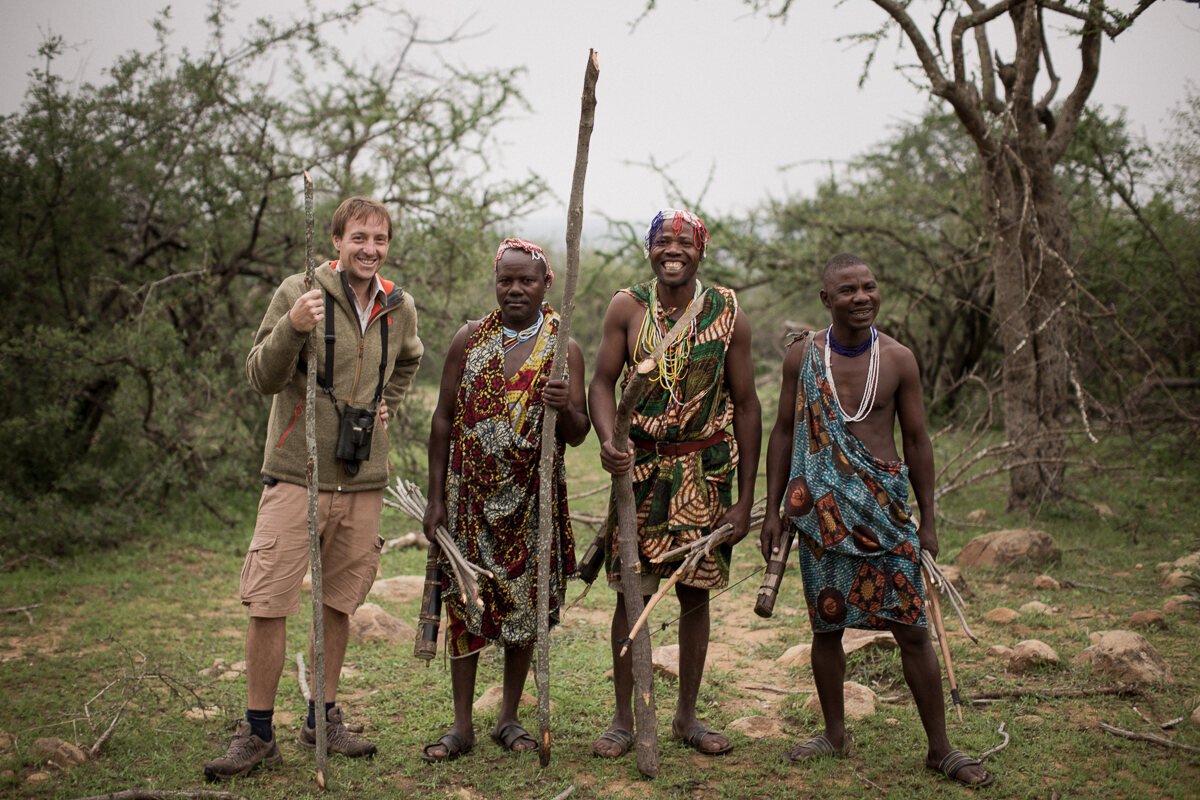
A visit to the Hadzabe is one of the most extraordinary cultural encounters in East Africa. Living around Lake Eyasi in northern Tanzania, the Hadzabe are among the last true hunter-gatherer peoples on earth, numbering only around 1,000 to 1,500, of whom a few hundred still live largely traditionally. Their click-based language is unrelated to any other on the planet, and genetic studies place them among the oldest continuous human lineages in existence.
The experience begins before dawn, joining the men as they set out to hunt with handmade bows and poison-tipped arrows. You walk with them through dry acacia scrub as they track birds, small game and baboons, reading signs in the sand and moving with a quietness that takes a lifetime to learn. Later, the women demonstrate foraging for tubers, berries and baobab fruit, and there is often honey gathering, fire-making by hand-drill, and time around the camp.
Most visits combine the Hadzabe with the neighbouring Datoga, a pastoralist blacksmith community who forge the arrowheads the Hadzabe hunt with, offering a window into how the two groups trade and coexist.
Visits usually take a morning, and Lake Eyasi sits within easy reach of Karatu and the Ngorongoro Highlands, making it a natural addition en route to or from the Serengeti.
Worth knowing: this is a genuinely sensitive form of tourism, and experiences vary widely depending on the operator. The most rewarding visits are arranged through guides who work with the community on fair terms rather than staging performances. Ask questions before booking, and follow your guide’s lead on photography.
Mount Bisoke is the most popular volcano climb in Rwanda’s Volcanoes National Park, and the payoff is one of the most striking sights in the Virungas, a perfectly formed crater lake sitting at the summit at 3,711 metres.
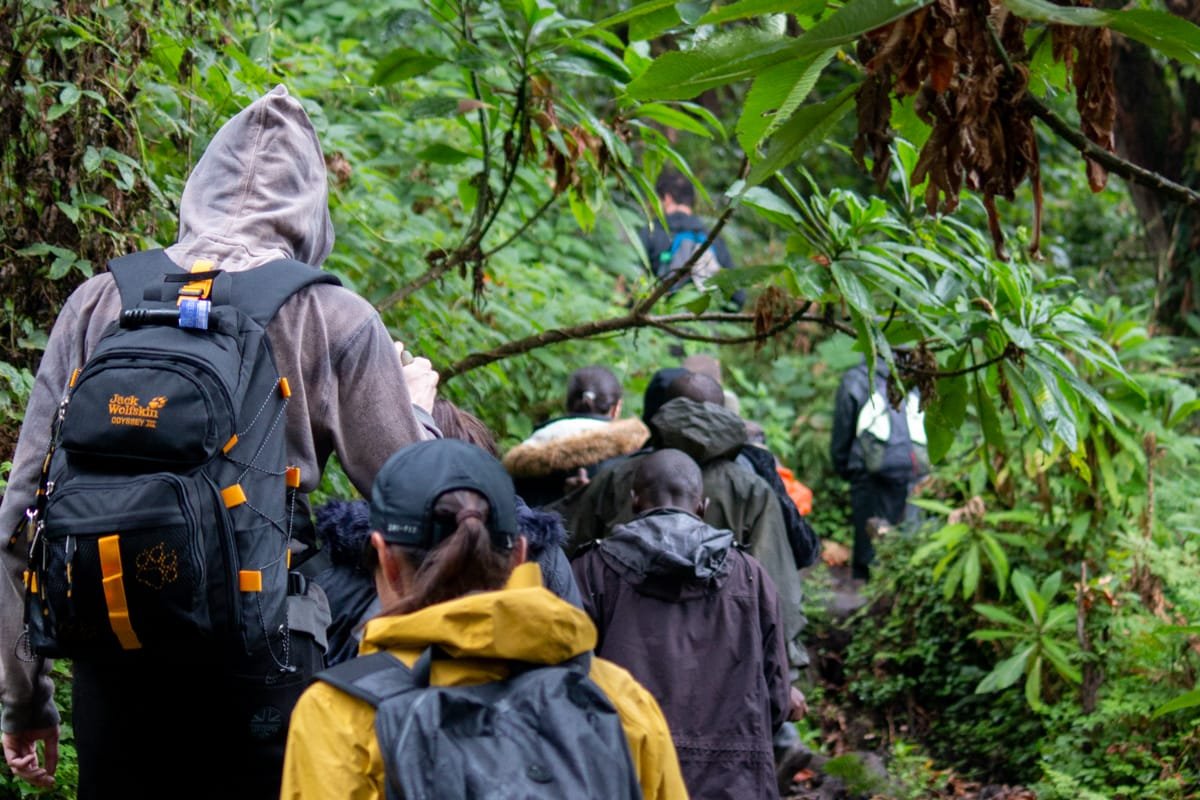
The hike begins at Kinigi park headquarters with an early briefing before the drive to the trailhead. From there, the climb takes roughly three to four hours up and two to three hours down, for a total of around six hours. The trail is steep and relentlessly muddy, cutting through bamboo, hagenia forest, and giant lobelia country, and the volcanic soil quickly turns slippery. Most hikers describe it as challenging rather than technical; no climbing skill is needed, but good fitness helps.
Along the way, there is a genuine chance of encountering wildlife: golden monkeys in the bamboo, buffalo, forest elephant signs, and occasionally even gorillas crossing the trail, since this is their habitat too. Rangers accompany every group.
At the summit, the crater lake appears suddenly, ringed by steep green walls, with views stretching across to Karisimbi and into the Democratic Republic of Congo when the cloud lifts. It is often misty and cold at the top, so the timing of your arrival is a matter of luck.
Permits cost around $75, and porters are available at the trailhead for a small fee, well worth hiring both for the assistance and for the local employment it provides.
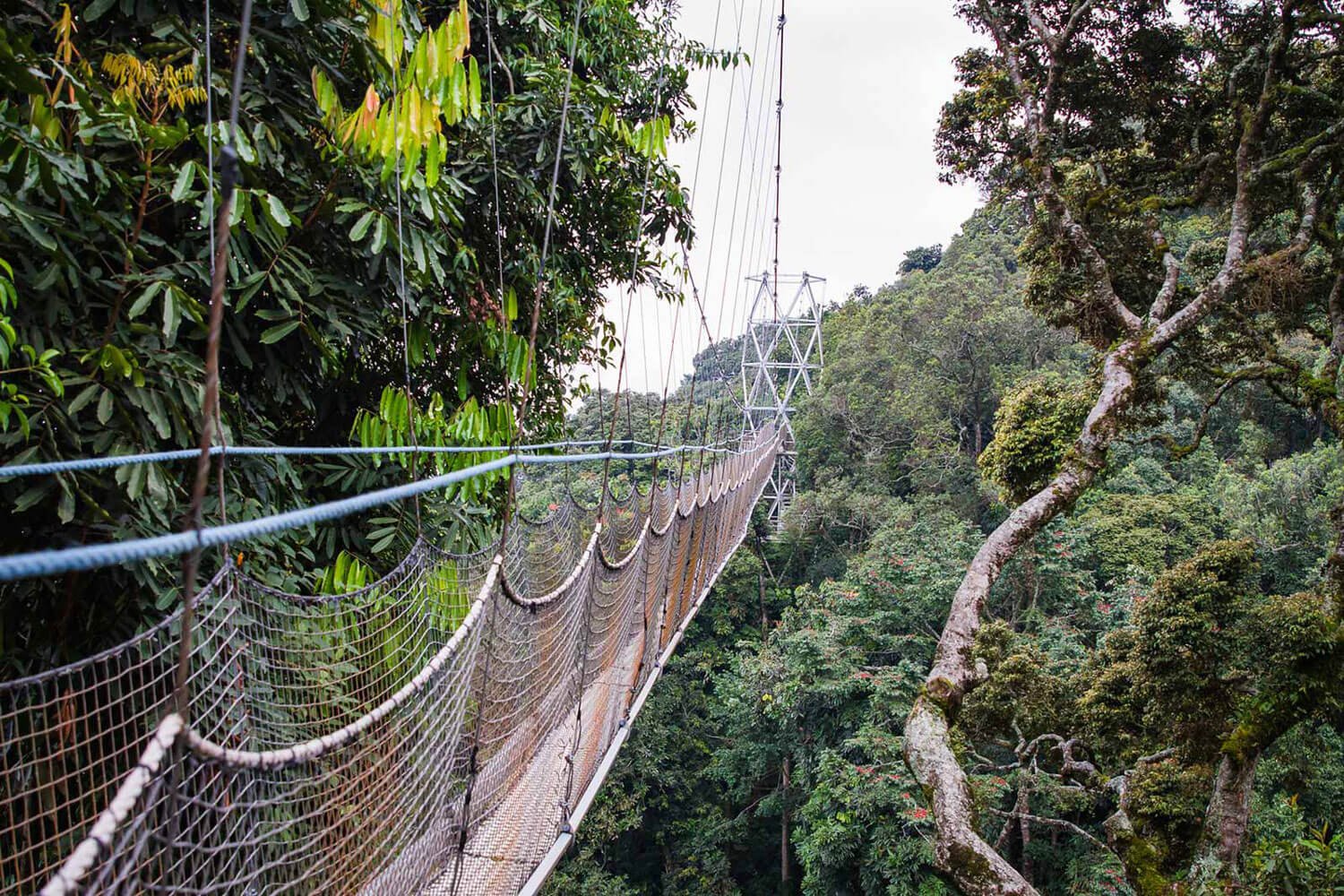
A canopy walk lifts you into the layer of the rainforest that most visitors only ever look up at. Suspended bridges strung between forest giants let you move through the treetops, level with the birds, monkeys, orchids, and epiphytes that live where the light is, and the perspective is completely different from the forest floor below.
Nyungwe Forest in Rwanda has the most famous, East Africa’s first, a 160-metre suspension bridge hanging 50 to 70 metres above a steep ravine, reached via the Igishigishigi Trail. It is genuinely dramatic, swaying gently with each step, with the forest canopy stretching unbroken in every direction. The full circuit takes around two hours and is often combined with chimpanzee tracking or a colobus monkey walk.
In Uganda, Mabira Forest between Kampala and Jinja offers a canopy zipline and treetop walkway through one of the country’s largest surviving rainforests, an easy and popular stop on the road east. Kakamega Forest in Kenya offers elevated forest viewing platforms, and Ngong House and various private reserves have added treetop structures.
Walks are guided, the structures are professionally engineered and inspected, and harnesses are provided where required. That said, the height and movement can be unsettling for anyone uneasy with heights, and there is usually a lower ground-level trail as an alternative.
Early morning offers the best birdlife and the most primate activity, and the light filtering through the canopy is at its most beautiful.
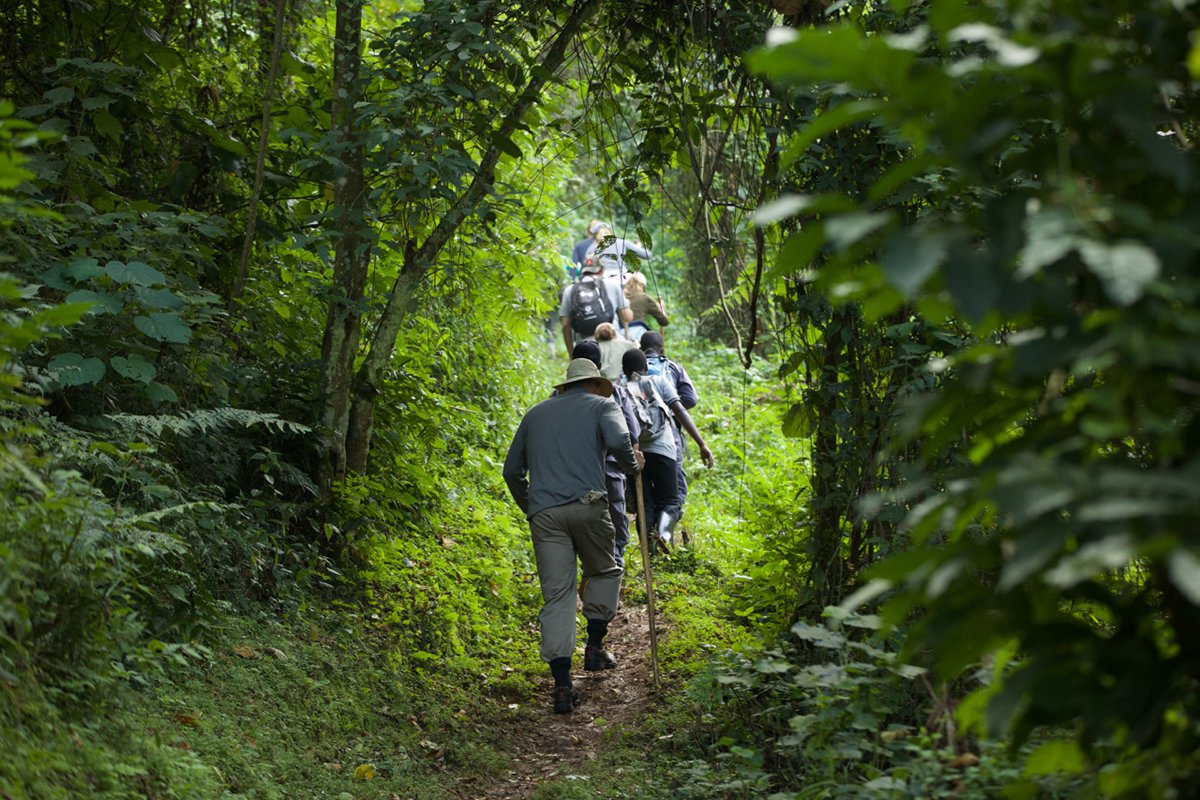
A nature walk strips away the vehicle and puts you directly into the environment, and it changes the experience entirely. On foot, the safari slows down. You notice tracks in the dust, birdsong overhead, medicinal plants, butterflies, insects, dung and the small details that a game drive passes at speed.
Walks are led by an armed ranger or specialist guide, who reads the bush and explains how everything connects. In forest parks like Kibale, Bwindi, Nyungwe and Kakamega, walks follow shaded trails through dense canopy, revealing primates, birds and towering hardwoods. In savanna parks such as Lake Mburo, Arusha, Waterberg and Nyerere, walking safaris bring you to eye level with giraffe, zebra and antelope, and the absence of large predators in some parks makes this possible. Hell’s Gate in Kenya is unusual in allowing visitors to walk and cycle freely among the wildlife.
Walks typically last one to three hours and range from gentle strolls to more demanding forest hikes. Some destinations offer specialist versions: swamp walks at Bigodi for primates and birds, waterfall trails at Sipi and Gishwati, and night walks with torches to find nocturnal species like bushbabies, chameleons and civets.
It is the best activity for travellers who want to feel the landscape rather than simply look at it, and it works well on arrival days or as an afternoon complement to a morning drive.
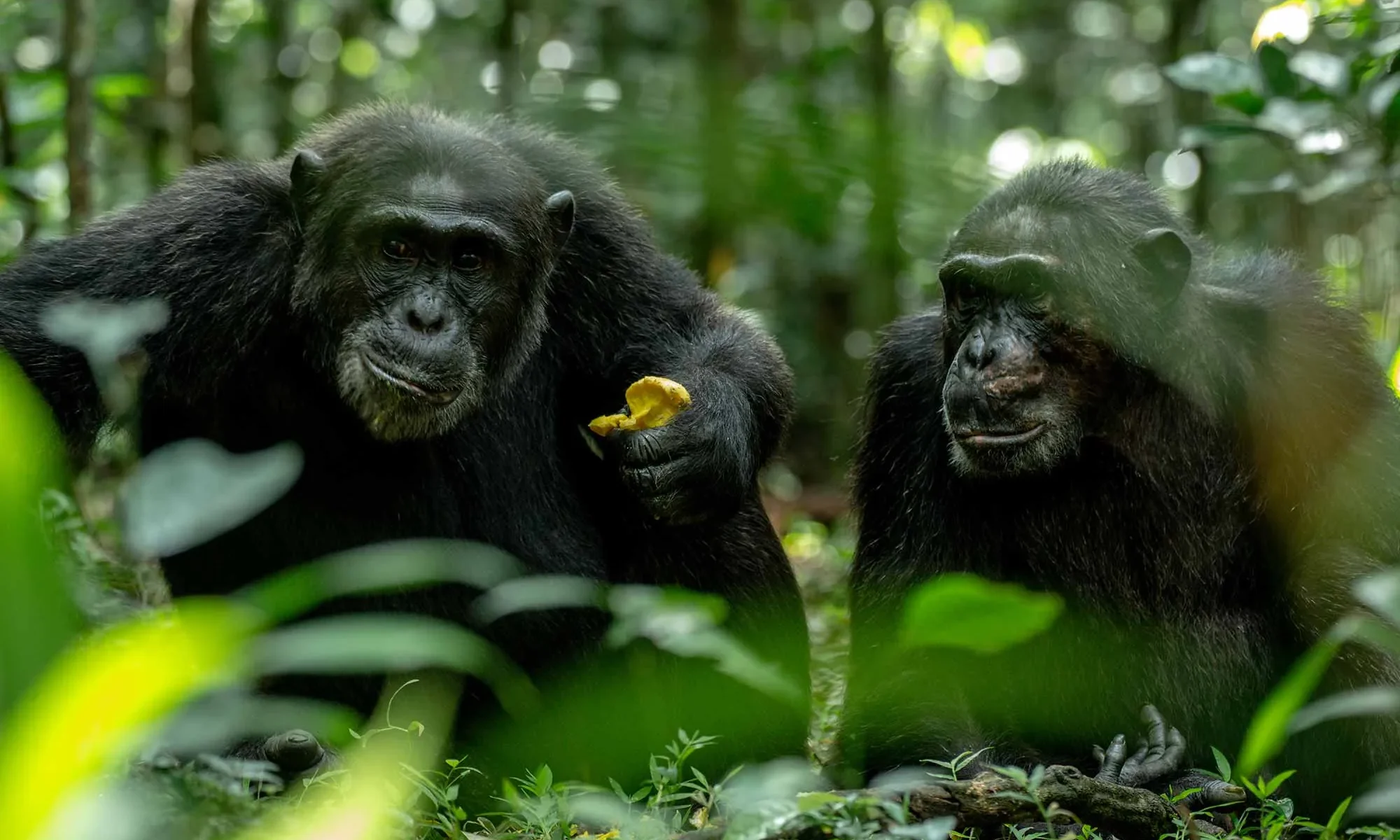
Chimpanzees share around 98 percent of our DNA, and time spent in their company is unmistakably different from any other wildlife encounter. Where gorillas are calm and deliberate, chimps are loud, fast and socially complex, and a tracking day is filled with drumming on buttress roots, pant-hoots echoing through the canopy, and troops moving overhead in a blur of limbs.
The experience begins with an early briefing before setting off into the forest with a guide and trackers who have been monitoring the community since dawn. Treks typically last two to five hours, and once the group is found, visitors spend one hour observing them feeding, grooming, squabbling and moving through the trees. Because chimps travel quickly and spend much of their time high in the canopy, sightings can be more fleeting than with gorillas, and patience pays off.
Kibale Forest in Uganda is the finest destination in Africa for chimps, with around 1,500 individuals and success rates above 90 percent, and it also offers a full-day habituation experience for those wanting more time. Nyungwe Forest in Rwanda, Kyambura Gorge in Queen Elizabeth, Budongo Forest in Murchison Falls, and Gishwati-Mukura all offer tracking, while Mahale and Gombe on Lake Tanganyika deliver the wildest, most remote encounters of all.
Permits vary considerably by destination, roughly $250 in Kibale and around $100 to $150 in Rwanda. Tracking runs year-round, though drier months mean firmer trails, and sightings are often easier in the wet season when fruit is abundant closer to the trails.
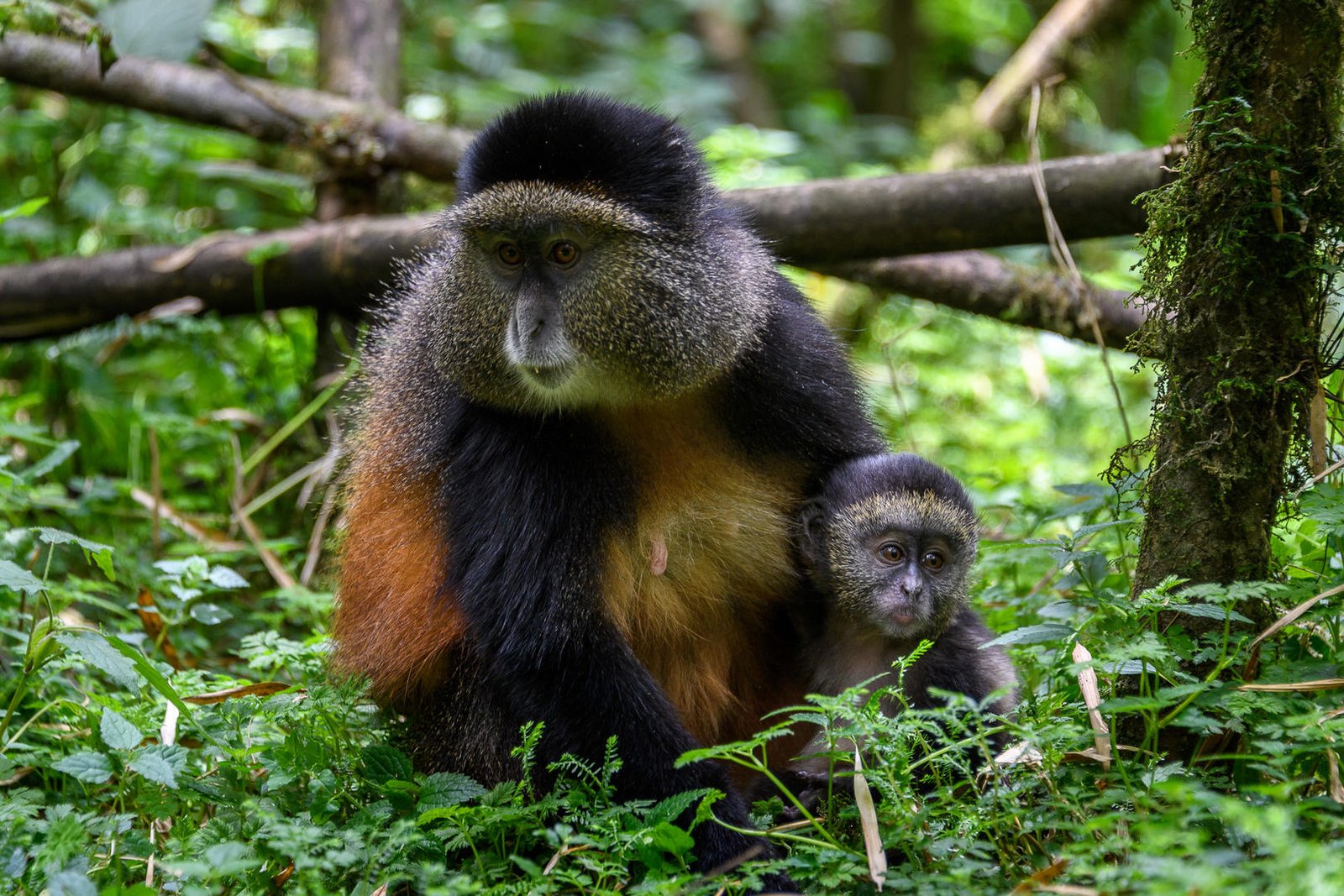
Golden monkeys are one of Africa’s great overlooked wildlife encounters, and a perfect companion experience to gorilla trekking. Found only in the bamboo forests of the Virunga Mountains, this endangered subspecies is unmistakable, with a vivid golden-orange back and flanks set against a black face, limbs and tail.
Where gorillas are contemplative and still, golden monkeys are the opposite: fast, noisy, and endlessly energetic. Troops can number well over a hundred, and tracking them means following the sound of snapping bamboo and rustling canopy until you find yourself surrounded by dozens of them leaping overhead, feeding on bamboo shoots, fruit and leaves, largely unbothered by your presence.
The trek is considerably easier and shorter than gorilla trekking, typically two to four hours in total, on gentler terrain at a lower altitude, making it well suited to families and those with more modest fitness. As with gorillas, visitors spend one hour with the habituated troop once found.
Tracking is available in Mgahinga Gorilla National Park in Uganda, where permits cost around $100, and in Volcanoes National Park in Rwanda, where they are also around $100. Both parks maintain habituated troops. In Rwanda, a golden monkey habituation experience is also offered, allowing extended time with researchers.
Photography can be challenging given how quickly the monkeys move and how dim the bamboo forest can be, so a fast lens and patience help. It is a lively, joyful, surprisingly affordable add-on to any Virunga itinerary.
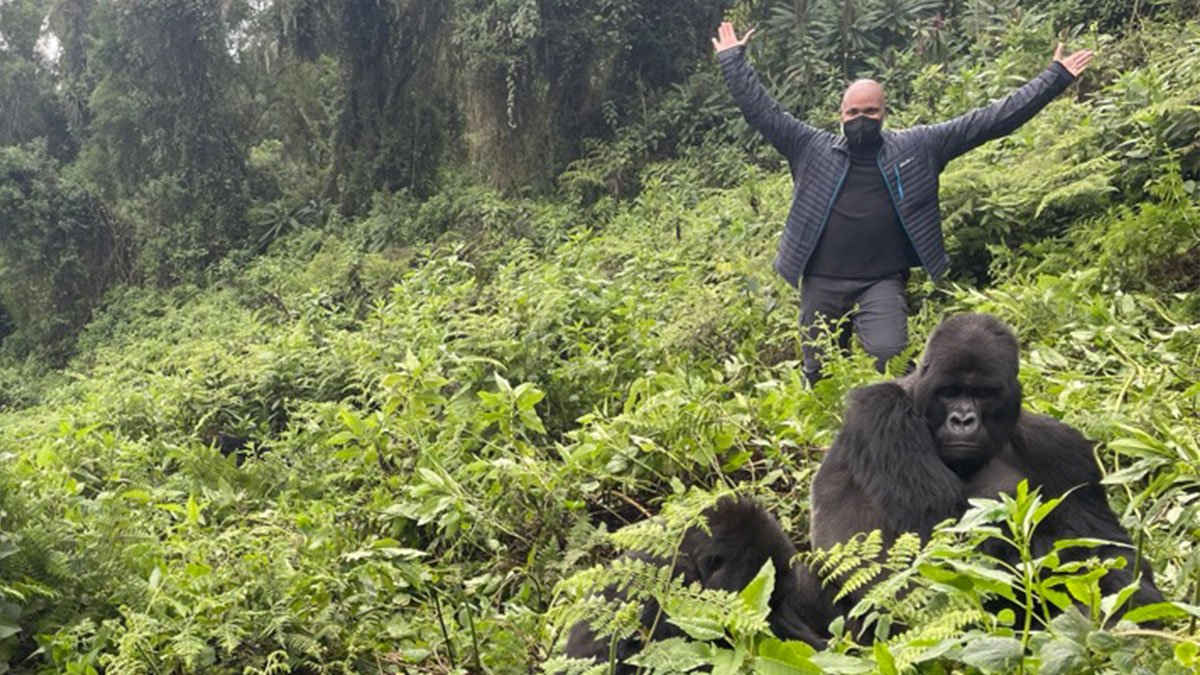
For many travellers, this is the reason they came to Africa. Fewer than 1,100 mountain gorillas remain on earth, living only in the forests of Uganda, Rwanda and the Democratic Republic of Congo, and standing among them is an experience that consistently ranks as one of the most profound in all of wildlife travel.
The day begins early with a briefing at the park headquarters, where visitors are divided into small groups of eight and assigned a gorilla family. Trackers set out at dawn to locate the group, radioing their position back to the guides. From there, you follow them into the forest, climbing through dense undergrowth, steep slopes, and thick mud on a hike that can last anywhere from one to six hours depending on where the gorillas have moved.
Then, suddenly, they are there. A silverback resting against a trunk, mothers with infants clinging to their chests, juveniles tumbling through the vegetation. You are permitted one hour in their presence, kept at a respectful distance, and it passes in what feels like minutes. Most people describe it as unexpectedly emotional rather than simply exciting.
Uganda’s Bwindi Impenetrable Forest shelters almost half the world’s population, with permits at $800, while Mgahinga offers a quieter alternative. Rwanda’s Volcanoes National Park is more accessible and more polished, with permits at $1,500. Success rates in both exceed 95 percent.
Trekking is possible year-round, though the drier months of June to September and December to February offer firmer trails. Reasonable fitness is required, but porters are available at every trailhead, and hiring one both eases the climb and supports the local community.
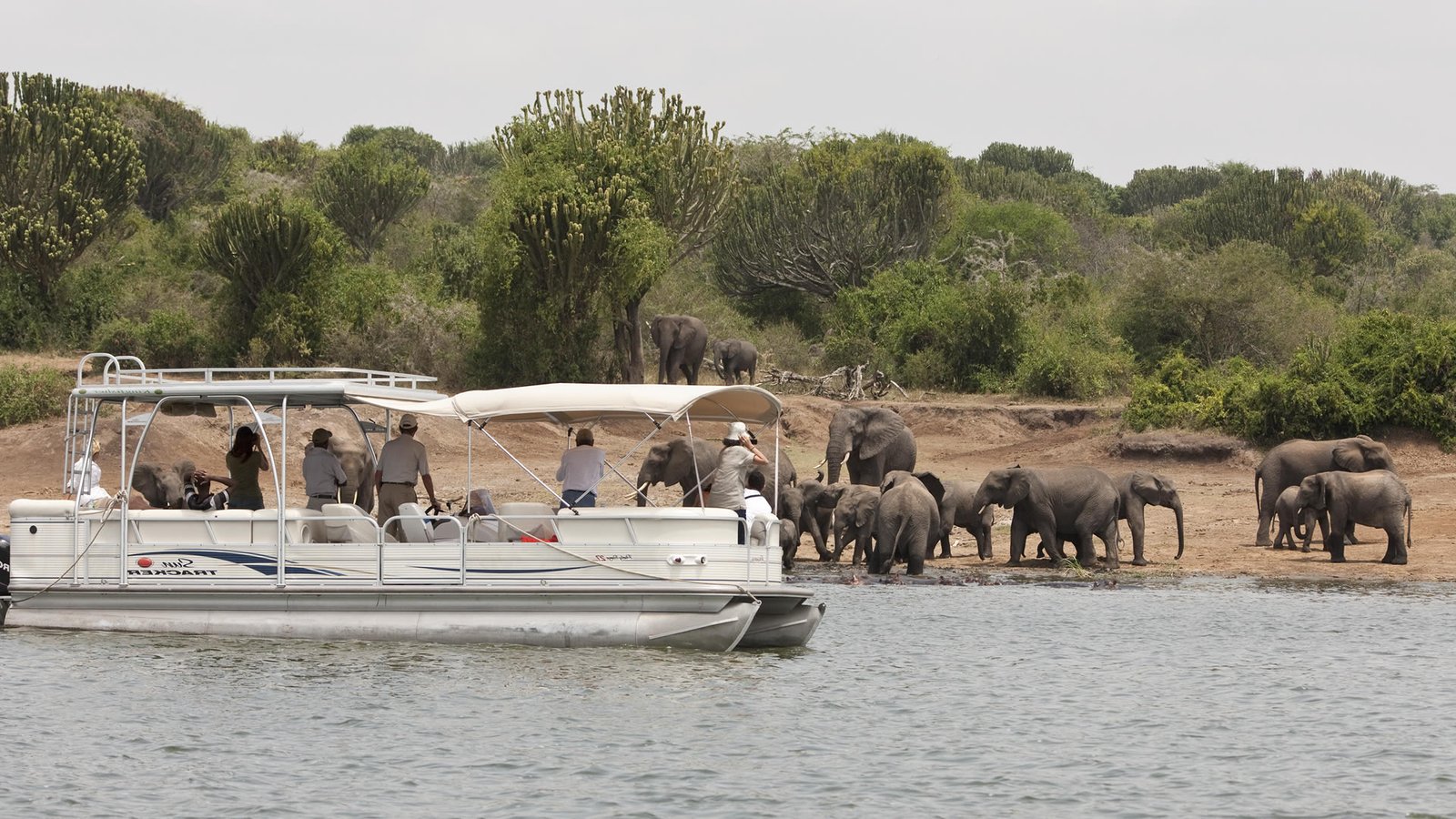
A boat cruise offers a completely different perspective on the safari, one taken at water level, where the wildlife comes to you. Rather than tracking animals across the plains, you drift quietly along a river or lakeshore while hippos surface metres from the boat, crocodiles bask on the banks, elephants come down to drink and kingfishers dart between the reeds.
The Kazinga Channel in Queen Elizabeth National Park is perhaps the most famous, a natural waterway linking Lake Edward and Lake George, lined with one of the highest concentrations of hippo in the world alongside buffalo herds and extraordinary birdlife. In Murchison Falls, the cruise up the Victoria Nile to the base of the falls is a highlight of any Uganda itinerary, ending beneath the thunder of the Nile forcing itself through a seven-metre gorge, with a separate downstream cruise to the delta offering the best chance of spotting a shoebill.
Elsewhere, Lake Ihema in Akagera delivers hippos, crocodiles and waterbirds against rolling savannah, the Rufiji River in Nyerere is one of the few places in Tanzania offering boat safaris, and Lake Mburo, Lake Kivu, Lake Bunyonyi and Lake Victoria all offer gentler, scenic cruises.
Cruises typically last two to three hours and are usually offered in the morning or, best of all, in the late afternoon, when the light turns golden and animals gather at the water’s edge. Boats range from large shared launches to small private vessels, and the pace is relaxed and easy, ideal for travellers who want wildlife without the bumpy roads.
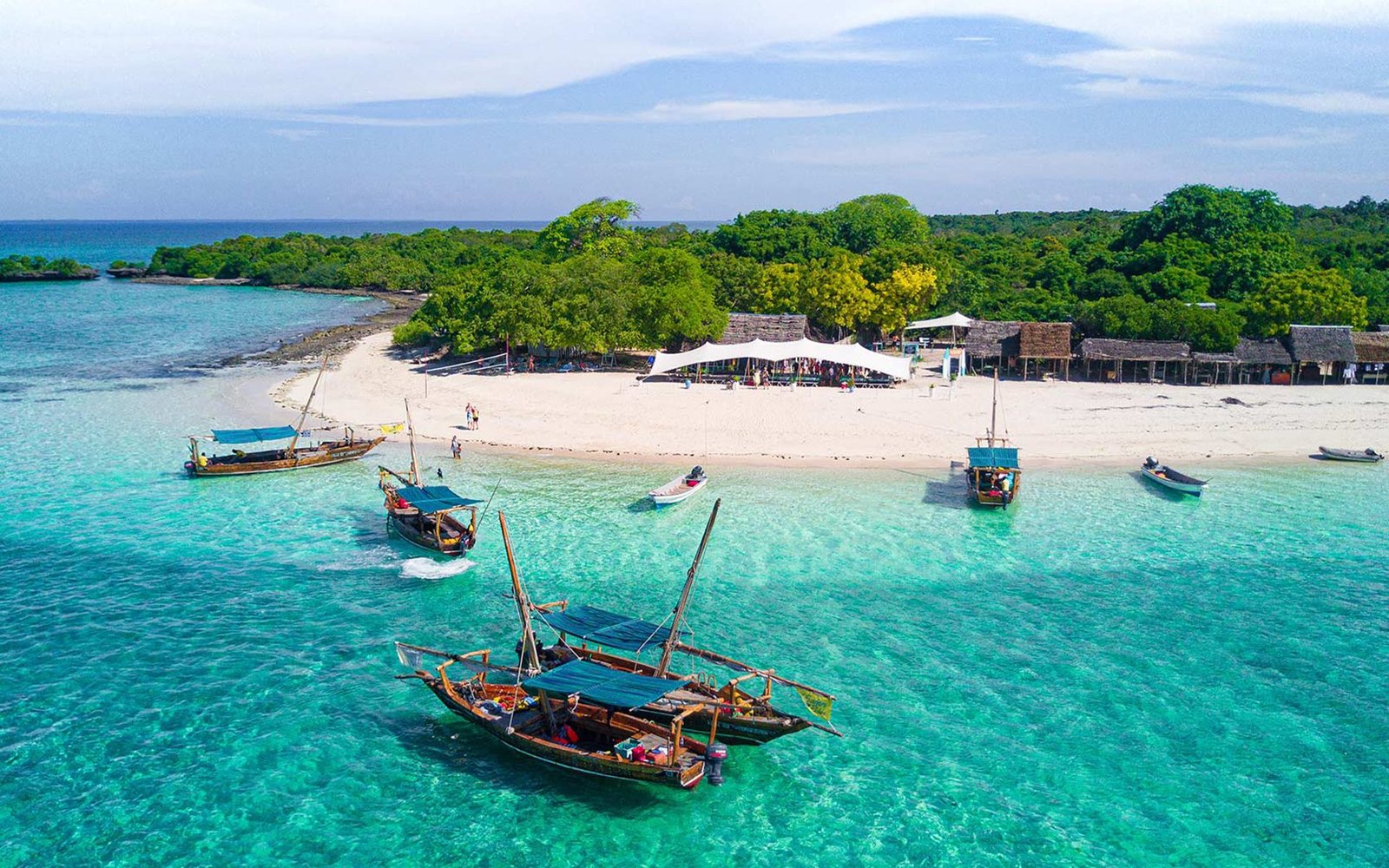
After days of dust, early starts and long game drives, the Indian Ocean is the reward. Both Tanzania and Kenya offer world-class coastlines within a short flight of the safari circuits, making the classic “bush and beach” combination one of the most satisfying ways to end a trip.
In Tanzania, Zanzibar is the headline. Powder-white sand, turquoise shallows, dhows drifting on the horizon and the historic maze of Stone Town make it a destination in its own right. The northern beaches around Nungwi and Kendwa offer swimmable water at all tides and lively sunset bars, while the east coast at Paje, Jambiani and Matemwe is quieter, with dramatic tidal flats and kitesurfing. Offshore, Mnemba Atoll delivers superb snorkelling and diving. Further south, Mafia Island is the place for whale sharks and untouched reefs, and Pemba for serious divers seeking solitude.
In Kenya, the coast around Diani Beach is consistently rated among Africa’s finest, a long ribbon of white sand backed by palms with excellent resorts and water sports. Watamu and Malindi offer marine national parks, turtle nesting beaches and superb snorkelling, while Lamu, a UNESCO World Heritage Site, is a world apart, all coral-stone architecture, dhow sailing and donkey-lined lanes with no cars at all.
Activities range from doing absolutely nothing to snorkelling, diving, kitesurfing, deep-sea fishing, dolphin trips, dhow sunset cruises and spice tours. Best conditions run from June to October and December to March, while the long rains from April to May bring rougher seas and many properties close or discount heavily.
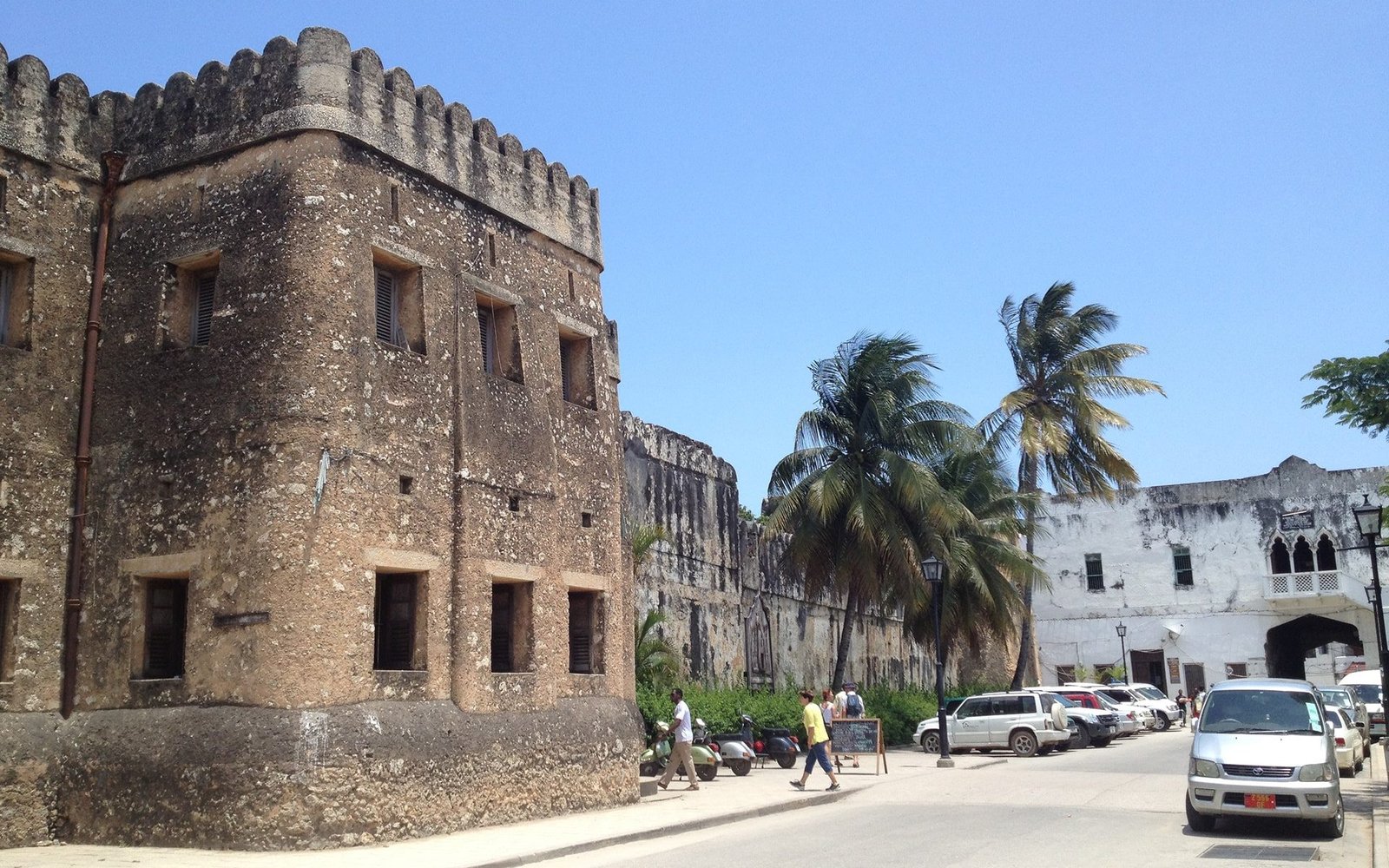
A city tour is the perfect bookend to a safari, a chance to step out of the bush and into the rhythm of everyday African life before or after the wilderness. Most itineraries begin or end in a capital, and rather than passing through it, a guided half- or full-day tour turns that transit time into something memorable.
Each city offers a different story. Kigali is famously clean, calm and green, and a visit to the Genocide Memorial is a moving, essential experience, balanced by craft cooperatives, coffee shops and hilltop views. Kampala is loud, warm and endlessly energetic, from the Gaddafi National Mosque and the Kasubi Tombs to the chaos of Owino Market and the roadside food stalls. Nairobi uniquely pairs a modern skyline with a national park on its doorstep, alongside the Giraffe Centre and the David Sheldrick elephant orphanage. Stone Town in Zanzibar is a labyrinth of carved doors, spice markets and Swahili history. Dar es Salaam offers coastal bustle, fish markets and museums.
Tours are typically led by a local guide by vehicle, on foot, or by boda-boda, and can be tailored around history, food, markets, art, or architecture. They are ideal for arrival and departure days when time is limited, and they add human context to a trip otherwise spent among wildlife.