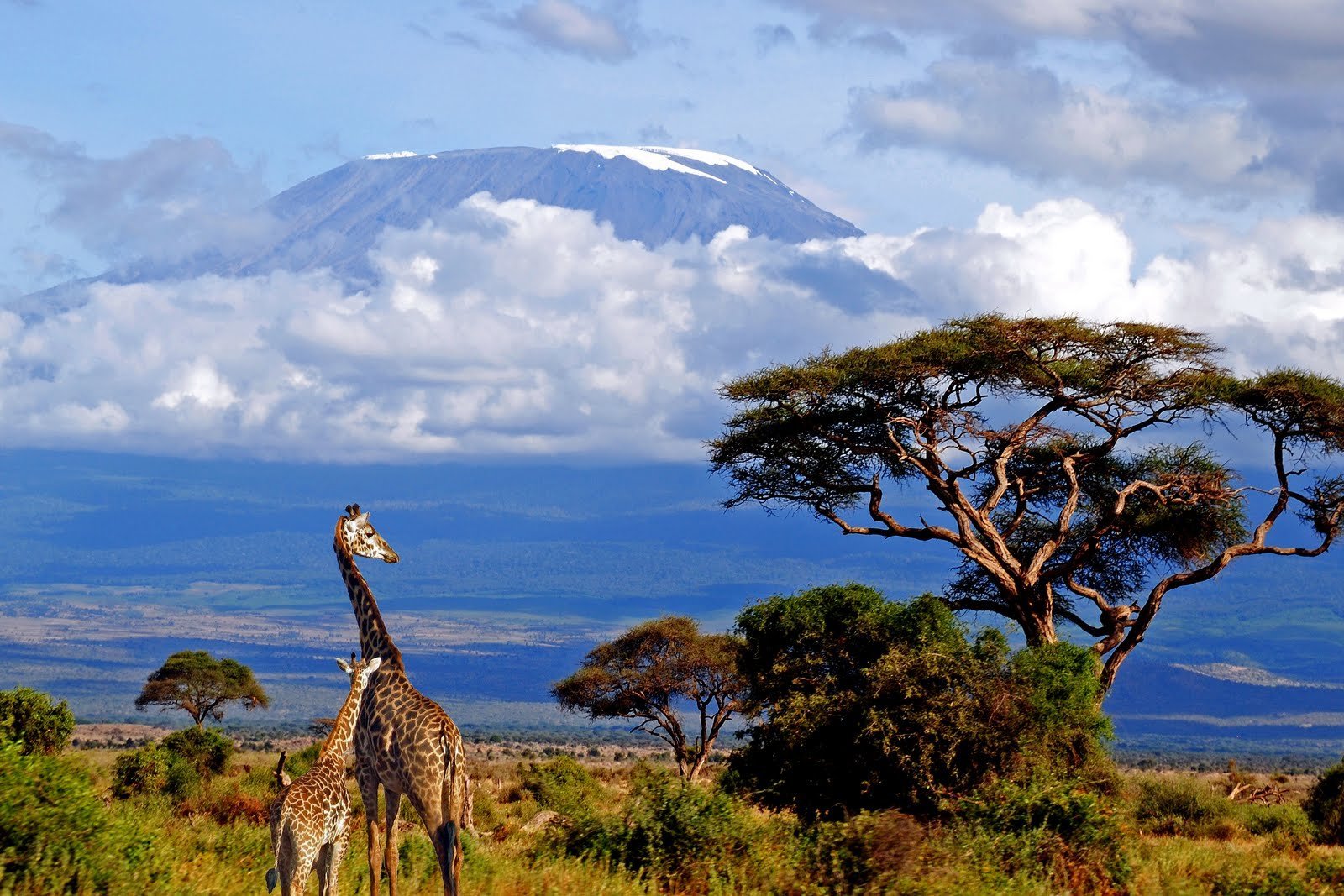
Mount Kilimanjaro National Park

This national park is found 190 kilometers south of the equator, about 300 miles away south. The national park is located near the town of Moshi/region and around the whole of Kilimanjaro mountain, surrounded by the montane forest at an altitude of about 1820 meters above sea level. Kilimanjaro National Park covers an area of 1688km2 and 652 square miles around the park and was declared a UNESCO World Heritage Site in late. This national park is among the most visited national parks in Tanzania, administered by the Tanzania National Authority. By 2013, this national park was said to have garnered over 51 million, the biggest second most in Tanzania, garnered revenue recorded 58460 tourists between 2012-2013, of whom 54584 were foreigners, and the rest were natives of Tanzania who had hiked the mountain through the Tanzania National Park Authority. This national park is widely known as the one offering the beauty of Africa and the highest point in Africa, known as Mountain Kilimanjaro.

Background of Mount Kilimanjaro National Park

The national park was declared a game reserve by the German colonial government in the early 20th century, and by 1921, it was designated a forest reserve. In 1921, the mountain above the tree line of 2700 meters(8900ft) classified as a national park. The park was declared a World Heritage Site by the United Nations Educational, Scientific and Cultural Organization in 1987. The national park was then expanded to include the entire montane forest, which had been part of the Kilimanjaro Forest Reserve. Flora. This national park has a variety of wildlife, including animals like the buffaloes of the Cape found in the Montane forest and occasionally in the moorland and grassland. In the same place, there exist blue monkeys, eastern and the black, or white colobuses, bush babies and leopards also exist in this place. Elephants can be found between the Namwai and Tarakia rivers and sometimes occur at higher elevations. Above the timberline, there exist the Kilimanjaro tree hyrax, the grey duiker, and rodents are frequently seen.  The bushbucks and the red duiker appear above the timberline.

Things to do in Mount Kilimanjaro National Park

Visiting the Chala Crater

At the edge of the mountain Kilimanjaro, there exists the Chala Crater Lake inside the high crater rim as one of the largest lakes found on this mountain. The Chala Crater lake covers 1.6 square miles as a point for viewing the fascinating scene of the national park with colors ranging from turquoise to emerald green depending on the time and the weather of that time. Camping is also supported in this place using tents around the swamp.

Hiking to the Uhuru peak

This activity is enjoyed by everyone who comes to this national park, and hiking to the peak is not as easy as you may expect, but it’s not a war. Some rests are taken during the journey. The routes are given, and then it’s the visitor’s choice to choose which trail to take. The hiking routes are six, though with the same destination, including the Machame route, Rongai route, Shira Route, Lemosho Route, and Marangu route, and getting to the top of Uhuru may take 7-8 days depending on the fitness and speed of the visitor. There are many different ways to come to the Mountain Kilimanjaro National Park, and for those using a plane, there is Kilimanjaro International Airport, which is located near the towns of Moshi and Arusha, where the tourism starts when seeing the mountain Kilimanjaro and the National Park at once. From Arusha or Moshi, you can drive to the main Gate of Kilimanjaro and then begin the hike

Primate trekking.

These are also key activities around this national park because it has a variety of primate species like Baboons, Blue Monkeys, Black-faced Monkey, and many others seen at the park. They are seen swinging on the trees, playing, and snatching foodstuffs from the visitor bags. The primate trekking is done in two sections of the day, that’s during the morning and the evening trek, and the action is guided by game rangers and guides who help to spot these primates.

Animal viewing

This national park has over 30 different animal species, and it is a fascinating national park in Tanzania. The national park inhabits both small and big mammal species within the park of which include, including forest Elephants, Hyenas, Bushbucks, Bush babies, dik-dik, and many others within the park. The animal viewing can only be done in two sessions every day, and with the help of the game rangers and the guides, if needed, just to help spot these animals for the visitors. There is a high chance of viewing the leopard, hyenas, baboons, buffalo, mongoose, and many other animals.

Bird watching.

This national park is recorded to have over 750 different bird species, and coming to this national park, you will be welcomed by the songs of the birds around the park, and this makes it among the top bird viewer destination in the country. As the bird watching around the park is done, visitors also hike around the park. Kilimanjaro National Park is home to the rarest bird that can’t be seen in any national park or any place around the world. Among the most cited birds are Turacos with more subspecies, including Hartlaub’s Turaco, Schlegel’s Turaco, Violet-crested Turaco, Rose Turaco and many others. Other bird species around the park include Narina, Trogon, Silvery-Cheeked Hornbill, Trumpeter Hornbill, and over 30 species of Cuckoos like Emerald Cuckoo, Klass Cuckoo, Lark-Heeled Cuckoo, the white-brown Coucal, and many others, Kingfishers like African pygmy kingfisher, Malachite Kingfisher, and the Bee eaters, though there are many other birds recorded to be in this national park. The bird watching until the highest destination is not done in one day, as birders camp along the way, then continue as they reach the last destination

Accommodation

Accommodation at the park is divided into three categories: mid-range accommodation, luxury accommodation, and budget accommodation. The mid-range accommodation facilities include, Babylon lodge at the foothills with all types of foods though prepared on order and well furnished rooms, Snow cottages that is located at Naleimoru east north east of Mountain Kilimanjaro with self-contained rooms and can accommodate up to 3 guests with a restaurant that offers buffets and a fireplace and a variety of wines and whisks, Amans Hotel with meeting cottages, dining table dinners, and others in many other accommodation facilities. Some of the luxury accommodation facilities include Kilembeyo Mountain lodge situated at the slope of Kilimanjaro mountain, about 1134 meters above sea level. It’s a perfect base for mountain trekkers and safari makers with all categories of food locally prepared, and the internal food plus the big bar of drinks. Among the budget accommodation facilities are Kilimanjaro Eco Lodge, with all kinds OF foods and well organized located Usa river Off Momela Road, Arusha. And coming here, you will not regret it.
Lake Manyara National Park

Lake Manyara National Park is found in northern Tanzania, close to Tarangire National Park. Lake Manyara has an area of 130square miles(325km2) offering a great stopover when connecting to Serengeti National Park for the Big Five watching and the Ngorongoro Crater in Tanzania. Never miss self-driving in the northern Tanzania parks while on an adventure in Tanzania.

It’s called Lake Manyara National Park because of Lake Manyara that’s is found within the park which is offering great fishing grounds for the local community and others.  Lake Manyara National Park was formed by the depression of the rift valley at an altitude of 3150 feet above sea level. This lake is not deep at all because even in the rainy season, the lake still seats by 3.5meters deep animals can still move around the water.

Book your Car Rental to explore the forested Lake Manyara National Park on a self-drive holiday, with recommended time being the dry months, as game drives and birding become hard during the rainy season. Don’t miss seeing  fig and mahogany trees, which are habitats for the tree-climbing lions, which are also popular in Queen Elizabeth National Park

Its administered by the Tanzania National Authority and it recorded over 350 bird species around the national park and many have been observed around the park

Genesis of the park

Before becoming a protected national park, Lake Manyara National Park was used for sport hunting by 1960, and in later1957 a game reserve was created, and by 1974, it gained the national park status, with 550 ha (1400 acres) added to the southern end. The majority of the land area of the park is a narrow strip running between the Gregory Rift wall to the west and Lake Manyara to the east. The national park only includes the northwest quadrant of the lake, about 200kmand the part of the larger Lake Manyara Biosphere Reserve. It was then established by UNESCO as one of its biosphere programmes

Things to do on Self drive in Lake Manyara National park

Wildlife.

This national park has a variety of wildlife species, and some of the mammals in the park are concentrated primarily in Tarangire National Park and then proceed to Lake Manyara national park including, Wildebeest, zebras, Thomson’s gazelles,

The dry season during the month of June and October are favorable for wildlife viewing in Lake Manyara National Park and this happen because all wild animals gather near the water points that still have water to quench thirsty making it easier to see a variety of wild animals

Bird species

The national park is home to a large number of bird species, and both migratory and native birds exist here. The most common native birds are the flamingo birds, ostriches, and storks. Hornbills, pelicans, herons, grey-crowned cranes, secretary birds, among others

The park also has different bird watching sites of which include, including Lake Manyara and the forests, and there are also bird species around the floodplains.

Hot springs in Manyara National Park.

At the western shores of Lake Manyara, there exists a hot spring called Majimoto. The name is a local name from the Kiswahili language that is translated as hot water

Lake Manyara

This lake is the major lake in Manyara National Park because even the name of this national park was derived from this spot. Intact, if someone doesn’t come to this lake, may be he/she hasn’t seen anything, as it inhabits a variety of water birds that tend to embed on the banks, and some with long legs move inside the blue waters, yet others tend to be floating on the lake. The Manyara water levels tend to fluctuate depending on the season and even some conditions like evaporation and a long dry season. The saline nature of the lake also increases the chances of decreasing and increasing the water level

Car Rental Africa

Self Drive Holidays in Tanzania

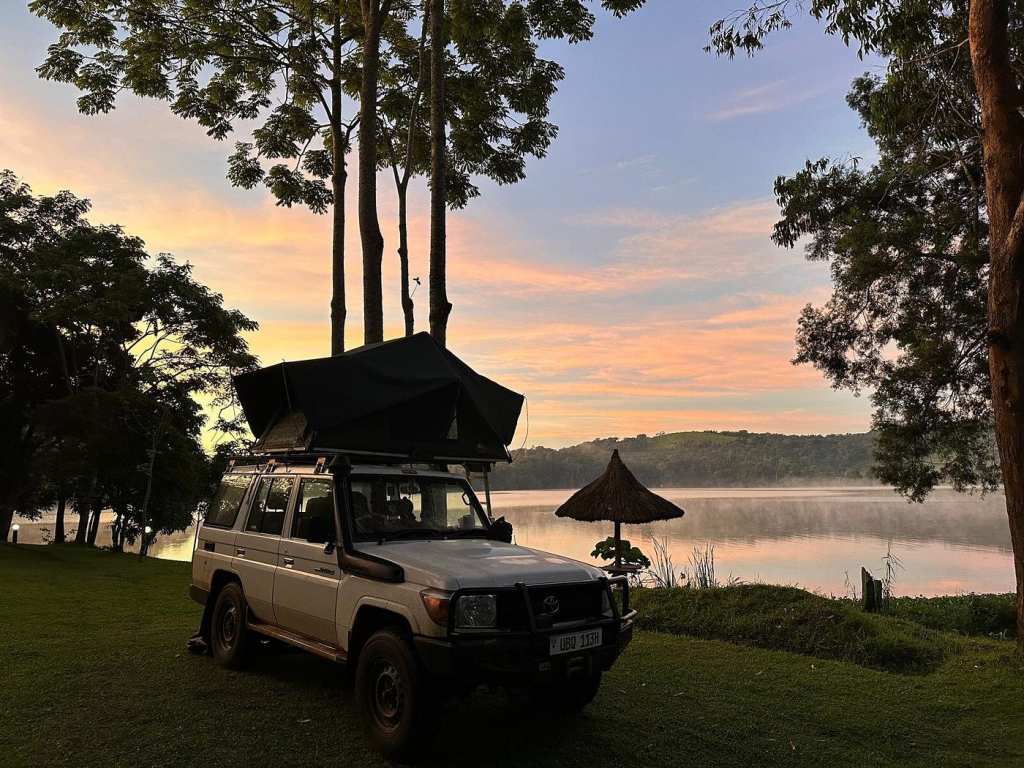
Every self-drive trip to Tanzania is custom-made to your liking. We design the route, type of accommodation, rental car, and optional excursions according to your wishes. Tanzania is very accessible with a normal rental SUV. According to the itinerary, we will advise on the best rental car to drive.

The most economical and most enjoyable way is a bed & breakfast in small guest houses or self-catering chalets, journey by car, visiting all the highlights this beautiful country has to offer. Starting in Arusha and ending in Dar es Salaam or vice versa is the most popular route, but we also design any other route according to your wishes and time frame! Multi-country in combination with KenyaRwanda and Uganda is also possible. We do not book just a rental car. We are a one-stop shop to design your ultimate trip to East Africa!

Book a self-drive holiday to Tanzania with 4wd Africa that will handle the accommodations, park entrances, and park guides for your vacation

What you expect at Lake Manyara National Park

Wildlife.

This national park has a variety of wildlife species, and some of the mammals in the park are concentrated primarily in Tarangire National Park and then proceed to Lake Manyara national park including, Wildebeest, zebras, and Thomson’s gazelles,

The dry season during the months of June and October is favorable for wildlife viewing in Lake Manyara National Park, and this happens because all wild animals gather near the water points that still have water to quench thirsty making it easier to see a variety of wild animals

Bird species

The national park is home to a large number of bird species, and here exist both migratory and native birds. The most common native birds are the flamingo birds, ostriches, and storks. Hornbills, pelicans, herons, grey crowned cranes, secretary birds, among others

The park also has different bird watching sites of which include, including Lake Manyara and the forests; there are also bird species around the floodplains.

Hot springs in Manyara National Park.

At the western shores of Lake Manyara, there exists a hot spring called Maji Moto. The name is a local name from the Kiswahili language that is translated as hot water

Lake Manyara

This lake is the major lake in Manyara National Park because even the name of this national park was derived from this spot. Intact if someone doesn’t come to this lake, maybe he/she hasn’t seen anything as it inhabits a variety of water birds that tend to embed on the banks, and some with long legs move inside the blue waters, yet others tend to be floating on the lake. The Manyara water levels tend to fluctuate depending on the season and even some conditions like evaporation and long dry seasons. The saline nature of the lake also increases the chances of decreasing and increasing the water level

Things to do on Self drive in Lake Manyara National park

Wildlife.

This national park has a variety of wildlife species and some of the mammals in the park are concentrating primarily in Tarangire national park and then proceed to Lake Manyara national park including, Wildebeest, zebras, Thomson’s gazelles,

The dry season during the month of June and October are favorable for wildlife viewing in Lake Manyara National Park and this happen because all wild animals gather near the water points that still have water to quench thirsty making it easier to see a variety of wild animals

Bird species

The national park is home to a large number of bird species, and here exist both migratory and native birds. The most common native birds are the flamingo birds, ostriches, and storks. Hornbills, pelicans, herons, grey-crowned cranes, secretary birds, among others

The park also has different bird watching sites of which include, including Lake Manyara and the forests, and there are also bird species around the floodplains.

Hot springs in Manyara National Park.

At the western shores of Lake Manyara, there exists a hot spring called Maji Moto. The name is a local name from the Kiswahili language that is translated as hot water

Lake Manyara

This lake is the major lake at Manyara National Park because even the name of this national park was derived from this spot. Intact if someone doesn’t come to this lake, may be he/she hasn’t seen anything as it inhabits a variety of water birds that tend to embed on the banks, and some with long legs move inside the blue waters, yet others tend to be floating on the lake. The Manyara water levels tend to fluctuate depending on the season and even some conditions like evaporation and long dry seasons. The saline nature of the lake also increases the chances of decreasing and increasing the water level

Accommodation at Manyara national park

Manyara National Park has both accommodation facilities outside and within the park, and the accommodation facilities are categorized into three: luxury, midrange, and budget accommodation. Some of the luxury accommodations include Lake Manyara Serena Lodge, Lake Manyara Sopa, Lake Manyara Kilimanjaro Lodge, Manyara Tree Lodge, Manyara Wildlife Safari Camp, and many

Mid-Range accommodation facilities

Accommodation here includes Lake Manyara Tortillas camp, Twiga lodge, Kirurmu tented lodge, Migunga tented lodge, and many others.

The budget accommodation.

Some of the accommodation facilities here include, Eco boma Camp, Jambo Rooms, Nysa lodge

Makuyuni Wildlife Park

Makuyuni Wildlife Park is one of Tanzania’s newest and most exciting safari destinations, a hidden gem tucked into the northern circuit yet still largely off the beaten track. Found in the Monduli District of the Arusha region, it lies at the heart of the Tarangire-Manyara ecosystem, just 70 kilometres from Arusha city at the junction of the Arusha-Babati and Makuyuni-Karatu highways, right on the main route toward the Serengeti. Officially handed over to the Tanzania Wildlife Management Authority (TAWA) in October 2023, the park is a remarkable conservation success story. Its 49 square kilometres of savannah, woodland and rolling acacia-dotted hills once served as farmland before nature reclaimed it, and it now forms a vital wildlife corridor linking Tarangire and Lake Manyara National Parks. This corridor is a crucial passage for the northern elephants of Tarangire as they move in search of water and fresh grazing. Far quieter than its famous neighbours, Makuyuni offers an intimate, peaceful, and affordable safari experience, where panoramic mountain views and close wildlife encounters come without the crowds.

Flora and Fauna

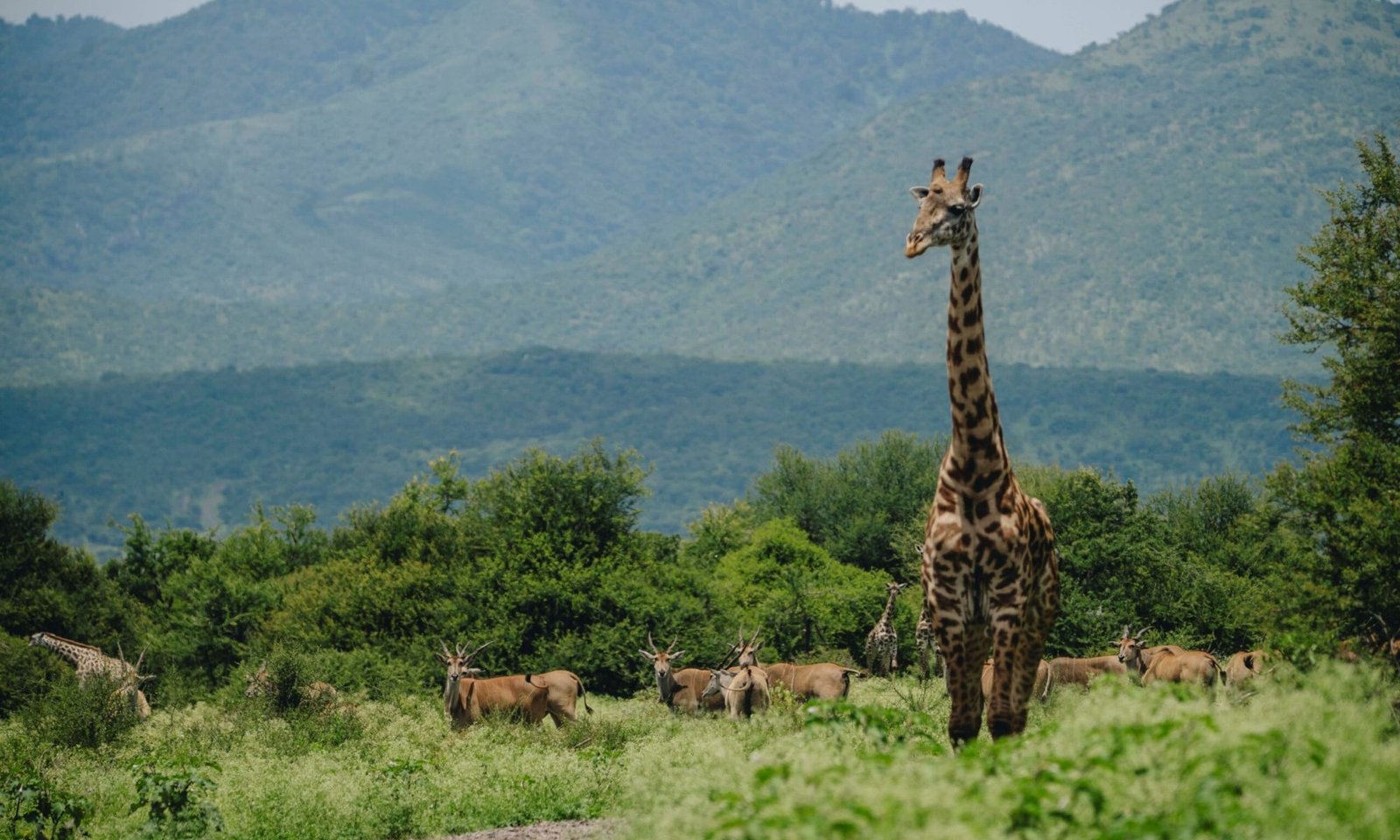
Despite its modest size, Makuyuni is rich in wildlife. Great herds of elephants roam its plains, while Maasai giraffes browse the woodlands and buffalo and zebra graze the open grasslands. Predators hold their territory here too, with lions patrolling the savannah and the elusive African wild dog making occasional, thrilling appearances, alongside leopards and spotted hyenas. The park is especially known for its dry-country antelope, most notably large numbers of the fringe-eared oryx, which are easily seen here, as well as both the sleek lesser kudu and the majestic greater kudu. Eland, impala, Grant’s gazelle and warthog complete the herbivore cast. The landscape itself is beautifully varied, moving from open savannah to lush woodland and dramatic acacia plains, which makes exploring on foot especially rewarding. In 2024, a giraffe with an unusual coat pattern was spotted in the park, sparking interest among researchers and visitors alike.

Birds

Makuyuni is a genuine haven for birdwatchers, with over 200 species recorded across its varied habitats. Waterside areas come alive with vibrant kingfishers, elegant storks and the commanding African fish eagle, while the plains and woodlands host ostriches, doves, weavers and countless others. Birding is at its finest during the wet season, when both resident and migratory species appear in their breeding plumage.

What you should not miss at Makuyuni Wildlife Park

Walking Safaris: Unlike the larger national parks, Makuyuni allows visitors to explore on foot. Guided by an experienced ranger, a walking safari brings you close to the smaller wonders of the bush, the plants, insects, tracks and birdlife, for a more intimate and immersive experience of the wild.

Night Game Drives: One of the park’s most thrilling offerings is the night safari. Under a canopy of stars, with the sounds of the African night all around, visitors have the chance to encounter nocturnal creatures rarely seen by day, and perhaps even hear the deep roar of a lion echoing through the darkness.

Adventure Activities: As a “wildlife park” rather than a traditional national park, Makuyuni offers a wider range of recreational activities than most safari destinations, including hiking, cycling, rock climbing, ziplining, bush meals, sundowners, stargazing, and picnicking, making it an ideal weekend getaway for the young and adventurous.

Maasai Cultural Visits: The park is surrounded by pastoralist Maasai communities, and a visit to a nearby village offers a warm and authentic window into their traditional way of life, an important cultural dimension of the region.

When to visit Makuyuni Wildlife Park

The park is open year-round and experiences two seasons, a wet season from March to May and a dry season from June to November. While wildlife can be seen at any time, the dry season from June to October is considered the best period for game viewing, as animals gather around water sources and the thinner vegetation makes them easier to spot. The wet season, though it brings occasional muddy roads, rewards visitors with lush green landscapes and superb birdwatching, as migratory species arrive in their breeding colours.

Accommodation

As a newly established park, Makuyuni’s internal tourism infrastructure is still being developed, so most visitors base themselves in the nearby towns of Makuyuni or Mto wa Mbu, which offer a range of budget and mid-range options, and make day trips or short excursions into the park. Camping and basic facilities are available within the area, and as the park continues to grow, more lodges and camps are expected to follow.

Lake Natron

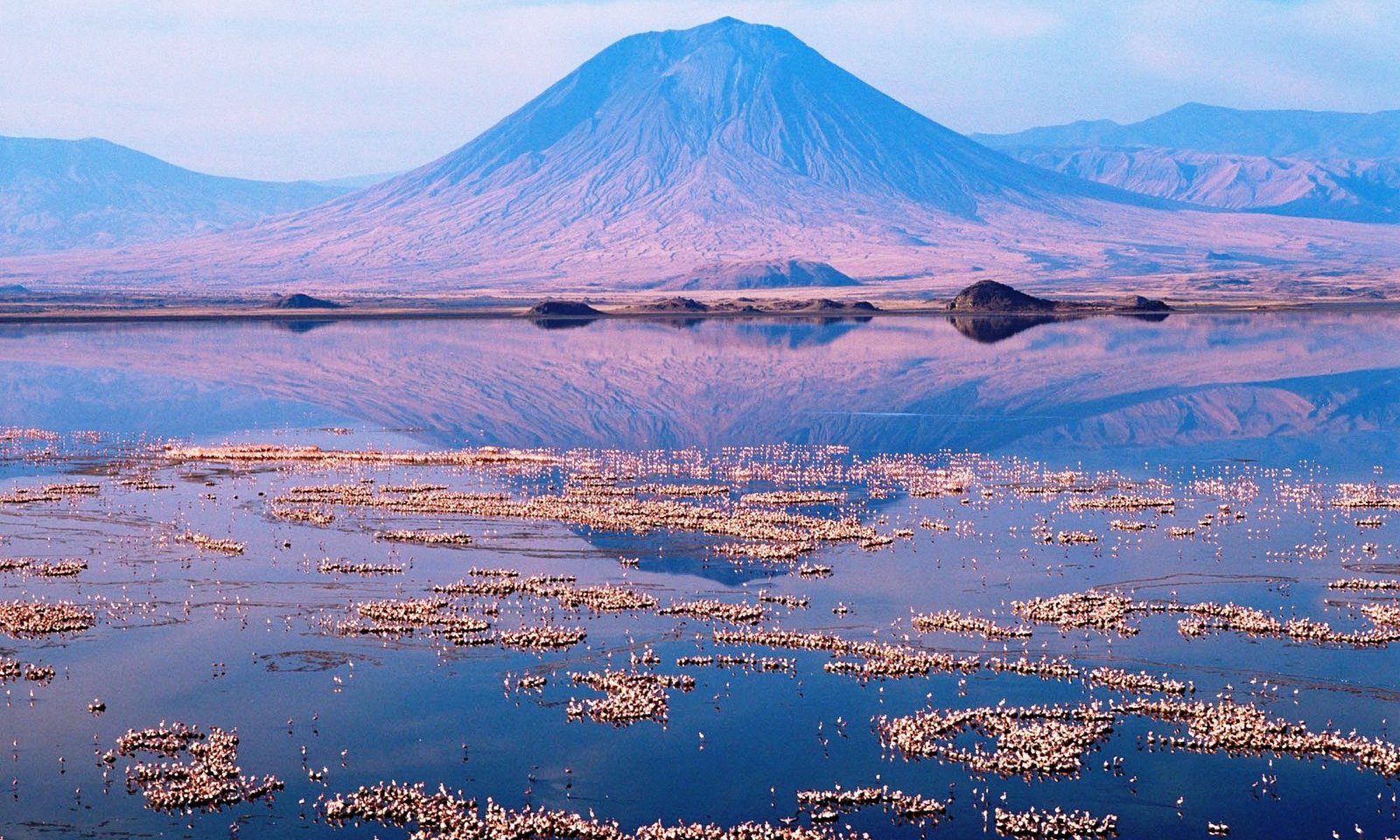
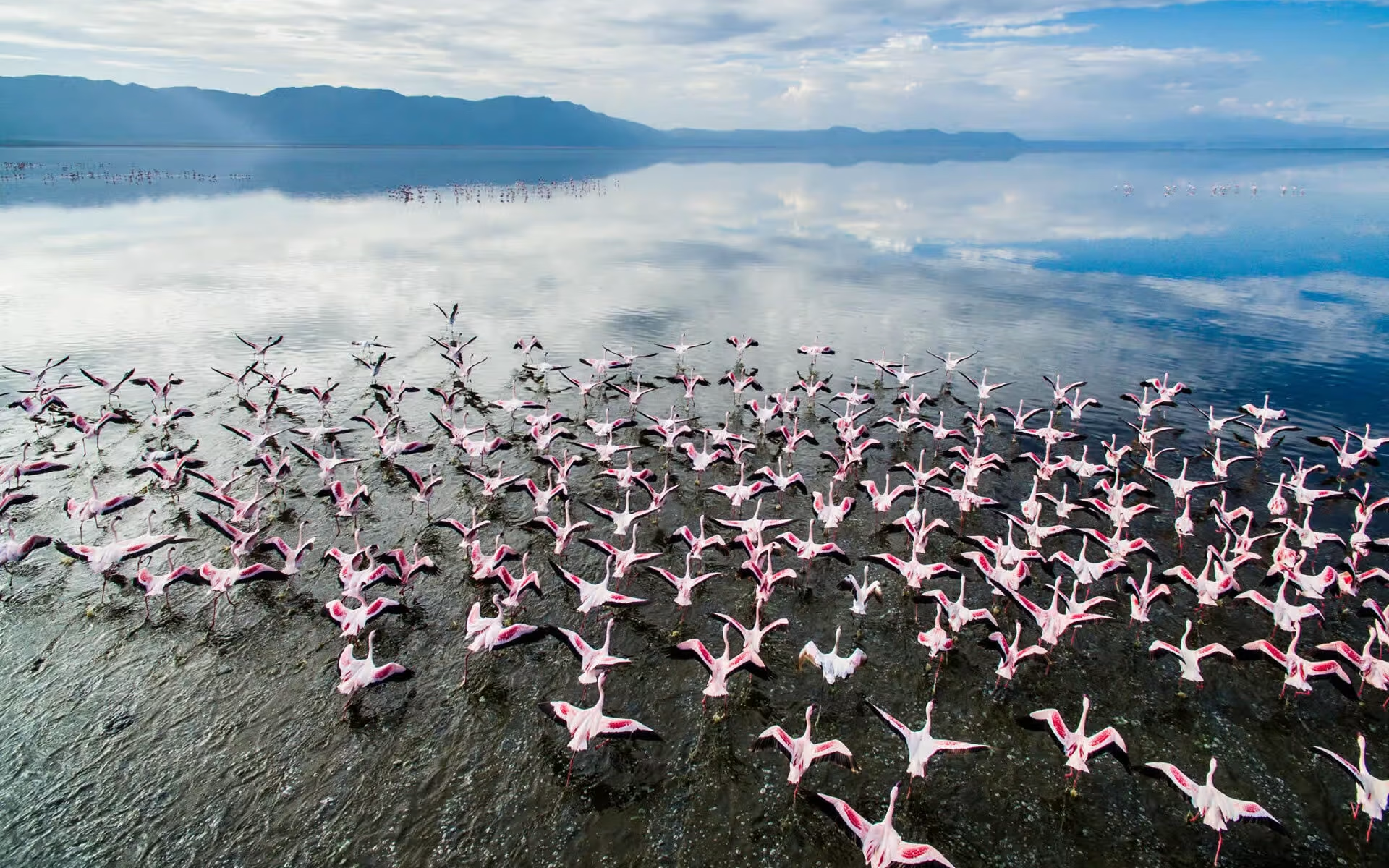
Lake Natron is one of the most surreal and otherworldly landscapes in all of East Africa. Tucked into the far north of Tanzania in the Arusha region, it lies along the floor of the Great Rift Valley, straddling the border with Kenya and resting in the shadow of Ol Doinyo Lengai, the “mountain of god.” This is not a lake like any other. Its shallow, blood-red waters are among the most chemically hostile on earth, with temperatures that can climb to 60°c and an alkalinity approaching that of ammonia. Yet from this deadly beauty springs one of the greatest wildlife spectacles on the continent, for Lake Natron is the single most important breeding ground on earth for the lesser flamingo. The lake stretches up to 57 kilometres long and 22 kilometres wide, though it swells and shrinks with the seasons, forever changing colour and shape. It is fed by the southern Ewaso Ng’iro River and by mineral-rich hot springs, and because no water flows out, evaporation leaves behind vast crusts of natron and trona, the salts that give the lake its name and its eerie, mineral-encrusted shores.

The flamingos

The true magic of Lake Natron is its flamingos. Up to 2.5 million lesser flamingos, roughly three-quarters of the entire global population, are born here, making it their only regular breeding site in East Africa. They gather to build strange little mud-volcano nests on seasonal islands in the centre of the lake, where the caustic waters form a natural moat that no predator dares to cross. It is this deadly chemistry that makes the lake such a safe nursery. The flamingos feed on spirulina, a blue-green algae rich in red pigment, and it is this same algae that stains both the lake and the birds their famous shades of pink and crimson. The sight of a million flamingos wading through the shimmering pink shallows, with the black cone of Ol Doinyo Lengai looming behind, is one of the most unforgettable images in African wildlife.

A lake that turns creatures to stone

Lake Natron carries an eerie reputation. Animals and birds that die in its waters are sometimes preserved by the mineral-rich alkalinity, their bodies calcified and hardened into ghostly, statue-like forms. These haunting remains, made famous by photographer Nick Brandt, gave rise to viral myths of a lake that “turns animals to stone.” The truth is gentler than the legend; it is natural preservation, not sudden death, but standing on these shores, it is easy to feel the raw, elemental power of the place.

Wildlife beyond the water

While the lake itself is inhospitable to most creatures, the surrounding plains, escarpments, and volcanic slopes support a scattered population of classic rift valley wildlife. Zebra and giraffe are commonly seen around the village of Engaresero, alongside wildebeest, fringe-eared oryx, greater and lesser kudu, Grant’s and Thomson’s gazelle, eland, waterbuck, impala, and the tiny dik-dik. Predators such as lion, leopard, cheetah, hyena, and golden jackal move through the area, while the forested lower slopes of Gelai Mountain shelter buffalo and bushbuck. In the cooler, less salty margins and hot-spring inlets of the lake, two endemic alkaline tilapia species have evolved to survive where almost nothing else can.

Birdlife

Beyond the flamingos, Lake Natron is a haven for birdwatchers, with tens of thousands of water birds gathering along its shores. Greater flamingos wade alongside their lesser cousins, and the shoreline teems with pelicans, geese, egrets, herons, storks, hamerkops, and countless migratory waders. Ostriches stride the surrounding plains, while secretary birds, kori bustards, Egyptian vultures, and verreaux’s eagles patrol the skies above.

What you should not miss at Lake Natron

Ol Doinyo Lengai, the “mountain of God,” dominates the skyline, rising over 2,900 metres above the rift valley floor. It is the only active volcano in East Africa that erupts natrocarbonatite lava, a rare, cooler lava unlike any other on Earth. Sacred to the Maasai, it can be climbed with an experienced guide, usually through the night to escape the heat and reach the summit for a breathtaking sunrise over the lake below.

The Engare Sero footprints near the southern shore are one of the world’s most remarkable prehistoric sites, a field of ancient human footprints pressed into hardened volcanic ash thousands of years ago. It is the largest collection of early hominin footprints outside of Laetoli, offering a haunting, intimate connection to the people who walked here in the distant past.

Waterfalls and Maasai culture: Several beautiful waterfalls tumble from the escarpments around the lake, offering refreshing pools after a hot walk. The area is also home to authentic Maasai communities, and a visit to a local village offers a window into a traditional way of life still lived in harmony with this harsh and beautiful land.

When to visit Lake Natron

Lake Natron can be visited year-round, but the dry months from July to November are the best time to reach it, as the roads become treacherous and muddy during the rains. The presence of the flamingos is never fully guaranteed and shifts from year to year depending on rainfall and the level of the lake, but the dry season generally offers the most reliable viewing and the easiest access. Lake Natron sits well off the main safari circuit and pairs beautifully as a dramatic, contrasting extension to a visit to the Serengeti, Ngorongoro, or Lake Manyara.

Accommodation

Accommodation at Lake Natron is simpler and more affordable than in the major parks, reflecting its remote, off-circuit position. Options range from rustic tented eco-camps to more comfortable lodges, most set within reach of both the lakeshore and the foot of Ol Doinyo Lengai. Popular choices include Lake Natron Camp for a more luxurious stay and Maasai Giraffe Eco Camp for budget-conscious travellers, along with a handful of other tented properties and campsites in the Engaresero area.

Tarangire National Park

The Tarangire National Park is found in Tanzania, in the Manyara region, to the North and west of the Masai Steppe. The name of this national park originates from Tarangire, which crosses the park. This is a primary water source that supplies water for the animals in the Tarangire ecosystem. The name of this national park is derived from the Tarangire River that crosses the park. This national park is managed by the Tanzania Wildlife Authority. This national park is famously known for its long-distance migration of the Wildebeest and Zebras. This national park covers a total area of 2850 square Kilometers (1100 square miles. This land is also known for its granitic ridges, river valleys, and swamps, and Vegetation is a mix of Acacia, woodland, seasonal flooding grassland, plus the Baobab trees. This national park is famously known for the large migration of the large number of wildebeests in the country

Fauna and Fauna

This national park is famously known for the abundance of elephants. The large herd of Zebras, wildebeest and cape buffalos and cape buffalo. Other animals include waterbucks, giraffes in large herds, dik-dik, dik, Impala, eland, Grant’s gazelle, vervet monkey, banded mongoose, and olive baboon. There are a lot of predators, including lions, leopards, cheetahs, caracals, honey badgers, and African Wild dogs. This park is known for the oldest elephant to give birth to twins.

The national park is also home to over 500 bird species; the landscape is also full of termite mounds that are seen filling parts of the land. And those being left out inhabit the squirrel, the dwarf mongoose.

What you should not miss at Tarangire National Park

Unique and giant Baobab Tree:

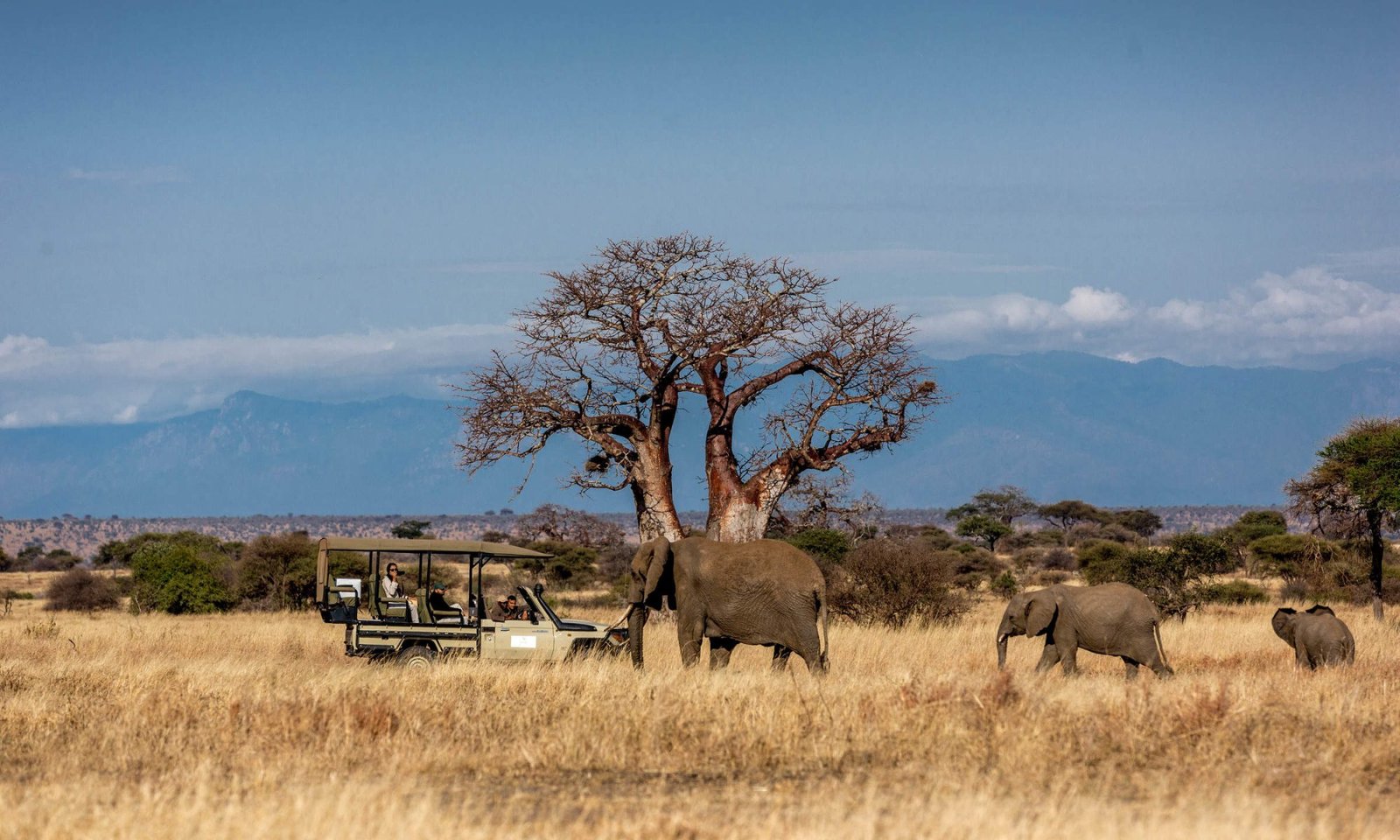
This is a certain unique tree species found in this national park, though some people refer to it as the Tree of Life, and known for its abundant water stored in trunks that it can store over300 liters of water -1000 liters within with a lifespan of over 600 years. This plant also drops seeds that are used as food by animals within the park

According to the local people in this place God himself must have planted them like that of which they call it upside down to limit them from growing until the whole of the continent

Wildlife:

This national park is known for the abundance of wildlife in bigger herds around the park; for example, it has the largest population of elephants, which is considered the highest in Tanzania and the whole world at large. From the month of June to October, herds of these elephants of over 300 individuals per herd dig up holes on the seasonal river looking for water and a colder environment to cool their temperatures and quench their thirst.  Besides the large herds of elephants, there are other animals within this national park, including zebras, which also look for underground beds looking other animals like Impala, antelopes, zebras, giraffes, kudu, rhino, hartebeest, buffalo, and other smaller mammals. There is also a group of dry country antelopes like the long-necked gerenuk and the fringe-eared Oryx

Birds

The park is said to have recorded over 500 bird species being housed in this place. The common bird species within this place include the crested francolins, Hoopoes, yellow-necked spurfowl, hornbills, guinea fowl, steppe eagles, brown parrots, the gigantic lappet- fenced vulture, white-bellied go away bird, bateleur eagles, mouse birds, Kori bustards, yellow colored lovebirds, bee-eaters, lilac-breasted rollers, and many others.

Activities at Tarangire National Park

Bird watching

In Tarangire National Park, there are over 500 bird species recorded all over the national park. These birds will welcome the visitors with the bird song of the different types, mostly in the morning hours. Some of the common bird species include brown parrots, bateleur eagles, guinea-fowl, hoopoe, bee-eaters, and many others. This activity can be done all day or half a day, depending on a visitor. This activity is so wonderful because in a guise to watch the birds, other activity like game watching is also done because of a large herd of animals in the park that can be viewed any time in any place.

Hot air balloon experience

This activity involves getting into the basket as early as possible to view a wide range of national park when seated sailing in the air. This activity also takes one hour and offers a broad aerial view of the park. Big animals can be spotted during this activity from one to four hours, depending on the weather conditions, starting as early as 5:00 am in the morning. After landing, the exercise is completed by a breakfast in the jungle, then a nature walk is taken as visitors come to see animals moving on foot though being guided and protected

Game viewing.

This is a common activity carried out in this national park. During the dry season, migratory wildebeest are seen moving to wet places, elephants digging holes, and besides that, there is a large number of zebras, hyenas, giraffes, antelopes, and other animals that can be viewed mostly during morning and evening drives. In the morning, the drive starts with a briefing,

When to visit Tarangire National park

The national park is always open for tourists all day throughout the year, though visitors are advised that the dry season is a bit better, and this runs from June to October. During this time, a large herd of migratory animals is seen looking for water and pastures. The grass in the national park is longer during the wet season, which may make it a little difficult to see the wildlife species, and this all in makes the dry season the favorite time for taking a visit to this national park

Accommodation

This national park has a variety of accommodation facilities of which they are categorized into three, that’s luxury mid-range and budgeted accommodation.

Some of the luxury accommodations:

Tarangire Treetops: This is a fantastic camp, an unusual resort, it’s located within the park proving very outstanding services where you get a chance to sleep up on the Baobab tree house that is inventive enough to stay a couple of nights., Nimali Tarangire lodge, Swala safari camp, and the mid-range accommodation include Sangaiwe Tented Lodge, Tarangire safari lodge, and Maramboi Tented Camp.

Ngorongoro Conservation Area

The Ngorongoro Conservation Area is found in northern Tanzania, in the Arusha region, spread across the highlands between the endless Serengeti plains to the west and the Great Rift Valley to the east. The name Ngorongoro is said to originate from the Maasai, echoing the sound of the cowbells (“ngoro ngoro”) worn by their cattle that have grazed these highlands for centuries. At the heart of the conservation area lies its crowning glory, the Ngorongoro Crater, the world’s largest intact volcanic caldera, formed around two to three million years ago when a giant volcano erupted and collapsed inward on itself. This conservation area is managed by the Ngorongoro Conservation Area Authority (NCAA) and covers a vast total area of about 8,292 square kilometers. It is famously known as “Africa’s Garden of Eden” for the extraordinary density of wildlife gathered within the crater floor, and it remains one of the only places on earth where wildlife and traditional pastoralist people, the Maasai, live side by side.

Flora and Fauna

This conservation area is famously known for hosting all of the Big Five within a single, self-contained volcanic caldera. The crater floor teems with large herds of cape buffalo and wildebeest, alongside great numbers of zebras, elands, gazelles, and warthogs. Elephants here are mostly solitary old bulls carrying massive tusks, wandering the acacia woodlands and swamps. Other animals include hippos wallowing in the freshwater pools, waterbucks, impalas, and dik-dik. The crater is a predator’s paradise, home to one of the world’s densest lion populations, alongside leopards, cheetahs, and the rare African wild dog. Smaller carnivores fill every niche, including spotted hyenas in their thousands, golden and black-backed jackals, bat-eared foxes, and the occasional serval. The star attraction remains the critically endangered black rhino, making Ngorongoro one of the very best places in Africa to complete the Big Five. Interestingly, giraffes are absent from the crater floor, as the steep 600-meter walls form a natural barrier they cannot cross, though they roam freely across the wider conservation area.

The conservation area has also recorded over 500 bird species, drawn to its varied habitats of alkaline lakes, grasslands, swamps and montane forest. The shimmering soda waters of Lake Magadi attract great flocks of pink flamingos, while the plains host ostriches, secretary birds, kori bustards, crowned cranes and augur buzzards.

What you shouldn’t miss at the Ngorongoro Conservation Area

The Ngorongoro Crater:

This is the jewel of the conservation area and one of Africa’s Seven Natural Wonders. Descending nearly 600 meters down the crater walls into the caldera below feels like entering a lost world, a natural amphitheater roughly 260 square kilometers in size, its floor a mosaic of grassland, swamp, forest, and the soda lake at its center. Enclosed by towering cliffs on every side and cradling over 25,000 animals, it offers some of the most concentrated and reliable wildlife viewing anywhere on the continent, all set against a breathtaking panorama.

Olduvai Gorge:

Often called the “Cradle of Mankind,” this steep-sided ravine within the conservation area is one of the most important paleoanthropological sites in the world. It was here that Louis and Mary Leakey uncovered hominin fossils and stone tools dating back millions of years, reshaping our understanding of human evolution. A visit to the small museum and the gorge itself offers a profound glimpse into the origins of humankind.

Maasai Culture:

Ngorongoro is unique as the only conservation area in Tanzania where wildlife is protected while people are permitted to live within its boundaries. The semi-nomadic Maasai graze their cattle across the same plains as zebras and wildebeest, and a visit to a Maasai boma (homestead) offers an authentic window into a traditional way of life, with warriors, beadwork, dance, and centuries-old customs.

Wildlife

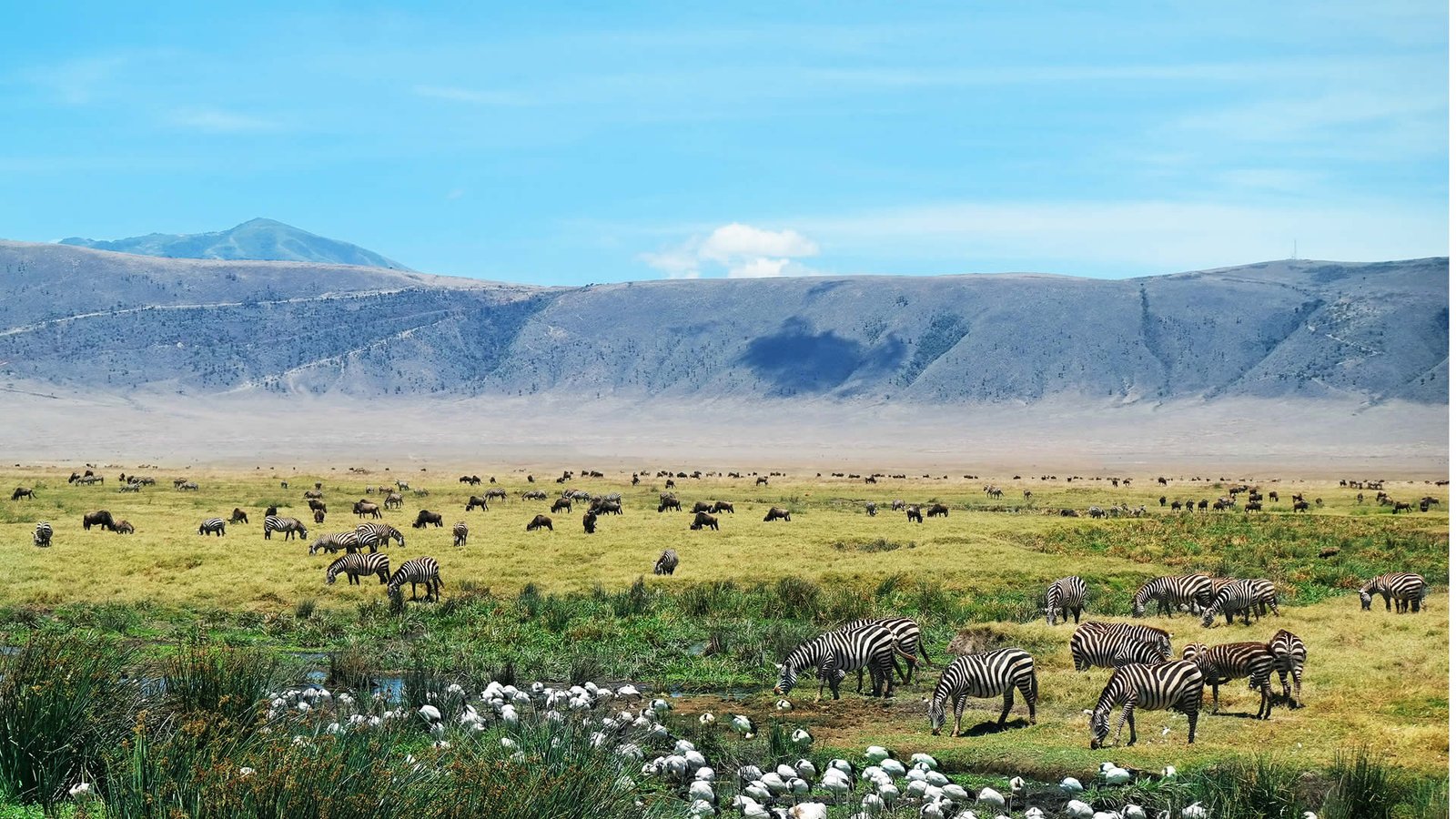
This conservation area is celebrated for the sheer abundance and density of wildlife packed into the crater floor. Because permanent water sources such as Lake Magadi and the Ngoitokitok Springs never dry up, and because the crater walls create an enclosed haven, animals rarely leave, meaning game viewing is rewarding at any time of year. Great herds of buffalo sweep across the grassy plains, thousands of wildebeest and zebras graze alongside gazelles and elands, and lone elephant bulls shelter in the acacia woodlands. Predators are exceptionally well represented, with lions comfortable around safari vehicles, spotted hyenas hunting in clans, and the prized black rhino sheltering in the Gorigor Swamp. The wider conservation area beyond the crater also plays host to the Great Migration, as some 1.7 million wildebeest, 260,000 zebra, and 470,000 gazelles pour across the southern Serengeti plains during the calving season between December and March.

Birds

The conservation area is said to have recorded over 500 bird species, thriving across its lakes, swamps, grasslands and forests. The common and notable bird species within this place include the great flocks of lesser and greater flamingos that gather on Lake Magadi, ostriches striding the plains, secretary birds, kori bustards, grey crowned cranes, superb starlings, augur buzzards, black kites, Fischer’s lovebirds, hamerkops and Livingstone’s turaco. Both permanent residents and seasonal migrants are present, with migratory numbers swelling during the rainy months around April.

Activities at Ngorongoro Conservation Area

Crater Game Drives

The centerpiece of any visit is a game drive down onto the crater floor. Vehicles descend the steep access road at dawn, when the light is soft and the animals are most active, and spend the day tracking the Big Five and countless other species across the grasslands, swamps and around the soda lake. Arriving at the crater gate when it opens at 6:00 AM offers the best light, the most wildlife activity, and the fewest crowds.

Cultural Visits

Guided visits to a Maasai boma allow travelers to meet the pastoralist people who share this landscape, learning about their traditions, cattle-herding way of life, beadwork, and dance, a meaningful cultural counterpoint to the wildlife.

Visiting Olduvai Gorge

A stop at Olduvai Gorge and its museum reveals the story of human origins, with fossil discoveries and ancient stone tools that span millions of years of evolution.

Walking and Hiking

Guided walks and treks in the crater highlands, including hikes around the rims of the other volcanic craters such as Empakaai and Olmoti, offer a more intimate, on-foot encounter with the dramatic scenery, waterfalls, and birdlife of the highlands.

When to Visit Ngorongoro Conservation Area

The conservation area is open to tourists throughout the year, and because water and forage never fully disappear from the crater, wildlife viewing is excellent in every season. That said, the dry season from June to October offers the easiest game viewing, with shorter grass, clearer roads, and animals gathered around water. The wet season, particularly April and May, brings lush green scenery, newborn animals, and superb birding, though the crater roads can become muddy. Whatever the season, the crater rarely disappoints.

Accommodation

The conservation area offers a range of accommodation, categorized broadly into luxury, mid-range and budget options, most perched along the crater rim with sweeping views into the caldera below.

Some of the luxury accommodations include: Ngorongoro Crater Lodge, an opulent lodge on the rim famed for its dramatic architecture and views; The Highlands Camp, with its striking dome-shaped tents on the forested slopes; and Entamanu Ngorongoro, positioned for both sunrise and sunset over the crater. Mid-range and budget options include Rhino Lodge, Ngorongoro Sopa Lodge, and various tented camps and campsites scattered around the highlands.

Masoala National Park

Masoala National Park, in northeast Madagascar, is the largest of the island’s protected areas. Most of the park is situated in the Sava Region and a part in Analanjirofo. Created in 1997, the park protects 2,300 square kilometres of rainforest and 100 square kilometres of marine parks. The Masoala peninsula is exceptionally diverse due to its large size and variety of habitats. Altogether, the park protects tropical rainforest, coastal forest, flooded forest, marsh, and mangrove. Three marine parks protect coral reefs and a dazzling array of marine life.

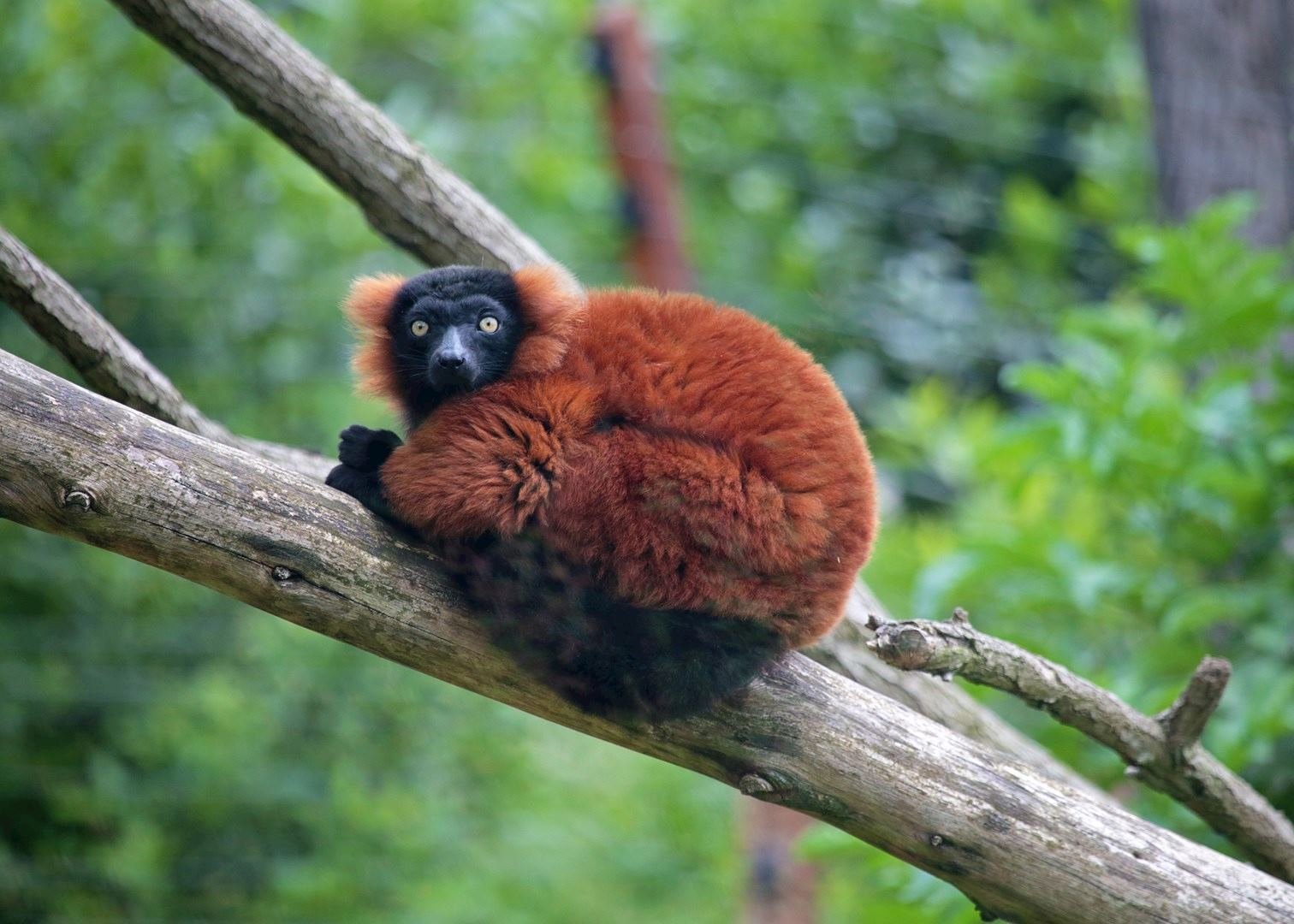
There are ten lemur species, including the red ruffed lemur, which is native to the peninsula. The island reserve of Nosy Mangabe is one of the best sites in Madagascar to try to glimpse the elusive nocturnal aye-aye. [citation needed]

Masoala harbors many other species, such as the Madagascar day gecko, leaf-tailed gecko, chameleons of all sizes, spectacular birds such as the helmet vanga, and rare species such as the red owl and tomato frog. Masoala is also home to the day-flying sunset moth, Chrysiridia rhipheus. The Madagascar serpent-eagle was recently rediscovered here and exists in healthy populations only in this part of northeast Madagascar.

Three marine parks are included in the Masoala National Park: Tampolo in the West, Ambodilaitry in the South, and Ifaho in the East. These are among the most diverse marine environments in Madagascar and are superb destinations for kayaking and snorkeling.

Each year from July to early September, hundreds of humpback whales visit the Antongil Bay during their long migration. The warm, protected waters of the bay provide an ideal breeding and calving ground for these marine mammals. [citation needed]

This is an exceptionally wet area of Madagascar. The driest part of the year is from September to December. As the park is accessible only by a three-hour boat journey, the cyclone season (January to March) is best avoided.

In June 2007, Masoala was designated as a World Heritage Site as part of a cluster of parks that represent the biodiversity of the eastern rainforests of the country. The other national parks included are Marojejy, Bahamian, Ranomafana, Andringitra, and Andohahela.

During 2009 and 2010, the national park was invaded by thousands of illegal loggers searching for rosewood.

Biodiversity in Masoala National Park

That the Masoala peninsula is truly exceptional is not new: two percent of all of planet Earth’s animal and plant species reside here. Some species like the aye-aye, red-ruffed lemur, Madagascar red owl and the extremely rare serpent eagle are endemic to the peninsula and thus found nowhere else. Masoala harbors many other novelties.

The park forests abound with chameleons, geckos, frogs, as well as several species of butterflies and fish which are new to science. As if that weren’t enough, the forests are filled with rare, endemic species, tumbling down to the edge of a pristine and unspoiled shore peppered.

There are unexplored golden beaches and the three marine parks that protect over 10,000 ha of coral reefs, marine plants, and mangroves around the peninsula.

Presently, more than 3,001 fish species have been inventoried in the marine parks. Moreover, the Antongil Bay itself is also used as a sheltered place by humpback whales that gather here during breeding season.

During the months of the austral summer, Antongil’s waters literally froth with cetaceans. The region also supports one of the most diverse groups of palm species in the world.

Activities in Masoala National Park

The hiking and trekking opportunities for those on Madagascar tours here are immense. The main trails for visitors on a Madagascar safari to Masoala National Park are at Nosy Mangabe, Tampolo/Ambodiforaha, Cap Est, and a several-day hike is possible across the peninsula on your Madagascar tour.

Alohatrozana, trail.

One of the best areas is the Alhoatrozana trail, a stunning virgin rainforest located about midway down the western side of the peninsula.

Lohatrozona.

On the Western coastal trail, Lohatrozona is a paradise for ornithologists. The marine reserve of Tanjona grows a wonderful mangrove forest. The marine reserves of Tampolo, Ambodirafia, and Marofototra have superb corals and nice, clean beaches perfect for a swim.

Coastal trail

Exploring the coastal trail, the path between Alhoatrozana and Antalavia weaves in and out of golden-sand beaches, rocky coves, and lush forest, which is probably the most beautiful site in Masoala.

Getting to Masoala National Park.

If you are staying in Antalaha, you can get from here either by bicycle or by taxi-brousse to Ambodirafia and Cap-Est. At the detached parcel of Andranoanala, trails are easy, and you can easily observe water birds in the park’s pond and even crocodiles on the river.

If you want to venture south from here, a trail leads you through small fishing villages to the Masoala Cap. The white – and in some places reddish – sands of the gently sloping beach are crossed by mangroves and rivers.

The park can be accessed from the towns of Maroantsetra or Antalaha. From Maroantsetra, transport by motor boat can be arranged. From Antalaha, the park can be accessed by road to Cap Est using daily bush taxis or by mountain bike as far as the village of Masoala.

Accommodation in Masoala National Park.

It is possible to sleep in Tampolo at the Tampolo Lodge on the coast. The very basic bungalows cost about AR 30,000 for two. There is also a campsite attached.

In Ambodiforaha, near Tampoco, there is Chez Arol, which offers 6 bungalows at 22 € with private facilities, and 3 at 13 € (with common facilities).  This place is really nice and offers many activities to explore Masoala National Park, though it is not located on the beach.

There is a new address destined for a more upmarket public: the Masoala Forest Lodge. To reach this isolated paradise, you take a boat in Maroantsetra, which drives you through the Bay d´Antongil until you reach the lodge.

This lodge has just seven palm-thatched tents set on hardwood platforms discreetly sited amidst the forest lining the beach. All tents are netted, furnished, and have en-suite bathrooms and hot water.

The wholesome three-course meals of organic local products are served in the restaurant overlooking the beach.

Apart from relaxing and enjoying this private paradise, there is a wide range of activities offered: guided forest walks and sea kayaking tours, bird watching, snorkeling, whale watching, fishing, or swimming.

The Masoala Forest Lodge is committed to a program of community benefit to assist local populations in maintaining a sustainable lifestyle. Price per person starts from 196 € on full board and includes boat transfers, park guides, and certain activities.

Several packages of generally five or seven days of duration are offered by these three lodges and generally include a visit to Nosy Mangabe, through trails within the park.

Camping is also possible in Masoala. In Antalaviana, three hours from Tampolo, there is a wonderfully set campsite. Other camping sites are located in Tanjona, Masoala, and Marofototra.

The surrounding villages also offer the visitor simple and very basic accommodations: Mahalevona, Fizono, Ampokafo, Ambanizana, Masoala, Ampananavoana, Vinanivao, and Ambohitralanana.

Accommodations in Cap Est were literally swept from the globe after Cyclone Gafilo, which struck Madagascar’s east coast in March 2004.

Activities in Masoala National Park.

Several multi-day treks of differing grades of difficulty are also possible within the peninsula:

Maroantsetra – Antalaha on the inland trail is a 3 – 5 days, depending on conditions and pace. If you want to experience the rain forest on this trek, it is best to spend the night in Ambatoledama and explore the Ambatoledama corridor.

Otherwise, the 45-minute walk through the corridor will be your only chance to experience the protected forest of the park on this route.

Maroantsetra to Altamaha – Coastal Route is a 10–14–day trek. This challenging trip will take you on local trails from Maroantsetra, down the beautiful coast of the Masoala peninsula.

You will pass through the park in several locations, through villages, and along the coastline of the marine parks. You may elect to stay for several nights in Tampolo.

Other beautiful locations include Ambodilaitry, where there is a tent shelter, Cap Masoala, Vinanivao, Ratsianarana, and Cap Est.

For any Masoala visit, remember that this is an exceptionally wet area of Madagascar. The best time to visit Madagascar and go to Masoala is the dry season from September to December.

If you come during the high season, be sure to book well in advance if you’re planning to come during this time of year: accommodation on the peninsula is still limited.

The park’s website is currently the best information source for preparing any visit to the park.

Masoala National Park protects the rich ecological diversity of the rainforest, coastal forests, and other tropical habitats, along with the diversity of wildlife that includes over 15 species of lemurs as well as other reptilian and amphibian species that thrive in this ecosystem.

The park also protects the aye-aye, which is a threatened species in the park.  This intriguing species is most notable for its glowing eyes in the evening.  Because of their status, night walks are no longer permitted in efforts to keep them from extinction in the park.

Some of the highlights

The majority of people visiting Masoala National Park are looking for the rainforest experience and opportunities to experience the diverse wildlife.  Bird-watching is a targeted activity with Madagascar being a coveted destination from visitors around the world.  The different species of lemurs and chameleons add to the wilderness experience.

Ankarafantsika National Park

Ankarafantsika National Park is located in northwestern Madagascar, about 115 km, or a two-hour drive, from the port city of Mahajanga (= Majunga) along RN4 to Antananarivo. Excursions to Ankarafantsika are easily arranged through hotels in Mahajanga or through Antananarivo-based tour operators.

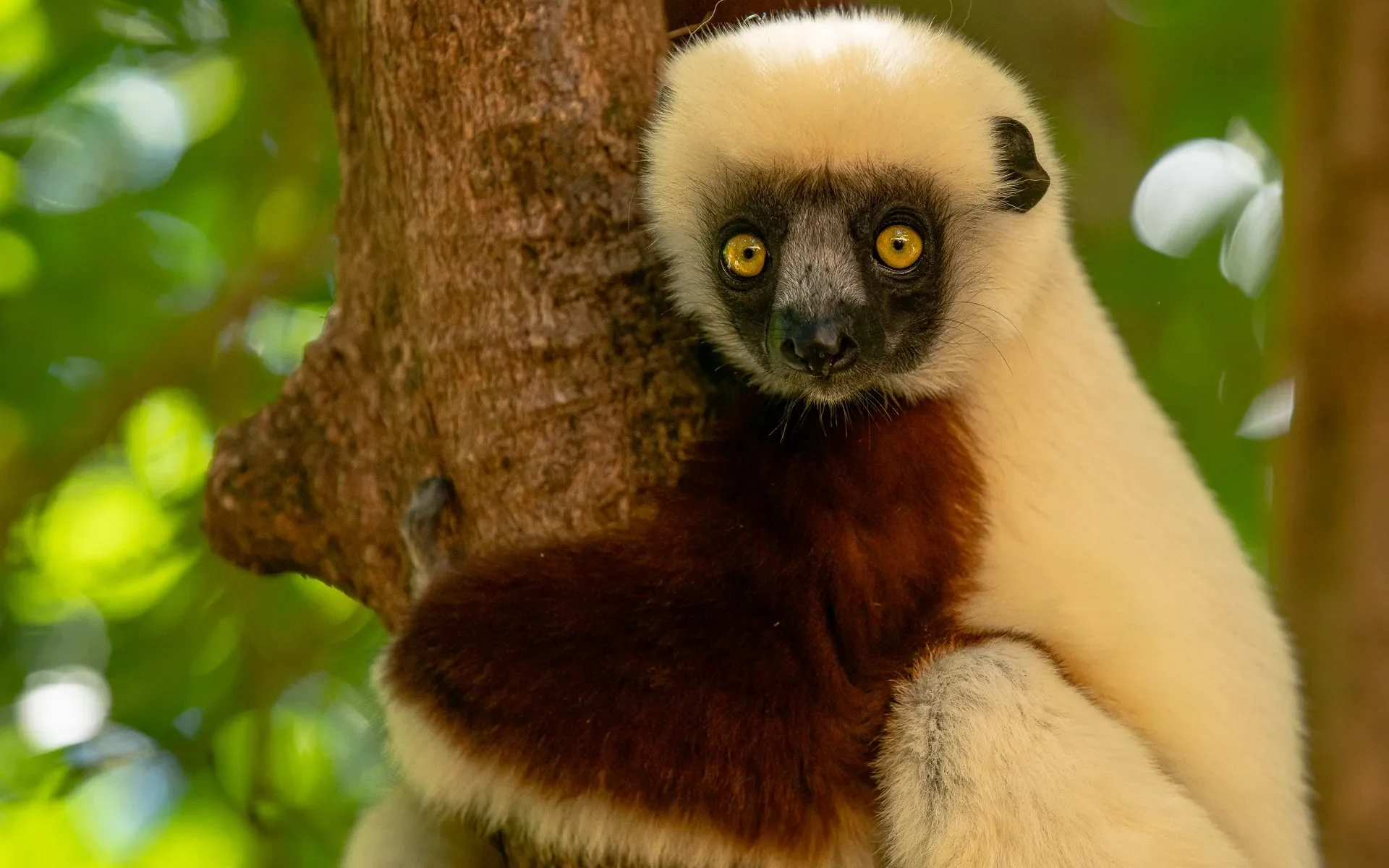
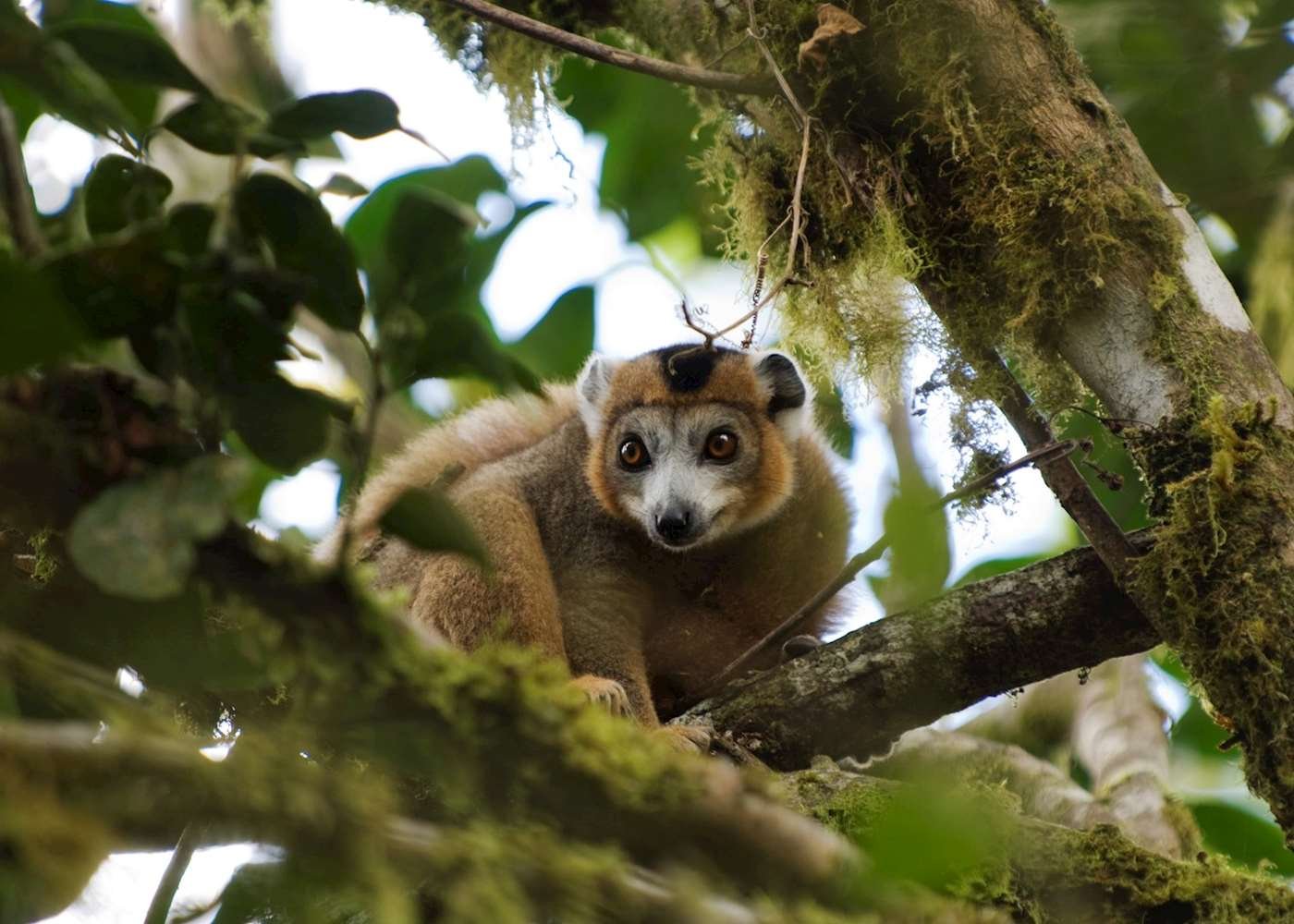
The Ampijoroa campsite has been upgraded recently and now contains the locally managed Gîte d’ Ampijoroa with comfortable rooms and a restaurant. In addition, more upscale chalets have recently opened at Lac Ravelobe right across the road. A local group (Association Pygargue) offers simple meals to visitors in an open-air restaurant. The three diurnal lemurs that are readily seen at Ankarafantsika are the brown lemur (Eulemur fulvus), the mongoose lemur (Eulemur mongoz), and Coquerel’s sifaka (Propithecus coquereli). Five nocturnal lemurs are also regularly observed during night walks, including the golden-brown mouse lemur (Microcebus ravelobensis), the gray mouse lemur (Microcebus murinus), and the fat-tailed dwarf lemur (Cheirogaleus medius). Both Milne-Edwards’ sportive lemur (Lepilemur edwardsi) and western woolly lemur (Avahi occidentalis) can be seen both at night and in their daytime sleeping sites just a few meters above the ground. Ankarafantsika, and especially the Ampijoroa area, is one of the best sites for first-time visitors to Madagascar.

Accommodations are good, and lemur-watching is easy. With a little bit of luck, one can see all eight lemur species in an afternoon, an evening, and a morning. The mongoose lemur can sometimes be elusive, but only because it is very quiet, and it is important to have a knowledgeable guide to distinguish the two mouse lemur species, which can easily be confused by beginning lemur-watchers. What is more, this is really the only site where one is likely to see Microcebus ravelobensis.

The Ampijoroa area within Ankarafantsika is also the site of the world’s most important captive breeding project for endangered Madagascar turtles and tortoises, including the ploughshare tortoise or Angonoka (Asterochelys yniphora), the flat-tailed tortoise or kapidolo (Pyxis planicauda), and the Madagascar big-headed side neck turtle or rare (Erymnochelys madagascariensis). The ploughshare tortoise is one of the most critically endangered tortoises in the world, and this is presently the only breeding site for it outside its natural range. Location

This Madagascar National Park is located in north western region, 450 km from Antananarivo and 115 km from Mahajanga. The National Road N°4 crosses through the park.

Wildlife.

Like other parts of Madagascar, Ankarafantsika National Park is home to lemurs and many other species of plants. Eight species of lemurs are recorded in Ankarafantsika: one strict diurnal species, two cathemeral species, and five typically nocturnal species, of which the famous Microcebus is the smallest in the world.

More than 120 species of birds live in the forest of Ankarafantsika. More than 70 of the birds in the park are endemic to the forests and lake shores. Examples of the birds in the park include the Rufous vanga Schetba rufa, which is an endemic bird, the Madagascar fish eagle, which is considered a critically endangered species of raptors, and the Van Dam Vanga, a rare species of threatened vanga. The best time to go birding in Madagascar is during the rainy season. Lake Ravelobe near the national park entrance is a breeding ground for fish eagles and other water birds in Madagascar. Other birds in the park include the banded Kestrel.

Getting to/from and around Ankarafantsika National Park

Right on the RN4, Ankarafantsika is easily accessible by taxi-brousse from Antananarivo and Mahajunga (Majunga). Jump on any taxi-brousse heading towards Mahajunga (if in Antananarivo, 8- 9 hrs) or towards Antananarivo (if in Mahajunga, 2 hrs.) and ask to get off at the park entrance.

If travelling by taxi-brousse, Cotisse Transport is an awesome option to travel to/from Ankarafantsika National Park. The Antananarivo – Mahajunga route goes right past the park entrance. If taking the Cotisse bus in either direction, tickets must be pre-booked as they sell out in advance. Price as of 2018 was Ar35,000p/p

Cotisse Transport offers reliable and well-maintained vehicles, safe drivers, and a comfy way to make the long journey. Seats sell out fast and well in advance, especially during peak seasons. We recommend pre-booking tickets. At the time of our visit, foreigners couldn’t pay online. If this is the case, ask your hostel to call and reserve your seats. You will then need to go to the Cotisse bus station 24- 48 hours before your departure to pay.

Accommodation at Ankarafantsika National Park.

Camping is allowed in the park, although visitors are encouraged to carry private camping equipment, tents, food, supplies, and other materials. Warm blankets are recommended for nights, while a flashlight or torch is needed for nocturnal tours in the forest.

Gîte d’Ampijora has a range of accommodation. We stayed in a Gîte. It was super basic but clean and comfortable enough for a couple of nights. The shared facilities were basic, also (cold water only), but fine. There are also very spacious bungalows, but 3 times the price. They all seemed to sleep 4 people, so maybe a good option for a small group. Camping (tents provided) Ar20,000, Gîte TWN/DBL with shared facilities – Ar30,000, Private en-suite bungalow – Ar90,000. There is a restaurant on site, Breakfast from – Ar15,000, Entree/dessert – Ar15,000,

Main course lunch/dinner – Ar20,000, Large Water – Ar5,000, Large beer – Ar4,000.

Best time to visit Ankarafantsika National Park.

Madagascar is a massive island, and its climate varies from east to west and from north to south. But as a general rule, April to October are the drier months, with December to the end of April being the wetter months in Ankarafantsika National Park. Though this part of Madagascar is a pretty dry area, it doesn’t see too much rain and is accessible year-round.

Things really start getting busy from June, with the peak months being the European school holidays of July and August. If you can avoid those two months, you will have a quieter experience in parks, and accommodation will be far less busy! December can also be quite busy here.

Ankarafantsika National Park has a huge array of birdlife, and it’s at its most impressive from October to December. Lizards and snakes tend to come out of hibernation from September through to December, too.

Amber Mountain National Park

The Amber National Park, located in the Northern part of the island, was created in 1958, and it is one of the few areas in the country that experiences different climatic conditions compared to other areas in the country. While other parks experience semi-arid conditions, the Amber Park is always green throughout the year as it receives more rainfall.

The park is one you should not miss when you visit Madagascar, as it has a lot to offer when it comes to activities that you can carry out, and that is why we are here. We can help you organize your safari to Amber National Park at an affordable cost, and we assure you that you will not regret your trip with us to this wonderful place.

The Flora and Fauna found in Amber Park

The different species of wild life that have been recorded and are found in the Amber National Park include snakes, chameleons, frogs, geckos and other animals like the Lemur.

75 bird species are found in the Park, and 35 of these are endemic to the island of Madagascar, and some of these bird species include the Amber rock thrush, the long-billed Bernieria, the Pitta-ground roller, and many more others.

The flora found in the Park consists of three different types, which make up the vegetation that is found in the Park, and these include the dry deciduous vegetation, the Montane rainforest, and the mid-altitude rainforest vegetation. This acts as a habitat for the different animals that are found in the park. The Park also has over 1000 flora species that different botanists have gone to see and study and these include the lianas, orchids and ferns and these grow in the rarest kind that can only be found in Amber National Park and you do not want to miss out on viewing the path of a thousand trees that has a lot of exotic tree species that you will not find anywhere else.

Besides the wild animals and different bird species that that are found in the park there are also other tourist attractions that make the park a good and favorable destination for all tourists and these include the following:

The waterfalls, which are found within the park and they offer a resting and refreshing place for tourists, especially if one has been hiking. The backdrop it offers is also good for those who want to take photos as souvenirs for the trip.

The lakes that are found in the Park, here you will be able to view the different water species in the lake, refresh your selves and also go for a boat ride on the lake.

Amber National Park Hiking & Things To Do

If you want to discover all the jewels hidden in the Amber National Park, hiking is the only way that you will be able to discover all that you are not aware of. The park has a lot to offer, and that is why it became a top destination for many tourists. The different routes take different amounts of time when it comes to hiking, and that is why one must choose the best hiking route that fits their fitness. When you join all the trekking routes, their total distance amounts to over 30 kilometers, and all these are marked trails, so if you are to enjoy your trekking, you should not veer off the trails.

There are three common routes that are normally used when it comes to hiking through the Park and these include:

The Cascade Sarcee.

This is the most commonly used route for hiking, and it leads to a waterfall that is believed to be sacred and a grotto. It is quite popular due to its easy terrain when it comes to hiking.

The cascade Antankarana.

This is of medium distance when it comes to hiking and can be taken even by children.

The cascade Antomboka.

This is the worst and most difficult route to use while trekking, and it is not for the faint-hearted. It is extremely narrow but has a beautiful waterfall to it that drops 80 meters below.

The park will also give you ample time and a chance to trek up the Amber Mountain, which is extremely close to the Park. There are several other routes that you can use when you want to trek through the park, and these are the Lac Maudit, the Lac de la coupe Verte, and the Grand Lac, all of which will help you explore the Park to the fullest. The trek through the Park normally takes two days, but it can also be done in one day if you have other places to visit or you are on a tight budget.

When to Visit Amber National Park?

As we have already established, the park is located on elevated land, and that is why it receives a different kind of climate compared to the rest of Madagascar. The Amber Park has two seasons, and that is the dry season and the rainy season.

The dry season.

The dry season is always cool and the best time for all birders. This season comes between March and November, and it is mostly clear on some days, although sometimes it still rains.

The cool temperature offers tourists a good chance to view the birds and carry out other activities that are not as tiring.

The rainy season.

The rainy season normally comes in around December to April, and it is never the best time to visit the Park as the roads and trails leading to the park are always flooded, making it extremely hard for one to go anywhere in the park.

It is always advisable for one to carry warm clothes when they are visiting the Park during this time to avoid the cold.

Sometimes the seasons interlope into other months, making it hard for one to determine when the dry season will end and the beginning of the rainy season. All these seasons have their ups and downs, and w below is a list of the best months and worst months as to when you should visit the Amber National Park.

The best time to visit the Park is between September and November.

The worst times to visit the Park are between June and August. These are the months when the Park experiences winter, and the months of December to April, because this is when the Park experiences a lot of floods due to the heavy rains.

As you visit the park, remember to take anti-malarial tablets with you so that you do not fall sick, and some insect repellent.

Where to Stay in Amber National Park.

There are several accommodation facilities that can be found within or around the Amber National Park and some of these include the following:

The Mantasaly

The Mantasaly is located just an hour away from the Amber National Park. It is located on a beach and will give you access to the beautiful scenery that the beach has to offer. They have single and duplex rooms where one can have their privacy while they rest. The hotel provides a good, hefty breakfast and lunch, bar, beach activities, free WIFI, transportation, and it has a very good view of the Amber National Park.

The Iharana Bush camp

The Iharana bush camp is located only five minutes away from the park, and it has one of the best facilities that you would not want to miss. They offer free dinner, breakfast, and a bar. The rooms are self-contained, and each is decorated in a very unique way. They also offer assistance when it comes to getting tickets into the park.

Hotel la Belle Aventure

The hotel offers free WIFI to the guests, breakfast and lunch, self-contained rooms which offer privacy to all those who stay there, laundry services, and each room goes for 20 dollars per night. The hotel is 42 minutes away from the Amber National Park.

How to get to Amber Mountain National Park

The Park can easily be accessed through different routes, the easiest being the Diego Suarez route, where you can use either taxis or get a private driver, but remember to use four-wheel drive so that you do not get stuck along the way.

If you are coming from Antananarivo, the best route and means of transportation is the best is air transportation, and the local airline offers direct trips to the park, and these take roughly two hours.

The Amber National Park is strategically located, and the beauty that it offers should not be missed by anyone who visits Madagascar. And note that not all the activities that you can carry out when you visit the park have been mentioned, but when you visit the Park, you will be shocked at how many surprises you will get in just the few hours that you will spend in this glorious Park.

Isalo National Park

Madagascar is among the most popular nature destinations. Isalo National Park lies amidst the Jurassic-era highlands of the country’s southwest. Isalo National Park was established in 1962. It protects over 190,000 acres of land dominated by a dramatic sandstone massif that has been eroded by time and weather into an otherworldly collection of plateaus, canyons, gorges, and pinnacles. Iron and mineral deposits stain the rock formations a rainbow of different colors, and the dense forests and grassland plains that surround them are filled with unique flora and fauna.

Flora and Fauna at Isalo National Park

Fauna.

The park is home to about 80 species of birds (of which 70% are endemic, including the rare Benson’s rock-thrush, which is found only here), 35 species of reptiles and several endemic frogs. The harsh landscape means that the wildlife is not as prominent as in the other popular parks of Madagascar. Nevertheless, in the forested canyons, look out for the lemurs – the Ring-tailed lemur, Brown lemurs and the Sifaka.

Flora.

Isalo is more known for its spectacular flora. There are several local endemic plants among the 500 species that are found within Isalo, such as the elephant´s foot (the miniature Baobab – genus Pachypodium), the salotse (Ichnolepsis graminifolia), and some rare palms and aloe species. The Salotse is the only species in the genus Icholepsis and is found only in Isalo!

An interesting common tree here is the Tapia tree (Uapaca bojeri) – again a species endemic to Madagascar. This short, resilient tree has evolved to withstand the constant wildfires in this arid environment. Locally, the Tapia (pronounced ‘ta-pee’) plays an important role in the economy and culture of the region. The Tapia leaves are the only food of the silkworm ‘landibe’ (Borocera madagascariensis). Local weavers collect the cocoons and spin the raw silk into shawls, cloths, and shrouds to bury the dead.

Geology.

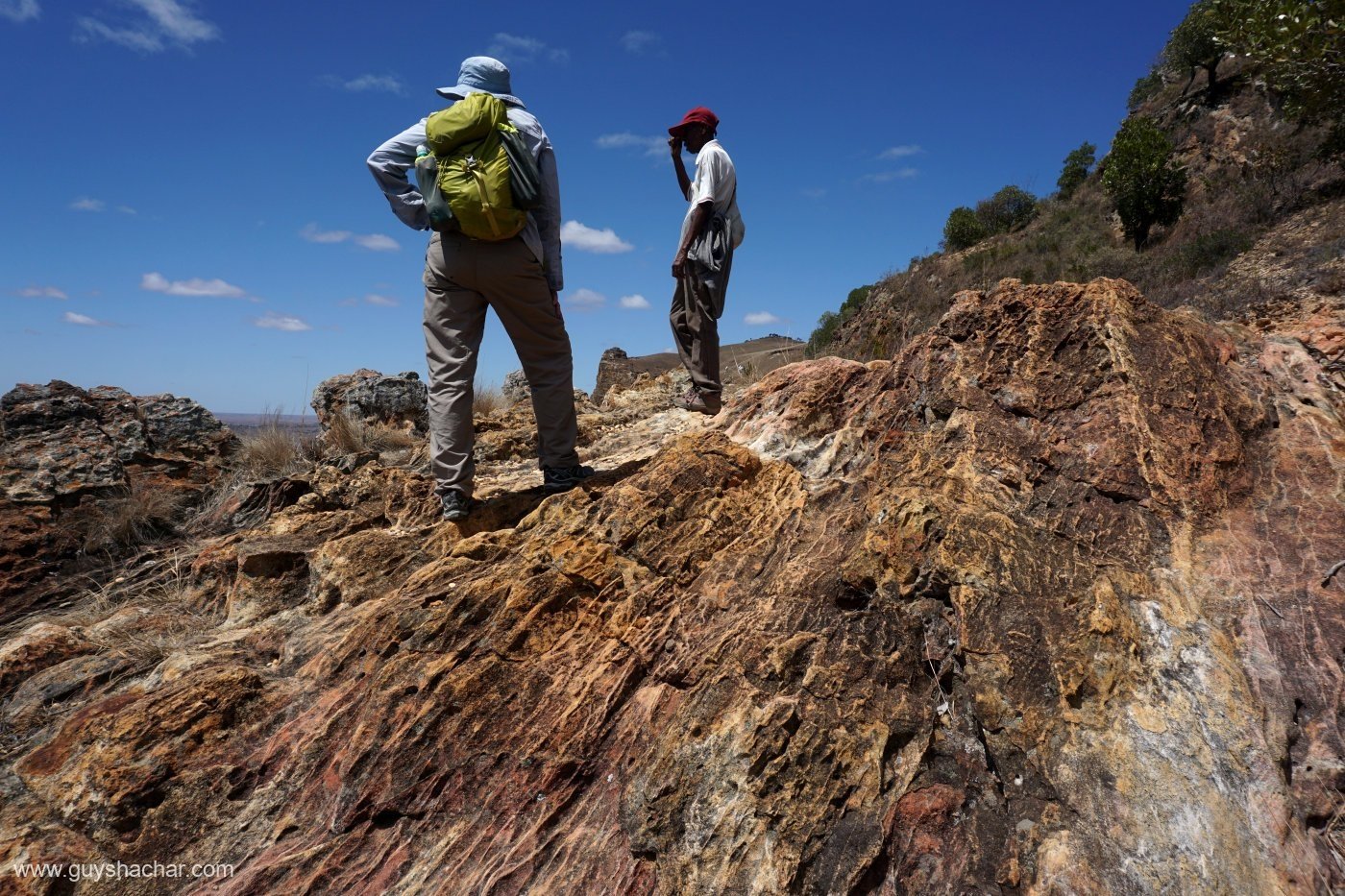
Located in the southern part of the Morondava Basin, the sedimentary Isalo Group is the main geological formation of the park, forming the Isalo Massif. [citation needed] The group is up to 6,000m thick, of Triassic to early Jurassic origin and made up of coarse-grained sandstone deposited by braided streams. The Isalo Massif has been eroded by wind and water, resulting in deep canyons, sandstone domes, flat-topped mountains and “uniform” mountains – steep-sided outcrops that have been dissected into odd shapes. These odd shapes are referred to as “uniform “, based on the French word for “carved”.

Climate.

Isalo National Park is in the arid western part of Madagascar, within the western dry deciduous forest bioclimatic zone. The area has a hot, dry climate with two seasons: a cooler-drier season and a warmer-wetter season. Each lasts from 5–7 months. Temperatures range between 15–32 °C (15–32 °C), the average annual temperature is 21.8 °C (71.2 °F), and the average rainfall is 791 millimetres (31.1 inches) (at Ranohira). Precipitation is lowest in June, averaging 2 mm (0.079 in). December through February are typically the wettest months. Rainfall in January averages 199 millimetres (7.8 inches), but the 2018/2019 wet season saw heavy rainfall, with 526 mm (20.7 in) of rain falling in January alone.

Attractions at Isalo National Park

Isalo National Park is more famous for its scenery than its wildlife, but that doesn’t mean there aren’t plenty of fascinating animals to look out for. Interesting mammals include Madagascar specials like the cat-like fossa, as well as two species of tenrec and two species of civet. The park’s pristine forests provide a home for no fewer than 14 lemur species, ranging from the iconic ring-tailed lemur to the endangered Verreaux’s sifaka. If you choose to stay overnight, you also have a chance of seeing nocturnal primates like the endangered Coquerel’s giant mouse lemur and the red-tailed sportive lemur.

The park is also known for its reptiles and amphibians, with top spots including the native white-lipped bright-eyed frog, Madagascar boa, and colorfully decorated Malagasy rainbow frog. Over 80 bird species have been recorded at Isalo, of which 27 are endemic to Madagascar. The park is especially famous in birding circles as one of the best places to spot the indigenous Benson’s rock thrush. Isalo’s plant life is equally unique. Botanists should look out for specials such as the elephant’s foot plant and the Aloe isaloensis, which takes its scientific name from the name of the park and its massif.

Activities at Isalo National Park

Hiking

Hiking is the main activity in Isalo National Park, and you’ll be required to hire a local guide to lead you through the park. If you’re not traveling as part of an organized Madagascar tour, it’s relatively easy to visit Isalo National Park independently. You can pay entry fees, book accommodation, and hire guides and porters at the park office, located in the nearby village of Ranohira. Some tour operators also offer options to explore the park by horse or mountain bike.

Best Hikes & Trails

The Isalo massif is crisscrossed with breathtaking hiking routes. Together, they offer the opportunity to encounter lemurs, escape the heat with a dip in a shaded natural swimming hole, or visit the sacred tombs of the Bara tribe that traditionally inhabited the area. It is possible to walk to the trailhead from Ranohira, but it’s better to take a car or hire a driver to save time.

Piscine Naturelle Trail: One of the most popular trails, this route will take you to Piscine Naturelle, a limpid pool fringed by old-world pandanus trees and fed by a crystalline waterhole. This route is easily combined with a visit to the Canyon des Singes via a hike past the park’s multicolored ranges and through forest inhabited by diurnal lemur and sifaka species.

Namaza Circuit and the Cascades des Nymphes: This route will take you to beautiful natural swimming holes, while the Canyon des Makis et Rats route combines natural wonders with the cultural heritage of the Bara people. Choose this trail, and you’ll find yourself in a former royal village complete with the ruins of a palace wall, royal baths, and burial places.

Portuguese Cave Route: This route is for keen hikers with plenty of energy and high fitness levels. It’s the ultimate way to immerse yourself in Isalo’s Jurassic landscape. It takes you on a four-day trek to and from the cave in the far north of the park, through the Sahanafa Forest with its rich animal and plant life.

Accommodation around Isalo National Park

Isalo Rock Lodge

Ronohira is 18.2 kilometres from the Isalo National Park situated in the Sandstone Mountains. Isalo Rock Lodge overlooks the Isalo National Park. The property offers an outdoor pool and restaurant.

The tastefully decorated rooms at Isalo Rock Lodge feature tea-and-coffee making facilities, air conditioning, armchair and table, and a private bathroom with bath and shower. The Superior Room category has 24-hour electricity.

Local and European cuisine is served at the restaurant, and drinks can be enjoyed at the lounge and pool bar.

You will find a shared lounge at the property, and staff can assist with booking tours and activities. Guests can enjoy various activities in the surroundings, including cycling and hiking. The lodge also offers bike hire.

Ranohira is 11 km from Isalo Rock Lodge, and Toliara is 226 km away, and the lodge can be reached with a 4×4 vehicle in 3 hours from Toliara Airport.

Hotel H1 Isalo.

Hotel H1 Isalo is 1 kilometer from the town of Ranohira, and its 8 km from Isalo National Park to Ranohira, Hotel H1 Isalo boasts views of the mountains. Some of Isalo’s natural pools are within 6 km of the property.

Each room at Hotel H1 Isalo is equipped with a fan and a desk, and the private bathrooms are fitted with a shower. Guests can enjoy a meal at the restaurant or relax on the sun terrace.

Hotel H1 Isalo has a 24-hour front desk and offers free WiFi in the restaurant and reception areas. The hotel has free private parking.

Alternatively, there are camping sites

There are two large campsites within the park, both of which offer shared toilets, showers, and barbecue facilities. Spending a night at one of them is a great way to experience the park in all its rustic glory, especially as the campsites are often visited by ring-tailed and sifaka lemurs. Overnight camping can be arranged with your tour operator, and tents and meals are typically provided. Namaza Campground is located on a plateau along the way to the Black and Blue Pools, and Analatapia Campground is closer to Piscine Naturelle.

Tips for Your Visit at Isalo National park.

Before heading into Isalo National Park, pay a visit to Maison de l’Isalo, a small museum dedicated to the region’s geological and cultural heritage located just south of Ranohira in the small village of Zahavola.

If you choose to self-drive, don’t forget to stop off along the way at La Fenêtre de l’Isalo, a natural rock window on the park’s southern border that’s famous for framing the setting sun.

Isalo National Park has a dry, tropical climate with very little rain and temperatures that frequently exceed 86 degrees Fahrenheit (30 degrees Celsius) no matter what time of year you visit. Because of this, you must pack adequate protection in the form of sunscreen, sunglasses, light clothing, and plenty of water.

Unlike Tsingy de Bemaraha National Park, Isalo is accessible year-round and there is no optimum time to travel in terms of weather. Be aware that the park can get busy during the peak tourist seasons (July to August and December); and if you plan on traveling during these times, it’s a good idea to book accommodation well in advance.

How to get to Isalo National Park

The town of Ranohira is the gateway to Isalo National Park, and the closest big cities are Toliara, which is 150 miles (241 kilometers to the southwest, and Fianarantsoa, which is 170 miles (273 kilometers) to the northeast. All three settlements are connected by the RN7, Madagascar’s biggest and best-maintained road, which makes access to Isalo easy. From the Madagascan capital, Antananarivo, it’s a 15-hour drive to the park along the RN7, stopping along the way at other Madagascar highlights such as Ranomafana National Park and the ex-colonial city of Antsirabe. Alternatively, there are typically flights from Tana to Toliara, and from there, you can hire a car or take a taxi to Ranohira.