Murchison Falls National Park

Explore Uganda’s Largest national park, which is managed by the Uganda Wildlife Authority, while on a road trip in Uganda.

Facts about Murchison falls National Park

Murchison Falls National Park is the country’s largest protected area, covering 3,840 square kilometers, and the oldest national park in Uganda, originally established in 1952.

The Park is split by the Victoria Nile, which dramatically tumbles 45 meters over the rift valley wall, creating the breath-taking Murchison Falls – a spectacular sight and the park’s main attraction.

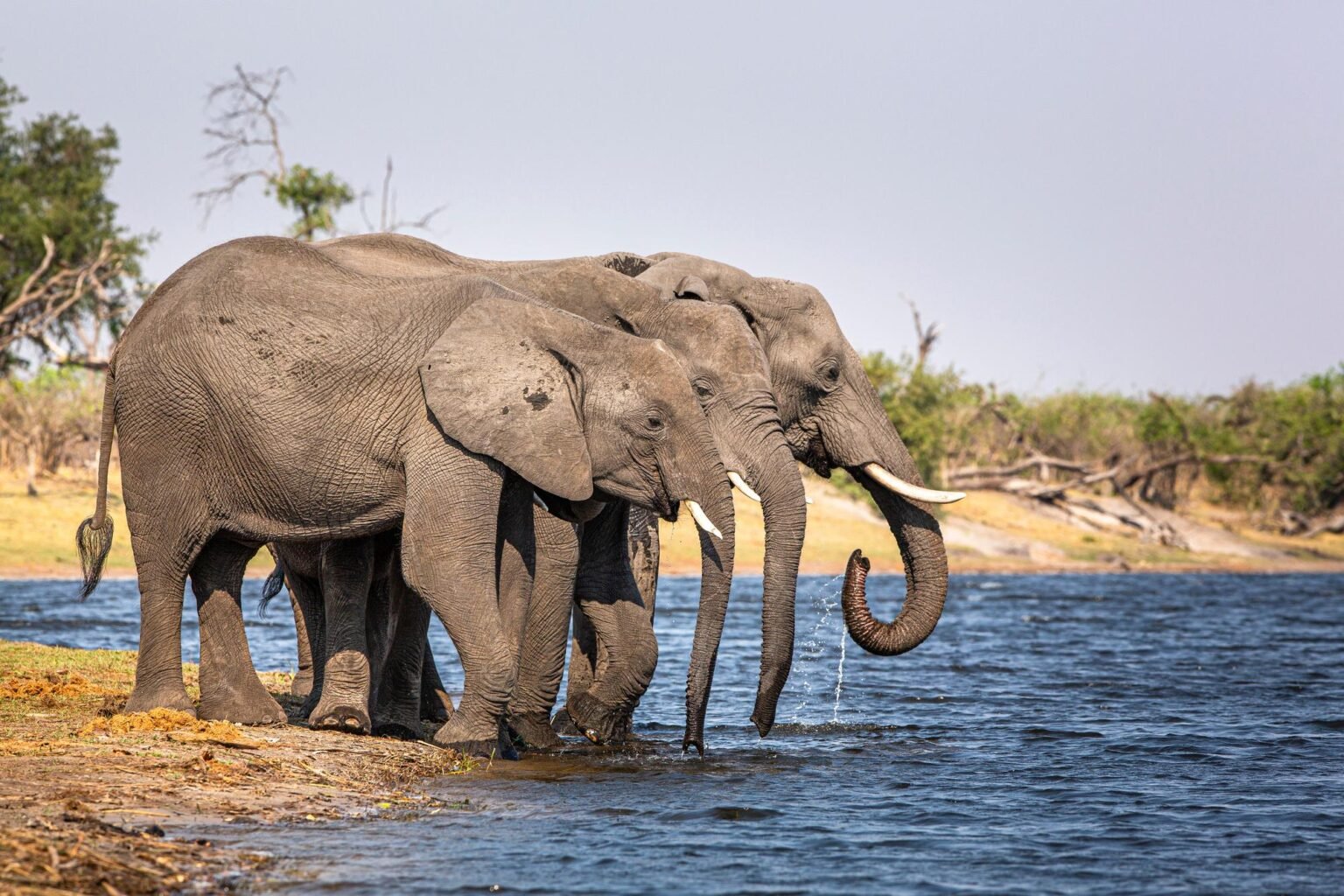
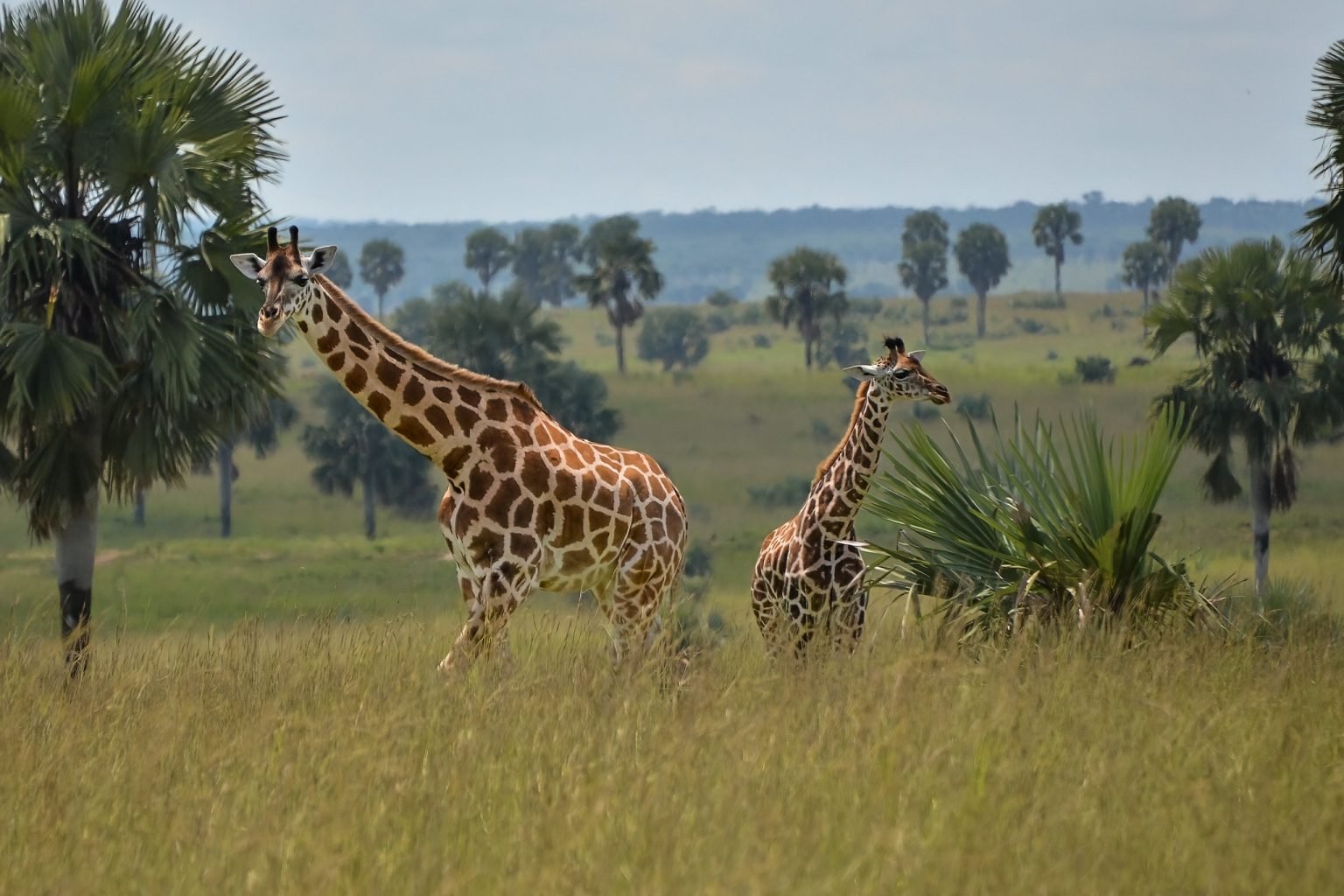
The river cascades through rapids for 80 km before reaching the falls, where it transforms into a calm, wide stream flowing into Lake Albert. It is also known as Uganda’s “giraffe paradise” and is home to the highest number of Nubian giraffes, offering an incredible wildlife experience with elephants, giraffes, buffaloes, hippos, and Nile crocodiles frequently seen along the riverbanks.

Birdwatchers will delight in the park’s variety of species, including the rare shoebill stork in the Lake Albert Delta. Murchison Falls is also a great spot for game fishing, particularly in the Karuma Falls area. For those seeking more adventure, the Kaniyo Pabidi mahogany forest within the park is home to chimpanzees. With its combination of wildlife, stunning waterfalls, and scenic landscapes, Murchison Falls National Park is a must-visit for nature lovers and adventure seekers alike.

Self Drive Safaris are possible and recommended to travelers planning to explore Murchison falls National Park on unique Uganda Safaris tailored by 4wd Africa with the freedom to go anywhere

Where is Murchison Falls National Park Located?

Murchison Falls National Park is located in north-western Uganda. It spreads inland from the shores of Lake Albert around the Victoria Nile up to Karuma Falls and is easily accessible, just 300 kilometers northwest of Kampala.

Self-drive to Murchison Falls?

Murchison Falls Park can be accessed by self-drive travelers from Kampala by road through driving to Murchison with a stopover at Ziwa Rhino. It takes a 5–6-hour drive (about 300 km).

Advise tips for Road Trip

Renting a 4×4 vehicle, like a safari van or land cruiser, is recommended due to the rough terrain.

Park gates are Chobe, Wankar, Tangi, Kichumbanyobo, Bugungu.

Things to do  In Murchison Falls

Murchison falls National Park offers a wide range of interesting activities which you can engage in at your favorable time be it in the morning or in the evening they include,

Chimpanzee trekking. As it’s mostly known that Murchison Falls holds strong on the Big Five viewing, it’s also the best destination for primate trekking at the most affordable prices. Chimpanzee trekking in Murchison Falls National Park takes place in Kaniyo Pabidi, situated in the Budongo Forest Reserve, the largest tropical rainforest home to a large population of chimpanzees and birds, granting you nice nature walks.

Chimpanzee tracking in Budongo is unique as you’re always led by expert guides; trekkers can hike through the forest to observe chimpanzees in their natural habitat, interacting, grooming, or foraging.

The trek typically lasts 2-6 hours, depending on where the chimps are located.  Chimpanzee Trekking permits at 130USD are required, the age limit for this activity is 12 years and above, and the best time to visit is during the dry seasons.

Birding

Murchison Falls National Park has been recognized as one of the best places to view the prehistoric-looking shoebill stork in Africa, which is best spotted in the dry season from January to March. Birds in the park include Shoebill, African Darter, Giant Kingfisher, Osprey, Long-toed Plover, Grey-headed

Balloon safaris, these safaris are growing in popularity and are only available at Murchison Falls and Queen Elizabeth National Parks. This unique experience is becoming a favorite among visitors to Uganda’s national parks.

Game drive;

Game drives in Murchison Falls National Park can be done early in the morning, in the afternoon, or at night, where you will be able to view different animals like buffalo and elephants. Uganda Kobs, Oribi waterbucks, Jackson’s hartebeest, lions, leopards, and giraffes, among others.

Boat Cruise;

You can take a boat trip to the delta and return via a game drive through the Buligi area, or you can leave your boat at Fajao Gorge, hike to the Top of the Falls for stunning views, and return by vehicle.

The most popular cruise, departing from Paraa on the south bank, offers a scenic view of Murchison Falls and is available daily at 8:30 am, 11:00 am, and 2:30 pm. Special trips, like the Waterfall & Sundowner cruise with drinks and snacks, depart at 3:30 pm. River offers great wildlife sightings, including hippos, crocodiles, and various bird species.

Hiking to the Top of Murchison Falls,

You can take a short but rewarding hike to the top of the falls, where you’ll get a fantastic view of the Nile and the waterfall. The sound of the water crashing below is powerful and mesmerizing

Sportfishing

Murchison Falls is a prime spot for anglers. The Nile is home to the giant Nile perch and tiger fish, providing an exciting and challenging fishing experience, especially just above and below the falls.

Weather condition of Murchison Falls National Park

The climate in Murchison Falls National Park is tropical and hot. Temperatures are quite uniform throughout the year. Daytime temperatures of around 31°C/88°F are common, with it cooling down at night to around 18°C/64°F.

That is normally, in the mornings it is breezy, a bit cold and windy with the sun rising early though temperatures tend to rise in the afternoons being very hot, it is hot as you can even see the glare of the sun in front of you, especially on the trucks during game drives.

However, the temperatures reduce in the evenings living the atmosphere warm and windless in most cases, with the bright sunset. Surely, the Murchison Falls National Park weather is relatively good as it is.

PARK RULES AND REGULATIONS,

These rules ensure that the park remains protected, and the wildlife and visitors are safe while preserving the park’s unique natural beauty,

  • All visitors are required to pay park entry fees and obtain the necessary permits for activities such as game drives, boat trips, and chimpanzee tracking.
  • Always follow the guidance and instructions of park rangers, especially during activities like chimpanzee tracking or when hiking to the top of the falls.
  • Stay in Designated Areas, visitors are required to stay within the designated areas and follow marked trails to avoid disturbing wildlife and the natural environment
  • No Feeding of Animals, it’s strictly prohibited to feed any wildlife within the park to ensure their natural behaviors are not disrupted and to prevent them from becoming dependent on human food.
  • Keep a safe distance from all animals. Do not approach or provoke wildlife, as this can be dangerous for both visitors and the animals.
  • No Littering, always dispose of waste properly. Littering within the park is prohibited, as it can harm the environment and wildlife.
  • Stay in Your Vehicle During Game Drives, visitors are required to remain inside their vehicles unless at designated safe areas or under the guidance of a park ranger.
  • Smoking is prohibited in most areas of the park due to the high risk of starting fires in the dry season, which can destroy habitats.
  • Keep noise levels to a minimum, especially near wildlife, to avoid disturbing their natural behavior.

HOW MANY DAYS TO SPEND IN MURCHISON FALLS NATIONAL PARK?

The ideal number of days to spend in Murchison Falls National Park depends on the type of experience you’re seeking, but generally, 3 to 4 days is recommended for a well-rounded safari experience.

BEST TIME TO VISIT MURCHISON FALLS NATIONAL PARK

The best time to visit Murchison Falls National Park is during the dry season, which runs from December to late February and then from June to August. During this season, the weather conditions are characterized by little or no rainfall, making animal viewing fascinating since they concentrate around the water shores. However, for birding, it is best done from January to March, which tends to be a low tourist season and has plenty of bird species.

WHERE TO STAY?

When planning a safari in Murchison Falls National Park, choosing the right place to stay can enhance the experience. The park offers a range of accommodation options to suit various preferences and budgets. Whether you’re looking for luxury, mid-range, or budget-friendly options, the park has something for everyone. Luxury Lodges include Paraa Safari Lodge and Nile Safari Lodge. Mid-range options like Murchison River Lodge, Red Chilli Rest Camp, and Budget Accommodation include Boomu Women’s Camp, Nile River Camp, The Shoebill Campsite, Red Chilli Rest Camp, Yebo Safari Camp, UWA Campsite, Murchison Falls Campground, and Budongo Eco Lodge, which provide excellent camping facilities with scenic views, offering a great base to start your trek. Additionally, these sites often have the necessary amenities, such as campfire areas and toilet facilities, making your camping experience comfortable while still being immersed in the wild.
Kibale Forest  National Park

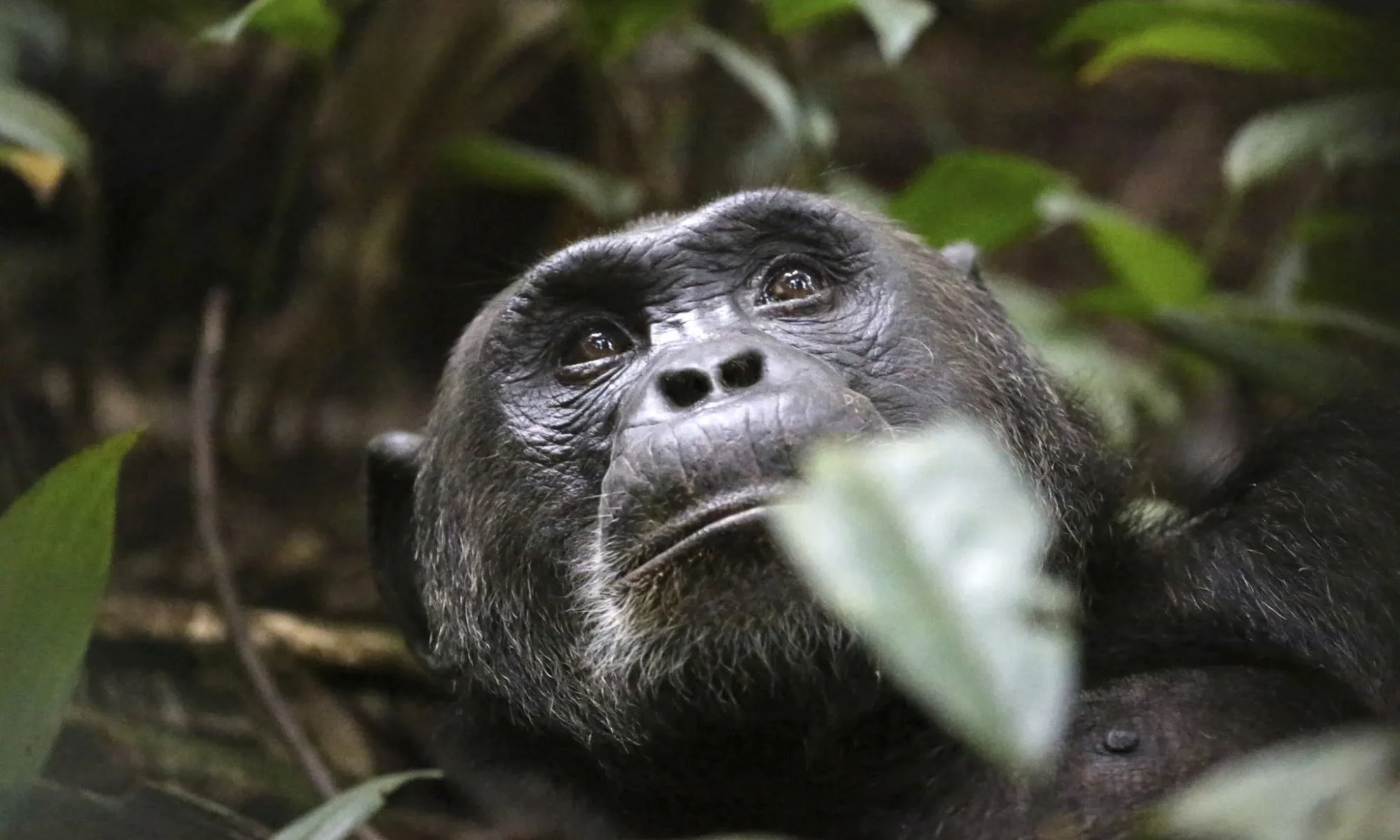
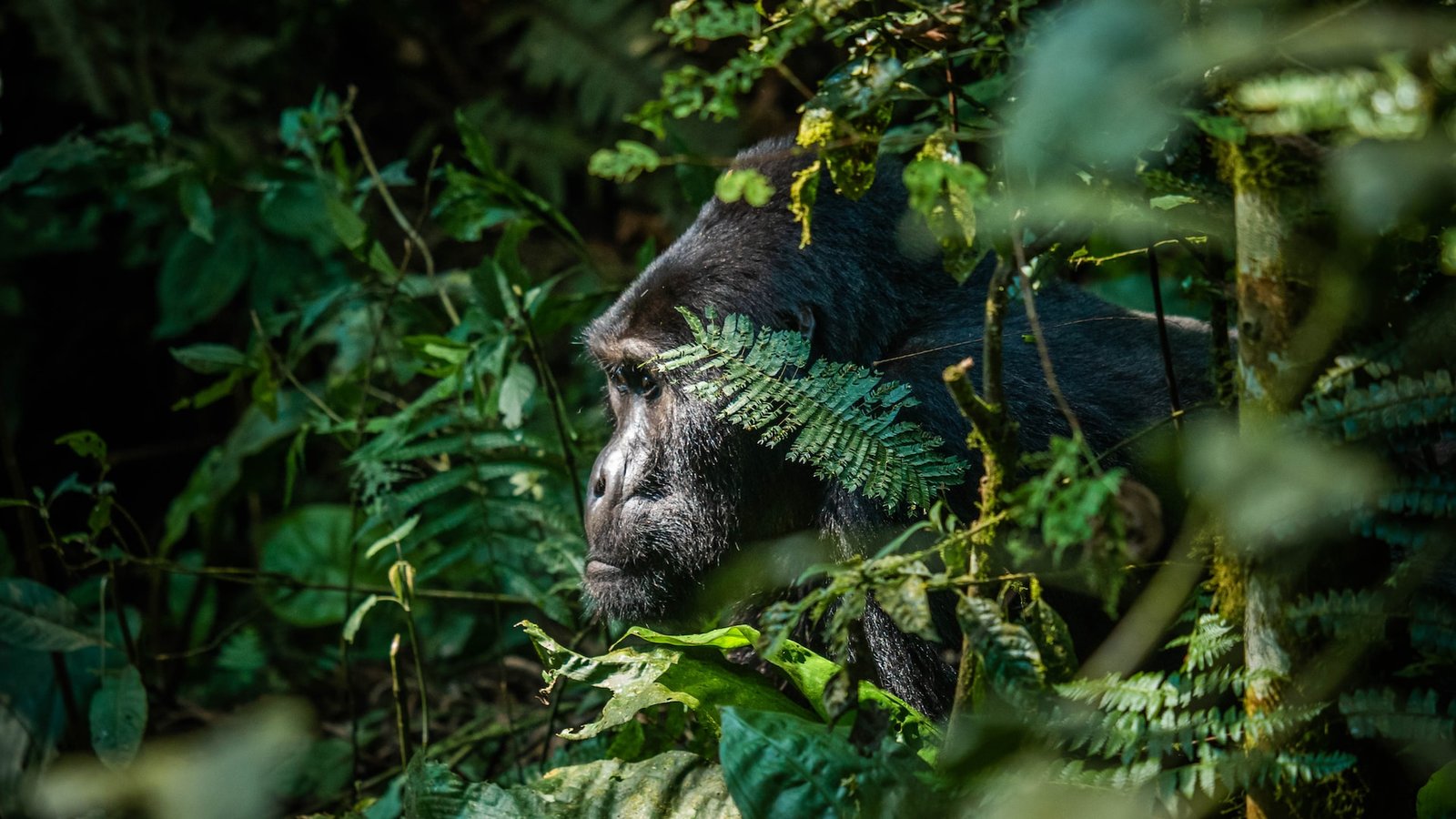
Kibale National Park, located in western Uganda, is one of the most stunning and biodiverse rainforests in Africa. Known as the “Primate Capital of the World,” it is famous for its incredible population of primates, especially chimpanzees. Covering 795 square kilometres, the park is a nature lover’s paradise, featuring lush forests, vibrant wetlands, and crater lakes.

For anyone seeking an up-close encounter with Uganda’s wildlife, Kibale National Park promises a once-in-a-lifetime adventure. From chimpanzee tracking to bird watching and nature walks, the park offers a range of activities that are both exciting and educational.

Kibale National Park is situated between the districts of Kabarole and Kamwenge in western Uganda. The park is bordered by Queen Elizabeth National Park to the south, forming a natural wildlife corridor. Its terrain includes dense tropical rainforests, patches of grasslands, and swampy valleys.

The park is divided into sectors, with Kanyanchu being the main area for chimpanzee tracking and other tourism activities. Another notable sector is Buraiga, a quieter region of the park that offers a more serene experience of the rainforest. Buraiga is ideal for nature walks, bird watching, and exploring Kibale’s biodiversity away from the busier areas.

Surrounding Kibale are tea plantations, small villages, and crater lakes, creating a scenic and tranquil environment that adds to the park’s charm.

History of Kibale Forest National Park

Kibale was first gazetted as a forest reserve in 1932 to protect its unique ecosystem. In 1993, it was upgraded to national park status, recognizing its importance as a biodiversity hotspot. Since then, it has become a cornerstone of Uganda’s ecotourism and conservation efforts.

The park is home to the Makerere University Biological Field Station, which has been instrumental in researching primates and rainforest ecology. These studies have helped to enhance conservation strategies while supporting the park’s sustainable tourism model.

Things to do in Kibale Forest National Park

Chimpanzee Tracking
The highlight of visiting Kibale is tracking its playful chimpanzees. Treks start from the Kanyanchu Visitor Centre, where small groups are guided into the forest. Once the chimpanzees are located, visitors spend an hour observing their behaviours, such as feeding, grooming, and swinging through the trees.

Cost: $250 per person.

Chimpanzee Habituation Experience
For those who want an even deeper connection, the habituation experience allows visitors to spend up to four hours with the chimpanzees. This activity involves joining researchers as they observe and habituate chimps to human presence, offering a more immersive understanding of these intelligent primates.

Cost: $300 per person.

Nature Walks in Buraiga
The Buraiga sector of Kibale National Park is ideal for tranquil nature walks. Guided by experienced rangers, visitors explore the park’s dense rainforest and spot primates, birds, and butterflies. This area’s quieter trails make it perfect for those seeking a peaceful connection with nature.

Bird Watching
Kibale is a birding hotspot, with trails offering opportunities to spot rare and colourful species. The Bigodi Wetland Sanctuary, located near the park, is particularly famous for birdwatching, with species like the papyrus gonolek and white-winged warbler frequently sighted.

Crater Lakes Tour
The crater lakes around Kibale add to its scenic beauty. Visitors can hike to these serene water bodies, enjoy picnics, or take in panoramic views of the surrounding landscape. Popular crater lakes include Lake Nyabikere and the Ndali-Kasenda cluster.

Practical Information

Chimpanzee Tracking

Chimpanzee tracking begins with a briefing at the Kanyanchu Visitor Centre, where guides share essential tips for the trek. Small groups of visitors then head into the forest, guided by the sounds of the chimps’ calls. The trek can last 2–4 hours, depending on the location of the chimps.

Once the group is located, visitors spend one hour watching them in their natural habitat. Observing their playful behaviour, communication, and family interactions is a truly unforgettable experience.

Chimpanzee Habituation

For those interested in a more immersive experience, the chimpanzee habituation program is ideal. Visitors join researchers for a full day in the forest, learning about the process of familiarizing wild chimpanzees with human presence. The activity allows for extended observation, making it perfect for photographers and wildlife enthusiasts.

Best time to visit Kibale forest Park

Kibale National Park is open year-round, but the best time to visit is during the dry seasons ranging from June to September and December to February.

During these months, the trails are less muddy, making activities like chimpanzee tracking easier and more enjoyable. The rainy seasons (March to May and October to November) can make trekking challenging, but they bring lush greenery and fewer crowds, offering a different kind of charm.

Activity Costs

Chimpanzee Tracking Permit: $250 per person.

Chimpanzee Habituation Experience: $300 per person.

Nature Walks: $30–$50 per person.

Bird Watching: $30 per person (guide fees extra).

Bigodi Wetland Sanctuary Visit: $20 per person.

Conservation and Community Benefits

Kibale National Park is a shining example of successful conservation. Revenue from tourism helps fund anti-poaching efforts, habitat restoration, and community projects. Local communities benefit through employment opportunities and revenue-sharing programs, while initiatives like the Bigodi Wetland Sanctuary promote eco-tourism.

Why Visit the Buraiga Sector?

The Buraiga sector offers a quieter and more intimate experience of Kibale’s beauty. It is less crowded compared to the Kanyanchu area, making it perfect for those who want to enjoy the forest in peace. Activities in Buraiga include bird watching, nature walks, and the chance to see a variety of primates and other wildlife.

Bwindi Impenetrable National Park

Bwindi Impenetrable National Park: A Hidden Gem for Nature Lovers and primate adventurers within East Africa.  Nestled in the southwestern corner of Uganda, Bwindi Impenetrable National Park is a natural wonder and one of the most celebrated wildlife destinations in Africa.

This UNESCO World Heritage Site spans approximately 331 square kilometres, offering breathtaking landscapes of dense rainforest, mist-covered hills, and diverse wildlife. The park is famously known as home to nearly half of the world’s endangered mountain gorillas. It is not just a sanctuary for wildlife but also a haven for adventurers, nature enthusiasts, and cultural explorers.

Bwindi promises an unforgettable adventure, whether you are captivated by its magical forests, unique wildlife, or the opportunity to meet endangered mountain gorillas up close, sharing the borders with Congo’s Virunga National Park.

A self-drive holiday in Uganda can take you to meet the mountain gorillas in Bwindi Impenetrable National Park with 4WD Africa, the leading Road trip adventure company.

History of Lake Bwindi Impenetrable National Park

In 1991, the Bwindi Impenetrable National Park was created to safeguard its distinctive wildlife, especially the endangered mountain gorillas. It was a forest reserve prior to being designated as a national park, and as early as 1932, its ecological significance was acknowledged.

Because of its extraordinary natural importance, it was designated a UNESCO World Heritage Site in 1994.

In addition to protecting the park’s wildlife and plants, conservation initiatives.

The most liked sector

Buhom is situated in the park’s northern section. It is the oldest gorilla trekking trailhead.
Ruhija: Ruhija is more sedate and perfect for tourists looking for a closer encounter with the natural world.
Rushaga: This southern region is popular for gorilla habituation and trekking.
Nkuringo: The most difficult but rewarding sector is Nkuringo.

Fauna and Flora of Bwindi Impenetrable

With more than 400 plant species, 120 mammal species, 350 bird species, and a large number of reptiles and insects, Bwindi is a hotspot for biodiversity. Ferns, bamboo, and enormous trees that provide a mystical canopy are among the park’s abundant vegetation.

Fauna

Mountain Gorillas: These gentle giants are the main draw and the crown treasure of Bwindi. There are more than 459 gorillas in the park, divided into many habituated groups.

Other Mammals: Other animals that call Bwindi home include duikers, bushbucks, forest elephants, and monkeys including L’Hoest’s and black-and-white colobus.

Birds: With rare species like the African green broadbill and Shelley’s crimson-wing, Bwindi is a birder’s paradise.

Flora

The forest is ancient, dating back over 25,000 years, and features a rich mix of lowland and montane vegetation. Its thick undergrowth and towering trees give it the name “impenetrable.”

Best Time to Visit Bwindi Impenetrable National Park

Bwindi Impenetrable National Park can be visited year-round, but the best time is during the dry seasons that range from June to August and December to February.

Gorilla Trekking is easier during these months since the routes are less muddy. Bwindi Impenetrable National Park is more beautiful, and there are fewer visitors during the wet seasons (March to May and September to November), which also bring significant rainfall.

Things to Do in Bwindi Impenetrable National Park

Gorilla Trekking.
The highlight of any trip to Bwindi is gorilla trekking. Hikers can spend an hour with a family of mountain gorillas during this trip, which takes them deep into the jungle. Experienced rangers lead small groups of trekkers on pathways that are specific to the gorillas’ current location.

Cost: Gorilla trekking permits cost $800 per person for foreign non-residents, $500 for the rest of Africa, and UGX 300,000 for East African citizens.

Gorilla Habituation Experience.
The habituation experience is ideal for people who want to learn more about gorillas. For up to four hours, visitors join researchers and rangers to watch a troop of gorillas become accustomed to human presence.

Cost: The habituation experience costs $1,500 per person.

Bird Watching.
To see unique and colorful bird species, birdwatchers can hike areas like the Buhoma Waterfall Trail. There are knowledgeable guides available to assist in recognizing unusual calls and sights.

Nature Walks and Hiking.
Trails like the Mubwindi Swamp Trail and the Nkuringo Walking Safari offer opportunities to explore the forest’s beauty, waterfalls, and unique wildlife on foot.

Community Visits.
You can walk through the forest’s natural splendor, waterfalls, and distinctive animals on trails like the Nkuringo Walking Safari and the Mubwindi Swamp Trail.

Parque Nacional de Bwabwata

Parque Nacional de Bwabwata is located in the northeast of Namibia and is prominently known to offer amazing wildlife safaris to all travelers from all over the world. The Park covers an area of 6,274 square kilometers with more than 5,000 people from the Khwe San and Mbukushu communities who co-exist naturally with the environment.

Bwabwata National Park comprises the Kavango and Kwando Rivers in the Zambezi Region (formerly the Caprivi Strip), which connects Namibia with Angola, Zambia, Botswana, and Zimbabwe, making the park ecologically and politically significant.

Flora and Fauna

The park includes Floodplains along the rivers, Savanna woodlands dominated by acacia, teak, and mopane trees, Seasonal pans and wetlands, Dense forest patches, fauna and flora, making the park a haven for wildlife and a hotspot for biodiversity.

Wildlife

Bwabwata National Park is a corridor for wildlife transferring between Angola and Botswana, hence obtaining its name as the People’s Park. The wildlife animals that can be seen here include: African elephant, Lion, leopard, African wild dog, Hippo, Sable and roan antelope, Buffalo, Red lechwe, etc.

Birdlife

The park is a birdwatcher’s paradise, hence a very ideal destination for all birders from all over the world. There are more than 450 recorded bird species that are watched in the park, and these include: African fish eagle, Wattled crane, Pel’s fishing owl, Carmine bee-eater, African skimmer, etc.

Things to do in the Park

Wildlife Safaris

Wildlife Safaris are exceptional to have while on guided or self-drive safaris. You sit in your 4×4 wheel drive vehicle with a ranger guide who informs you about the park and the various wildlife animals wandering around their natural vegetation habitat. The animals you watch include elephants, lions, leopards, buffalo, hippos, and various antelope species.

Safari Walks

Accompanied by experienced guides, these walks offer an intimate experience with the park’s flora and fauna. It’s an excellent way to learn about the ecosystem and spot smaller wildlife.

Boat Cruises

Navigate the Okavango and Kwando Rivers to observe hippos, crocodiles, and a variety of bird species. Popa Falls, a series of rapids on the Okavango River, is a scenic spot for boat trips and birdwatching.

Canoeing

For a more hands-on experience, canoeing on the Kavango and Zambezi Rivers allows for close encounters with wildlife and a peaceful exploration of the waterways.

Birdwatching

Bwabwata is a haven for bird enthusiasts, with over 450 species recorded. Notable spots include the Mahango area and the Kavango River. Species to look out for include wattled cranes, African skimmers, Pel’s fishing owls, and various eagle species.

Fishing

The Okavango and Kwando Rivers offer excellent fishing opportunities. Whether you’re an experienced angler or a novice, the tranquil rivers provide a relaxing environment to enjoy the sport.

Community Visits

Engage with the Khwe, Mbukushu, and other local communities residing within the park. Learn about their traditional lifestyles, crafts, and conservation efforts.

Bushman Paintings

Discover ancient San (Bushman) rock paintings within the park, offering insights into the region’s rich cultural history.

Khaudum National Park

Tucked away in the northeastern corner of Namibia, bordering Botswana, lies Khaudum National Park, a remote and rugged wildlife haven that epitomizes true African wilderness. Unlike Namibia’s more popular parks such as Etosha, Khaudum is deliberately undeveloped and isolated, offering intrepid travelers an authentic, off-the-beaten-path safari experience.

Established in 1989, Khaudum covers an area of 3,842 square kilometers and lies within the Kavango East Region. It is part of the Kavango-Zambezi Transfrontier Conservation Area (KAZA), the largest conservation area in Africa.

Geography

Khaudum National Park sits on the Kalahari Sandveld, a region dominated by deep sands, semi-arid woodland savannah, and ephemeral rivers. The terrain consists of dry riverbeds (omiramba), open grasslands, and dense acacia and teak forests, which create varied habitats for a wide range of fauna and flora.

The park experiences two main seasons

Dry Season (May to October): Wildlife viewing is at its best as animals congregate at waterholes.

Wet Season (November to April): Roads can become impassable, and the bush becomes thick and green, making game spotting more difficult.

Flora and Fauna

Despite its remoteness, Khaudum boasts a rich and diverse ecosystem, especially renowned for its large populations of elephants and predators.

Mammals

African Elephant: Up to 3,000 elephants move through Khaudum, making it one of the best places in Namibia to see these giants in a wild, free-roaming state.

African Wild Dog: One of the last strongholds for this endangered species in Namibia.

Lions, Leopards, and Cheetahs: Khaudum is home to all three of these big cats, although they are elusive.

Spotted Hyena and Jackal

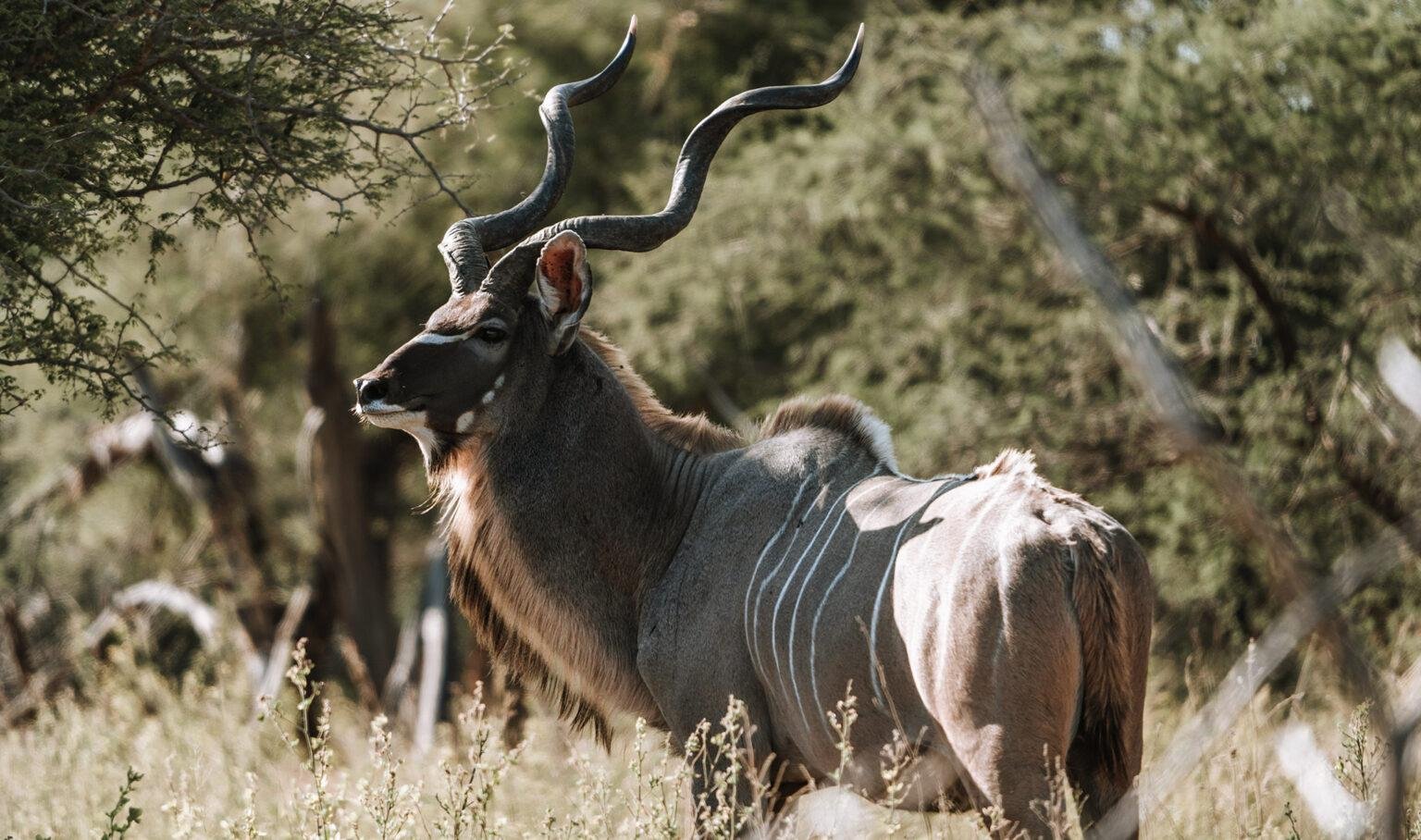
Giraffe, Eland, Roan Antelope, Kudu, and Blue Wildebeest

Rare species: Includes tsessebe, reedbuck, and sitatunga near wetlands.

Birdlife

Over 320 bird species have been recorded. Birdwatching is exceptional, especially near the omiramba and waterholes. Key species include: Bateleur eagle, Secretary bird, African fish eagle, Ground hornbill, Meyer’s parrot.

Khaudum lies near the Nyae Nyae Conservancy, which is home to the San people (Ju/’hoansi), one of the oldest surviving hunter-gatherer cultures in the world. Visitors to the region often combine wildlife viewing with cultural experiences such as:

Traditional San bushwalks

Storytelling sessions

Craft markets

These cultural exchanges provide valuable income for local communities and enhance conservation through sustainable tourism.

Wildlife & waterholes

One of the highlights of a visit to Khaudum is to watch wildlife from the hides provided at some of the waterholes. And, wildlife there is. Khaudum is home to large herds of elephants, a flourishing leopard population, lions, giraffes, spotted hyenas, and black-backed and side-striped jackals.

It also has a rich variety of antelope species: blue wildebeest, kudu, steenbok and gemsbok, and reedbuck, eland, hartebeest and tsessebe in the central areas. An important conservation area, this is where you have the opportunity to encounter the rarer animals like roan antelope and, if fortunate, the endangered African wild dog.

Birdlife

Approximately 320 bird species have been recorded in Khaudum, including Bradfield’s hornbills, black-faced babblers, sharp-tailed starlings, rufous-bellied tits and coppery-tailed and Senegal coucals.

Slow-going

Travelling is slow, and vehicles need to be permanently engaged in 4×4, negotiating the deep and loose sand on the two-track roads that weave through the Park, linking waterholes and omurambas.

Waterberg Plateau National Park

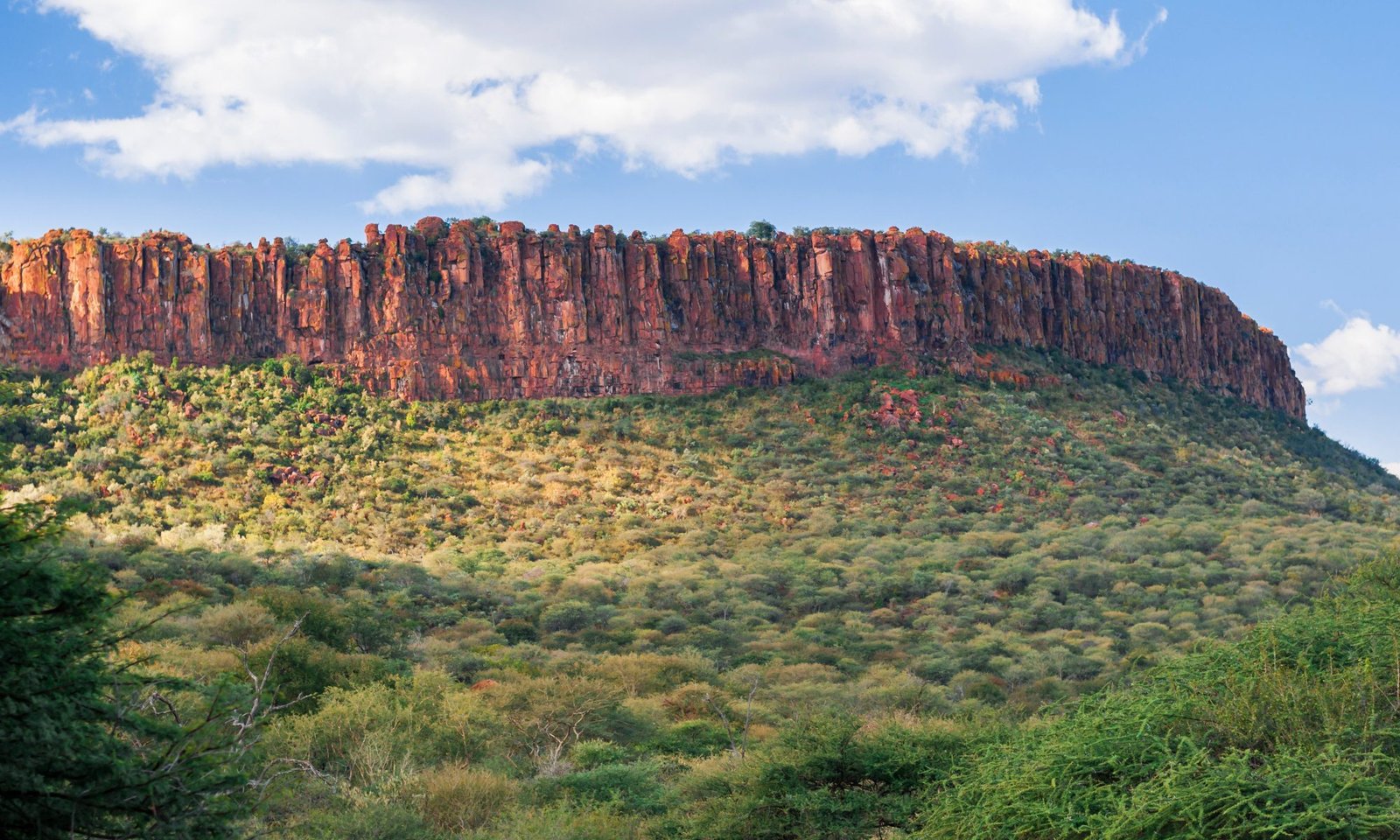
Nestled in northern Namibia, the Waterberg Plateau National Park is a place of striking natural beauty and immense ecological significance. This national park, established in 1972, centers around the Waterberg Plateau, a massive sandstone table mountain that rises sharply from the surrounding savannah. Not only does the park boast extraordinary geological features and panoramic vistas, but it also serves as a critical sanctuary for endangered wildlife species in Namibia.

Geography and Geology

The Waterberg Plateau is approximately 50 kilometers long and 16 kilometers wide, covering around 405 square kilometers. The plateau rises up to 200 meters above the plains, offering dramatic cliff faces and lush vegetation not found in the drier lowlands below. The plateau was formed over 200 million years ago, with sandstone formations that contain dinosaur footprints and fossils, testifying to the area’s ancient past.

One of the most distinctive features is the porous sandstone that traps and stores rainwater. This allows the plateau to support more vegetation and biodiversity than the surrounding arid regions, essentially creating a natural “island” of greenery.

History and Cultural Significance

The name “Waterberg” comes from the German “Wasserberg,” meaning “Water Mountain,” reflecting the plateau’s abundant springs and natural water sources.

Historically, the area is notable for the Battle of Waterberg in 1904, a pivotal and tragic confrontation during the Herero-German War. The Herero people, resisting German colonial rule, were defeated here, leading to mass deaths and a humanitarian disaster in what is now considered one of the first genocides of the 20th century. Several Herero graves and memorials can still be found in the area.

Flora and Fauna

Thanks to its elevation and water-retentive sandstone, the Waterberg Plateau supports diverse ecosystems. The vegetation includes woodlands, acacia savannas, and lush sub-tropical plants — quite different from the surrounding semi-arid regions.

Wildlife Conservation

Waterberg Plateau National Park plays a key role in Namibia’s wildlife conservation efforts. Because the plateau is difficult to access, it functions as a natural fortress, ideal for protecting endangered species. Key animals include:

White and Black Rhinoceroses – Both species have been reintroduced for conservation.

Cape Buffalo – One of the few disease-free populations in Africa.

Sable and Roan Antelope – Rare and elegant, thriving in the park.

Leopard, Cheetah, and Brown Hyena – Predators that play a role in maintaining ecosystem balance.

Birdlife – With over 200 species, the park is a haven for birdwatchers. Look for raptors such as the African hawk-eagle, lanner falcon, and Peregrine falcon.

Tourism and Activities

Waterberg Plateau is a popular destination for eco-tourism and historical exploration. Key activities include:

1. Hiking and Nature Trails
There are multiple trails, both guided and self-guided, that take visitors through the park’s varied landscapes.

The Waterberg Wilderness Trail is a multi-day hike that offers unique access to otherwise restricted areas.

2. Game Drives
Guided safaris within the park allow visitors to spot rhinos, buffalo, and other species.

Night drives are also available, offering the chance to see nocturnal animals.

3. Bird Watching
Dedicated bird hides and observation points cater to ornithologists and amateur birders alike.

4. Cultural Tours
Learn about the Herero culture and the colonial history that shaped this region.

Visit local communities or historical battle sites.

Namib-Naukluft National Park

Namib-Naukluft National Park is located in Namibia, covering an area of 49,000 square kilometers with terrain landscapes from the towering red dunes and rocky mountain ranges to rugged plains and dry riverbeds. The Park includes the Namib Desert, one of the oldest and driest deserts in the world, with beautiful flora and fauna.

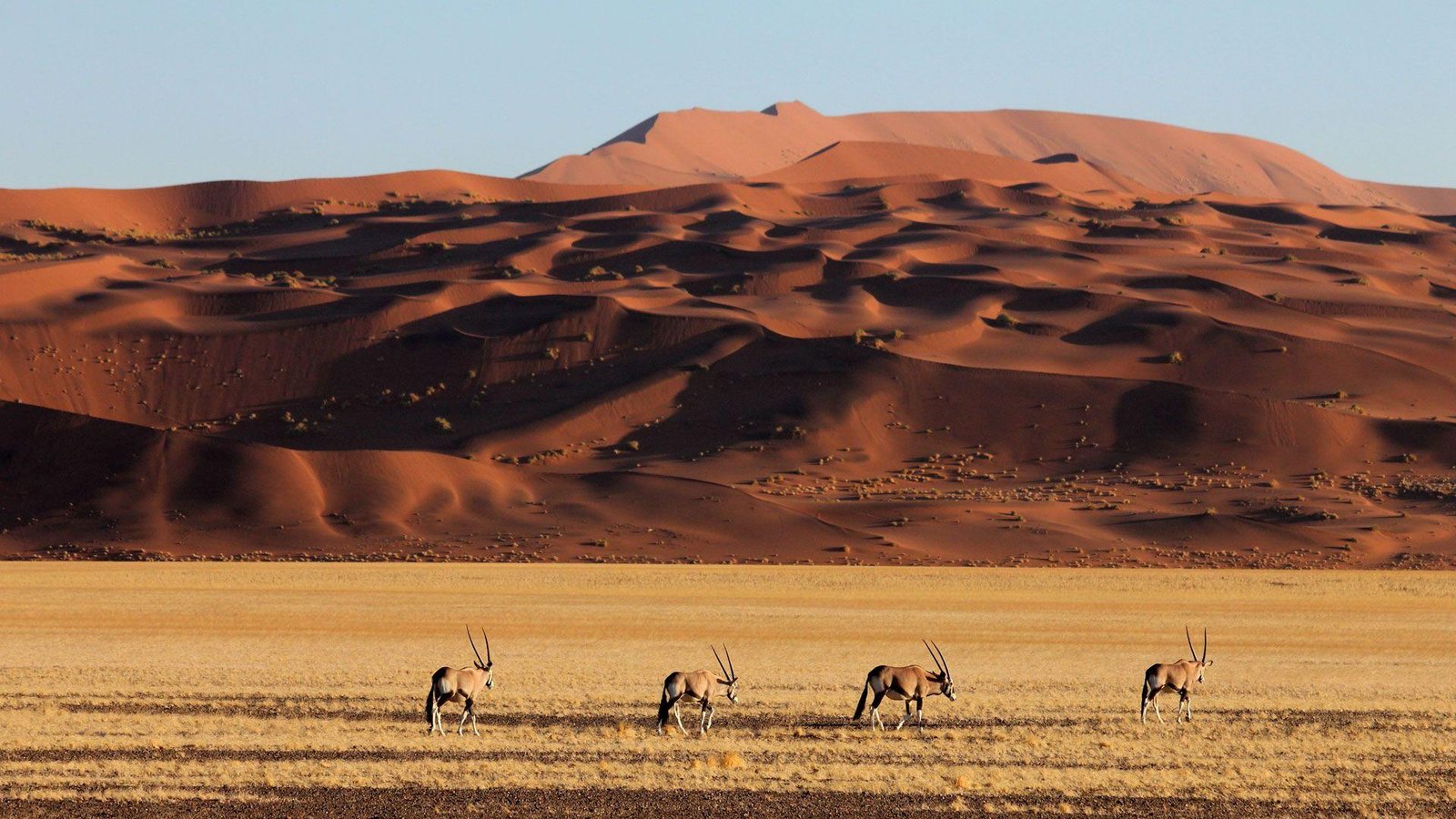
The park consists of breathtaking terrain landscapes, rich biodiversity, particularly desert-adapted species that have evolved to survive in this challenging environment. It includes the Dune 45 and the Sossusvlei salt and clay pan, which are among the most photographed landmarks in Africa.

Namib-Naukluft National Park comprises beautiful terrain landscapes in Africa, ranging from vast sweeping dunes to rugged Mountain Ranges and Salt Pans. The desert consists of towering red dunes, the tallest in the world to heights of over 300 meters (984 feet).

Dunes and Salt Pans

  • The Sossusvlei is a remarkable salt and clay pan located in the heart of the Namib Desert. It is surrounded by some of the park’s most famous dunes, including Dune 45, which is considered one of the most photographed dunes in the world. The shifting, fiery-red dunes are a striking contrast to the stark white salt pans.
  • The Deadvlei, a fossilized forest of blackened, dead camelthorn trees, is another remarkable feature of the Namib Desert, creating an eerie and surreal landscape. The striking white clay pan, combined with the stark contrast of the dark trees and red dunes, makes for one of the most photographed scenes in the park.

Mountain Ranges and Valleys

  • The Naukluft Mountains, located to the south of the Namib Desert, create a dramatic transition between the dunes and the central plateau. These mountains rise abruptly from the surrounding desert plains and offer a stark contrast to the barren sand dunes. The rugged terrain is popular for hiking and offers stunning views over the desert below.
  • The Kuiseb River runs through the park, providing one of the few water sources in the otherwise dry landscape. The riverbed is a unique feature, with seasonal floods that briefly transform it into a vibrant wetland, attracting migratory birds and desert wildlife.

Flora and Fauna

Despite the harsh conditions, Namib-Naukluft National Park supports a surprising diversity of life, including plants and animals. The wildlife you can watch includes: desert elephants, Springbok, Oryx (Gemsbok), Hartmann’s Mountain Zebra, Brown Hyenas, cheetah, lion, leopard, and bird species such as peregrine falcon, Kori bustard, and lappet-faced vulture. The flora of the park includes Welwitschia, camelthorn tree, Aloe, Carpobrotus, and Mesembryanthemums, which are commonly found in the park’s arid regions.

Climate and Best Time to Visit

Namib-Naukluft National Park has an arid climate with temperatures fluctuating greatly between day and night. The temperatures fluctuate above 40°C (104°F), while nighttime temperatures can drop significantly.

Best Time to Visit

The best time to visit the park is during the months from May to October when daytime temperatures are manageable, and wildlife viewing is easier.

Things to do at Namib-Naukluft National Park

Namib-Naukluft offers a wide range of activities for visitors, from thrilling dune climbs to scenic hikes and wildlife safaris.

Climb the Dunes

Climbing the Dunes is an exceptional adventure to do in the park as you explore the towering red sand dunes, especially Dune 45, which offers you spectacular views of the surrounding desert.

Explore Sossusvlei and Deadvlei

Explore the Sossusvlei and Deadvlei an adventure that gives you an opportunity to traverse the clay pan, taking in the surreal beauty of the dead trees against the backdrop of the towering dunes.

Hiking in the Naukluft Mountains

Naukluft Mountain Range offers some of the best hiking trails in Namibia. The hikes vary in difficulty, from easier walks to more challenging treks that provide stunning views of the desert below.

Wildlife Viewing

Wildlife enthusiasts can enjoy self-drive safaris or guided tours to spot the park’s unique desert-adapted animals, including elephants, oryx, and the elusive brown hyena.

Photography

Namib-Naukluft National Park is a photographer’s paradise, offering opportunities to capture the dramatic landscapes, ancient plants, and rare wildlife.

Skeleton Coast National Park

Skeleton Coast National Park is located on the North Atlantic Coast of Namibia, with one of the most beautiful distant terrain landscapes in Africa. The park includes a vast desert that meets the cold, foggy ocean and shipwrecks that litter the coastline. The park is a natural wonder which attracts adventurers and photographers on safari holiday in Namibia.

The park covers an area of 16,000 square kilometers, expanding from the Kunene River in the north to the Hoarusib River in the south. The park is divided into two zones, i.e the Southern Zone open to Travelers and the Northern Zone, which is a restricted area that stays off limits due to conservation and security reasons.

Skeleton Coast’s geography is nothing short of dramatic. The terrain landscape is an intricate blend of dunes, dry riverbeds, salt pans, desert plains, and rocky outcrops that border the cold Atlantic Ocean.

The inland part of the Skeleton Coast is covered by the Namib Desert, which is one of the oldest deserts in the world. The terrain landscape comprises towering dunes, some elevating to more than 300 meters above sea level. It includes arid terrain where rainfall is scarce. Despite the dryness, some hardy plant species, such as the Welwitschia plant, manage to survive.

The Skeleton Coast’s coastline is rugged and jagged, often marked by reefs and dangerous currents that have claimed countless ships over the centuries. Fog, driven by cold Atlantic currents, often envelops the coastline, contributing to the park’s eerie, mysterious atmosphere. This thick fog is a direct result of the cold Benguela Current colliding with the desert heat, and it can persist for much of the year. The Dunnottar Castle, Eduard Bohlen, and Shaunee are just a few of the wrecks that have become iconic symbols of the Skeleton Coast’s deadly allure.

The Dunnottar Castle, Eduard Bohlen, and Shaunee are just a few of the wrecks that have become iconic symbols of the Skeleton Coast’s deadly allure. These wrecks are often seen as haunting relics, reminders of the perilous nature of navigating this coastline before modern navigation technology was developed.

Flora and Fauna

Skeleton Coast National Park includes a variety of wildlife, both on land and in the sea. The animals found in the park have adapted to the harsh, dry conditions, and the flora reflects the resilience of life in this extreme environment.

Fauna

Skeleton Coast National Park comprises the desert adapted Elephant which is a resident of the Skeleton Coast and is fond of roaming the arid plains. These elephants have adapted to survive in the harsh environments due to their smaller body sizes and longer legs, which help them traverse the desert terrain more efficiently. They rely on desert springs and hidden water sources to sustain themselves.

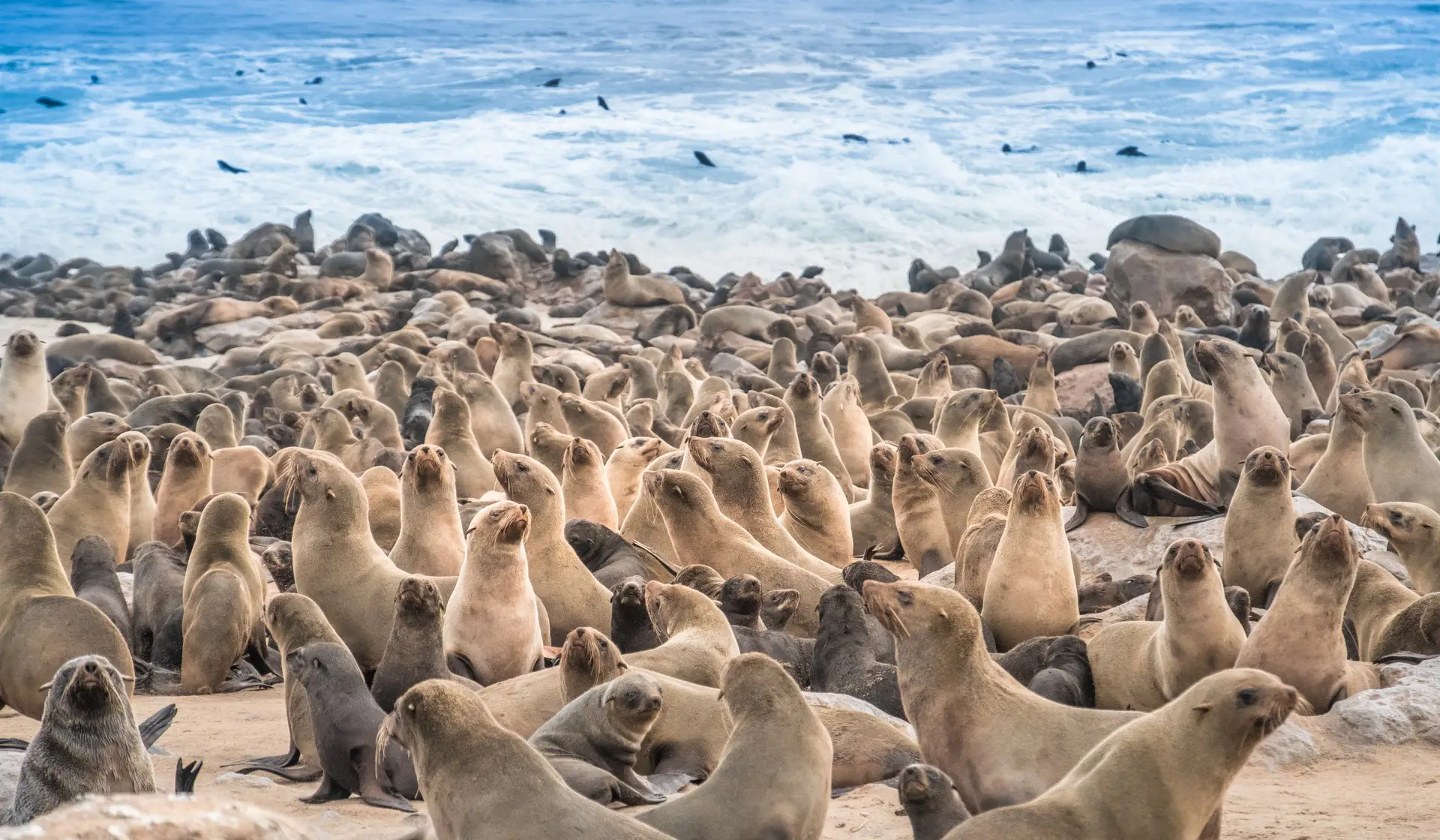
Other than the elephants, the park includes Lions, Brown Hyena, Giraffes, oryx, springbok, jackals, bat-eared foxes, Cape fur seals, and meerkats. You shall also watch bird species, i.e seabirds which inhabit the Guano Islands, rocky outcrops. Other birds are Raptors, pelicans, gulls, terns, pale chanting goshawk, and steppe eagles, Migratory Birds like flamingos and waders, etc. There are also whales and dolphins.

Climate and Best Time to Visit

The climate of the Skeleton Coast is heavily influenced by its proximity to the Atlantic Ocean and the cold Benguela Current. The temperatures around the park are cool with foggy conditions which rare exceed 25°C (77°F).

Best Time to Visit

The Park can be visited anytime around the year, although the best time to visit the park is during the dry season in the months of May to October, when temperatures are moderate with fog along the coast. You shall have clearer views of the coastline and its attractions during this period.

Things to do in the Park

Explore the Shipwrecks

While in the park, you shall explore the old shipwrecks along the Skeleton Coast. Getting some of the wrecks, you shall need a guide, although others can be accessed using 4×4 vehicles depending on the conditions. One of the most famous is the Eduard Bohlen wreck, which can be accessed deep within the park, enfolded by dunes.

Wildlife Safaris on Game Drive

Skeleton Coast National Park is awesome to explore on a wildlife safari as you get to watch various wildlife animals on a game drive seated in a 4×4 wheel vehicle that transfers you from one point to another with ranger guides. The wildlife animals you watch on Game Drive include: elephants, lions, leopards, rhinos, giraffes, various species of antelope like springbok, gemsbok, and kudu, as well as cheetahs, wildebeest, zebras, and even smaller animals like jackals, warthogs, and bat-eared foxes. While on the Game Drives, view the desert dunes and the rugged coastline that are perfect backdrops for photography.

Fly-in Safaris

Skeleton Coast National Park can also be explored on fly-in safaris. These are perfect due to the size and remoteness of the park. These give you remarkable aerial views of the terrain, vegetation, shipwrecks, wildlife, and the coastline. This is an incredible option for travelers looking to experience the park without the physical exertion of a long overland journey.

Photography Safaris

Photographic Safaris are exceptional to do in Skeleton Coast National Park. The park has remarkable spots which include: dramatic landscapes, eerie shipwrecks, and unique wildlife, which make it exceptional to explore. Travelers can take stunning photos of the Dunes and wildlife.

Etosha National Park

Etosha National Park is located in the northwestern part of Namibia and is one of the most famous wildlife reserves in Africa. The Park covers an area of more than 22,000 square kilometers with a unique terrain landscape, rich biodiversity, and incredible wildlife sightings. The park includes salt pans, vast savannah, and many wildlife species.

Etosha National Park, whose name means “Great White Place” in the local Oshiwambo language, gets its name from the massive Etosha Pan at the center of the park. The Etosha Pan, a large salt flat, was once a vast lake that dried up many years ago. The salt pan today serves as a dramatic and surreal backdrop for the park’s diverse wildlife.

Etosha National Park is one of the oldest game reserves in Africa, situated in the arid, semi-desert region of Northern Namibia with seasonal rains, extreme temperatures and unique ecosystem. There are many, many wildlife animals and plant life that are found in the park. The terrain comprises dry salt pans, grasslands, thornveld (thorny shrubland), and savannahs.

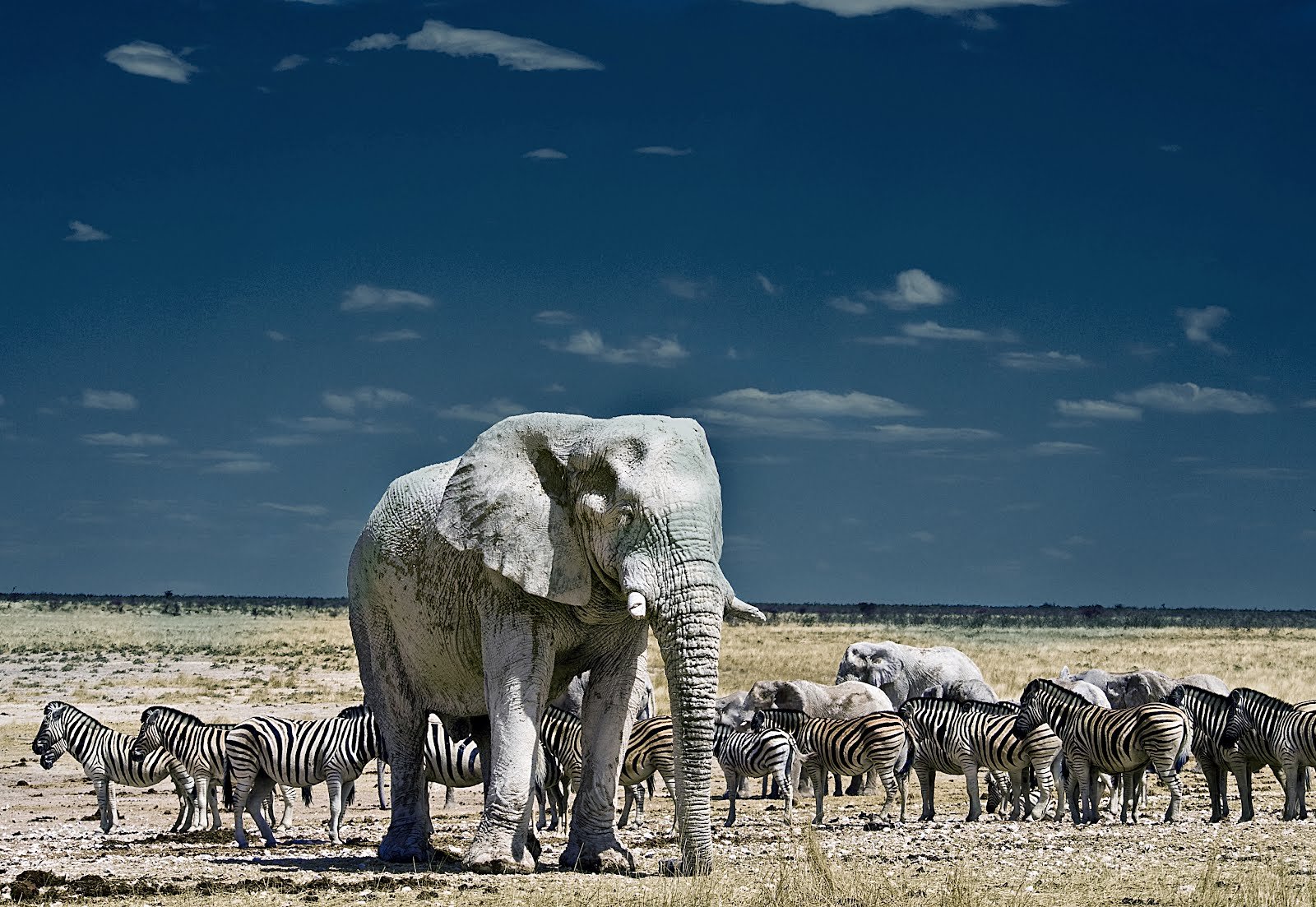
When it is rainy, the pan gets filled up with water, attracting many migratory birds, offering wildlife animals abundant water to break their thirst, especially during the dry season. The park also has water holes that gather large congregations of wildlife, such as elephants, zebras, giraffes, and predators like lions and hyenas.

The park consists of vegetation zones with grasslands, bushveld, and woodland, each providing diverse habitats for different species. Acacia trees, mopane shrubs, and the occasional camelthorn tree dot the landscape, offering some shade to the park’s many species.

Flora and Fauna

Etosha National Park includes unique Flora and Fauna species i.e more than 100 mammal species, more than 340 bird species and various reptiles, amphibians and invertebrates. The park has large herds of elephants along the North Western Part. These have a relatively smaller body size compared to others in the Savannah parks of Africa.

Other than the elephants, you can watch other wildlife animals like lions, leopards, Rhinos, Giraffes, zebras, antelopes, various species of antelope like the springbok, gemsbok, kudu and impalas.

There are various bird species as well, and these include: Flamingos, Pelican, Raptors, martial eagle,  brown snake eagle. Other birds include: the ostrich, secretary bird, and various species of hornbills, storks, and vultures.

Climate and Best Time to Visit

Etosha National Park consists of semi-arid climate with distinct wet and dry seasons. The Dry Season runs from the months of May to October, as this is the best time to visit the park when the vegetation is sparse, short, and photography is clear. The wildlife animals gather around the water holes, hence a perfect time for travelers on a photographic safari.

The Wet Season happens from the months of (November to April) making it challenging to watch wildlife in the park as the vegetation is verdant. For borders, this is the perfect time to watch various migratory bird species.

Things to do in Etosha National Park

Etosha offers a range of safari adventures travelers can engage in, and these are exceptional, offering travelers a chance to watch many wildlife animals in their natural habitat. Below are the things travellers can do in the park.

Game Drives

Game drives in the park are the most exceptional safari adventure carried out. These offer you a chance to watch many wildlife animals wander around their natural habitat as you transfer from one point to another in a 4×4 wheel vehicle. These are scheduled Morning Game Drive which goes till mid day, Full day Game Drive which goes for the whole day and Sun Downer Game Drive which happens when the sun is setting. The wildlife animals you watch on Game Game Drive in the park include; elephants, lions, leopards, rhinos, giraffes and various species of antelope like springbok, gemsbok, and kudu. Watch cheetahs, wildebeest, zebras, and even smaller animals like jackals, warthogs and bat-eared foxes.

Photographic Safaris

Photographic Safaris are awesome to do in Etosha National Park and these are exceptional for travelers looking for unique spots to watch wildlife in their natural vegetation habitat. The park consists of many wildlife animals which wander around their natural habitat and these include; elephants, lions, leopards, rhinos, giraffes and various species of antelope like springbok, gemsbok, and kudu. Watch cheetahs, wildebeest, zebras, and even smaller animals like jackals, warthogs and bat-eared foxes. You can take photos of waterholes, terrain landscape, two palms and the Namutoni spring.

Bird watching at Etosha

Bird watching in Etosha National Park is awesome hence birders from all over the globe should visit the park to watch the various species of birds flying around their natural habitat. There are many vibrant bird species that can be watched and these include; the crimson-breasted shrikes, northern black korhaans, violet-eared waxbills and pale chanting goshawks etc.

Visit and Tour the native Hai||Om Culture

While in Etosha National Park, travelers can transfer to visit and tour the Hai||Om San or commonly known as the Bushmen who stay around the park. Their culture is rooted in their ancestorial lands and traditional way of life which comprised of hunting, gathering and a close relationship with nature. They possess a rich spiritual tradition and custom where they believe in spiritual agencies and shamen who acted as intermediaries between humans and the animal world. Get a chance to learn about their culture and traditions as they include you through performances.

Night safari at Okaukuejo Water Hole

While in the park, you can embark on a night safari exploring the Okaukuejo Water Hole. The waterhole is known to offer amazing views of various wildlife animals as they gather around it to break their thirst during the night. On the safari, watch wildlife animals like leopards, rhino, and jackals peeping out at dark.

Gishwati-Mukura National Park

Tucked into the misty hills of western Rwanda along the Congo-Nile Divide, Gishwati-Mukura is the country’s fourth and newest national park, a hidden gem of regenerating rainforest, rare primates, and remarkable birdlife. Spanning roughly 34 square kilometers across the larger Gishwati and smaller Mukura forests, it offers an intimate, crowd-free alternative to Rwanda’s more famous parks. This is a place where conservation is unfolding in real time, and every visit supports one of Africa’s most inspiring forest recovery stories.

A Forest Reborn: Once nearly lost to deforestation and illegal mining, Gishwati and Mukura were merged and protected in 2015 as part of an ambitious restoration effort. Today, the forest is flourishing again, its chimpanzee population climbing, its canopy thickening, and its trails opening to a new generation of travellers.

Things to Do

Chimpanzee Tracking — The park’s signature experience. Trek through recovering forest in search of a small community of eastern chimpanzees. Treks run 2–5 hours; sightings aren’t guaranteed, which only adds to the adventure.

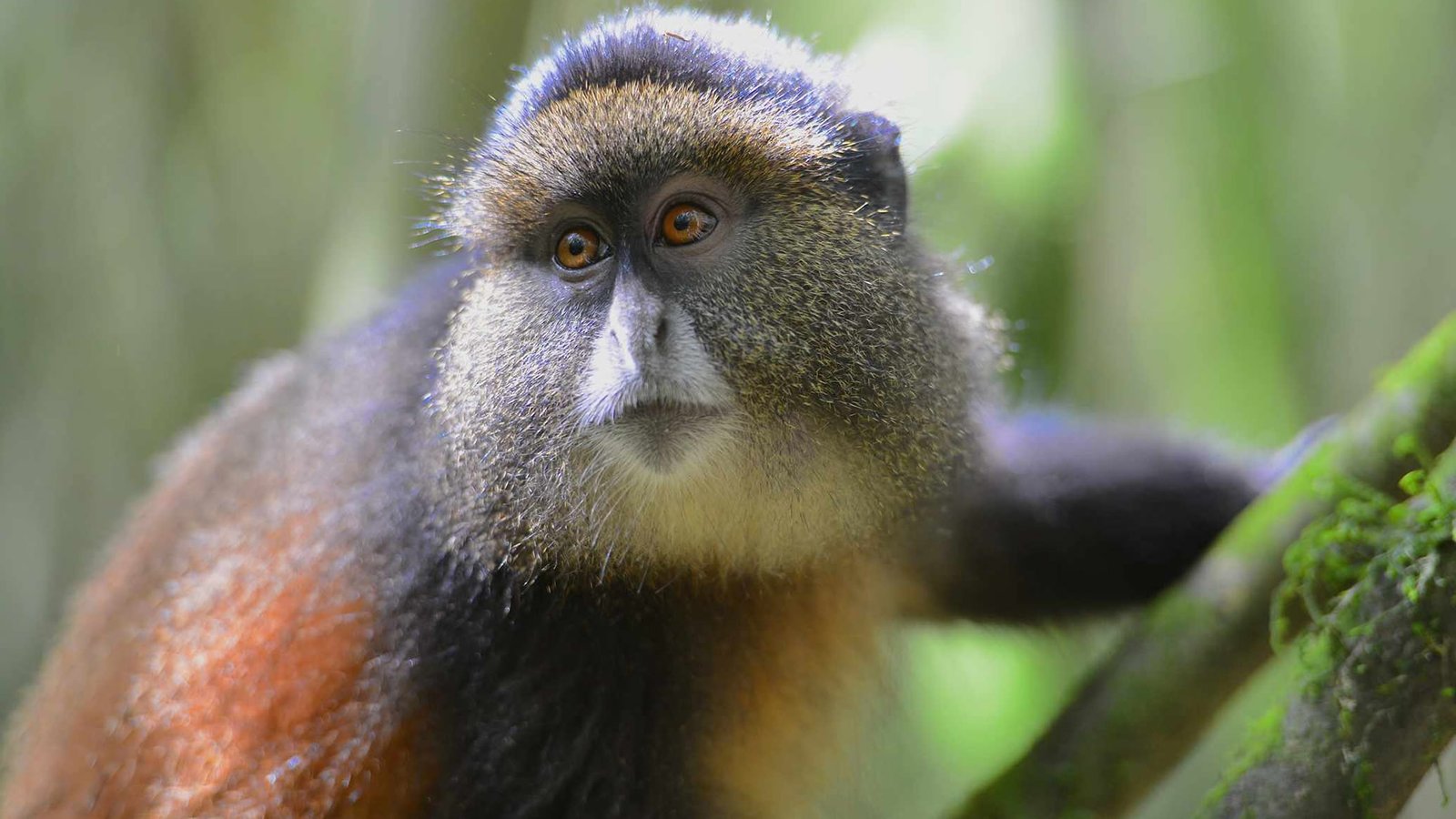
Golden Monkey & Primate Walks — Encounter golden monkeys, L’Hoest’s monkeys, blue monkeys, and colobus on guided forest walks, a quieter alternative to Volcanoes National Park.

Hiking & Waterfalls — Follow scenic trails like the Umushwati and Waterfall routes, or climb Matyazo Hill (2,469m) for sweeping views over the Congo-Nile ridge.

Birdwatching — With over 230 recorded species, including Albertine Rift endemics like the Rwenzori Turaco and Regal Sunbird, this is one of Rwanda’s rising birding destinations.

Cultural Encounters — Meet nearby communities for traditional dance, handicrafts, beekeeping, tea tours, and time with local healers who draw medicine from the forest.

Best Time to Visit Dry seasons (June–September & December–February) bring firmer trails and easier wildlife spotting. Green seasons (March–May & October–November) offer lush scenery, fewer visitors, easier chimp sightings, and lower rates, and the trails hold up well even in the rain.

Want the animals-to-see emoji list to go with it?